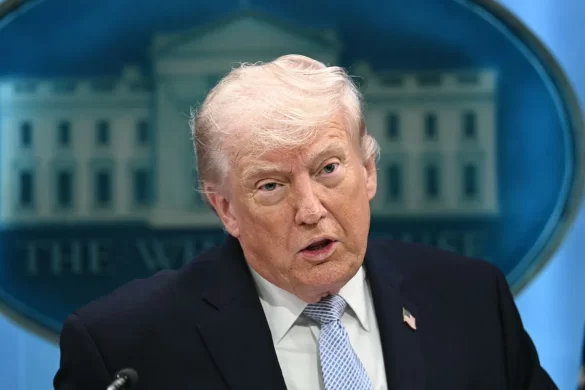
Former US President Donald Trump has voiced concerns over a potential $83 billion deal in which Netflix is reported to be pursuing a takeover of Warner Bros. Studios. He cautioned that the move could become a problem, especially as federal regulators review the proposal and rival companies worry about the impact on competition.
Trump Signals Possible Intervention
Speaking to reporters, Trump said he may intervene directly if necessary, noting that the scale of the proposed deal warrants close scrutiny. He suggested that federal regulators, including antitrust authorities, may need to examine whether such a merger would give Netflix disproportionate control over film and television content.
The remarks highlight growing political interest in major media mergers. Over the past decade, US regulators have blocked or heavily altered deals involving AT&T, Time Warner, and major telecom companies. Trump’s statement signals that the Netflix–Warner Bros. deal could face a similar level of scrutiny.
Despite raising concerns, Trump also praised Ted Sarandos, Netflix’s co–chief executive, who recently visited the White House. Trump said Sarandos had delivered “remarkable contributions” to the film industry and described him as a visionary executive.
A Vast Library of Iconic Franchises
If finalised, the acquisition would give Netflix control over some of the world’s most valuable entertainment franchises. The Warner Bros. catalogue includes:
-
Harry Potter
-
The Lord of the Rings
-
DC superhero films such as Batman, Superman, and Wonder Woman
The deal would also hand Netflix the rights to Hollywood classics like Casablanca and Citizen Kane, widely regarded as some of the greatest films ever made. Moreover, recent global hits such as the 2023 blockbuster Barbie would become part of Netflix’s content library.
Industry analysts note that this could significantly strengthen Netflix’s position at a time when streaming platforms are locked in intense competition. Netflix already commands more than 260 million global subscribers, far surpassing rivals such as Disney+, Amazon Prime Video, and Max (formerly HBO Max).
What’s Not Included in the Deal
According to early reports, Warner Bros. plans to spin off several television assets, meaning they will not be part of any Netflix acquisition. These include:
-
Discovery Channel
-
CNN
-
Additional linear TV networks
Warner Bros. Discovery began exploring a sale in October after receiving expressions of interest from multiple companies. Comcast and Paramount/Skydance were among the parties considering bids. David Ellison, head of Skydance and known Trump supporter, was reportedly a strong contender.
Concerns About Market Concentration
Media experts warn that such a large merger could reshape Hollywood. They argue the deal would dramatically expand Netflix’s content library, potentially reducing competition in film production and licensing.
Smaller studios, independent filmmakers, and rival streaming services could struggle to compete with a company holding such an extensive catalogue. Some analysts also note that Netflix would gain greater bargaining power in distribution and international markets.
The US entertainment industry has already experienced a wave of consolidation in recent years, including:
-
Disney’s $71 billion acquisition of 21st Century Fox
-
Amazon’s purchase of MGM
-
The merger creating Warner Bros. Discovery
Each of these deals prompted debates about declining competition and the increasing dominance of a few mega–corporations.
What Comes Next
The proposed Netflix–Warner Bros. deal is still at a preliminary stage. Regulator reviews, shareholder approvals, and potential political resistance could slow or reshape the process. However, even early discussions have triggered significant reaction across Hollywood, Washington, and global markets.
For now, the entertainment industry is watching closely. If the deal progresses, it could mark one of the largest media acquisitions in history, reshaping the global streaming landscape for years to come.