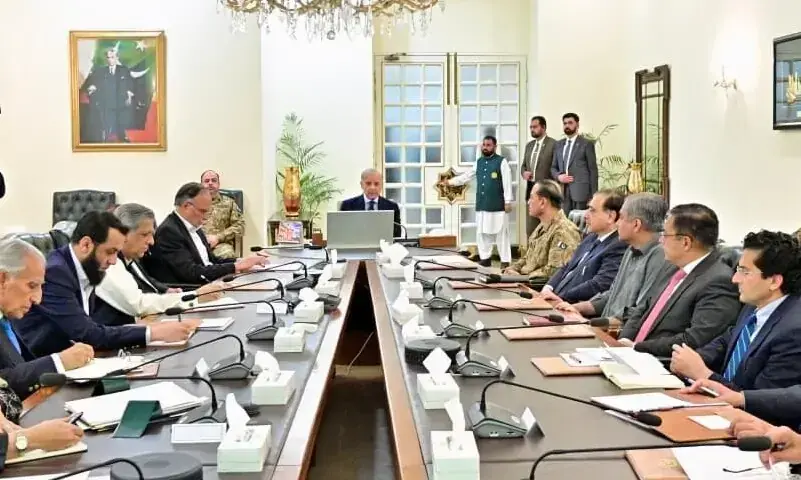
ISLAMABAD: Prime Minister Shehbaz Sharif chaired a federal cabinet meeting at the Prime Minister’s House on Sunday to review the political and security situation in Khyber-Pakhtunkhwa (K-P), with the government expected to consider imposing an emergency or governor’s rule in the province.
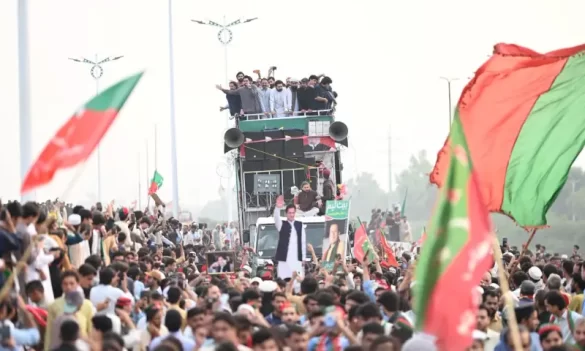
The meeting comes amid escalating tensions between the federal government and the Pakistan Tehreek-e-Insaf (PTI)-led provincial administration, as the party’s long march continues and concerns over terrorism and law and order remain central to discussions.
According to government sources, the cabinet is expected to examine both options and consider sending formal advice to President Asif Ali Zardari. Significant administrative changes, including the possible appointment of a new chief secretary, are also reportedly under consideration.
Federal ministers arrived at the Prime Minister’s House ahead of the meeting. Those attending included Interior Minister Mohsin Naqvi, Defence Minister Khawaja Asif, Adviser to the Prime Minister on Political Affairs Rana Sanaullah, Religious Affairs Minister Salik Hussain, Information Minister Attaullah Tarar, and Deputy Prime Minister and Foreign Minister Ishaq Dar.
President, Prime Minister Discuss K-P Situation
The cabinet meeting followed discussions between President Zardari and Prime Minister Shehbaz at Aiwan-e-Sadr on Saturday.
According to the Presidency’s media wing, the two leaders reviewed the overall political and security situation, with particular attention to developments in K-P, where PTI launched its long march on October 4.
Sources said the president and prime minister discussed the possibility of imposing an emergency or governor’s rule. However, the final decision rests with the federal cabinet and the relevant constitutional authorities, and no formal announcement had been made at the time of reporting.
The Presidency also said separate sessions of the National Assembly and Senate had been agreed upon for October 13.
PM Shehbaz, Fazlur Rehman Move to Ease Federal-K-P Tensions
Emergency Proposal and Administrative Changes
According to sources, K-P Governor Faisal Karim Kundi submitted a written explanation to the prime minister about a week earlier outlining the grounds for the proposed emergency measures.
The reported advice argues that the province’s law and order situation has deteriorated to a level requiring federal intervention. Sources said the prime minister could forward the advice to the president following cabinet approval, with any emergency taking effect only after the required constitutional process and presidential approval.
The Cabinet Division was expected to place the relevant summary before the cabinet for consideration.
The proposals reportedly include replacing the incumbent chief secretary with another senior administrator to oversee provincial affairs. Other changes involving senior government officials could also be considered.
Sources have also indicated that the federal government is examining a proposal to impose an emergency in 12 districts, including eight merged tribal districts and four settled districts.
The eight merged districts are Khyber, Kurram, Orakzai, Bajaur, Mohmand, North Waziristan, South Waziristan and Lower South Waziristan. The four settled districts are Dera Ismail Khan, Tank, Bannu and Lakki Marwat.
Another proposal reportedly involves transferring certain administrative powers from the provincial government to the federal government. These measures remain proposals, and their implementation would depend on the relevant legal and constitutional requirements.
Naqvi Says Government’s Options Are Narrowing
Interior Minister Mohsin Naqvi indicated that the government believed its options for resolving the political standoff had become limited.
Speaking informally to journalists, he questioned what alternatives remained to imposing an emergency and said the government had made extensive efforts to resolve the situation.
“What scope remains for not imposing an emergency?” Naqvi asked.
He added that the government had exhausted much of its room for manoeuvre, although the final course of action remained subject to the government’s decision-making process.
PTI Opposes Proposed Emergency in 12 K-P Districts as Long March Continues
Fazlur Rehman Favours More Time for Talks
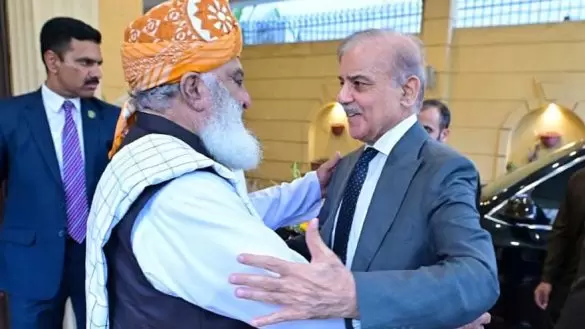
Meanwhile, Prime Minister Shehbaz contacted Jamiat Ulema-e-Islam-Fazl (JUI-F) chief Maulana Fazlur Rehman to discuss the political situation and other important matters.
During the telephone conversation, the prime minister congratulated Fazlur Rehman on performing Umrah and invited him to meet at the Prime Minister’s House. The JUI-F chief accepted the invitation.
Sources said Fazlur Rehman favoured allowing more time for negotiations and had remained in contact with PTI leadership. Consultations were expected to focus on the situation in K-P and possible ways to reduce tensions between the federal and provincial governments.
His potential role as a mediator comes as efforts to revive dialogue have faced repeated setbacks.
Tarar Accuses PTI Government of Neglecting Governance
On Saturday, Information Minister Attaullah Tarar accused the PTI-led K-P government of neglecting governance and prioritising efforts to secure the release of its jailed founder, Imran Khan, over public welfare, development and security.
Speaking at a press conference in Islamabad, attended by Prime Minister’s Coordinator on Information for K-P Affairs Ikhtiar Wali Khan and K-P MPA Jalal Khan, Tarar criticised Chief Minister Sohail Afridi’s administration.
“The hours that should have been spent on governance have instead been spent plotting to secure the release of a prisoner,” Tarar said.
He also alleged that Afridi had devoted virtually no time to governance, despite PTI having governed the province for more than 13 years.
The remarks reflect the continuing dispute between the federal government and the provincial administration over governance, security and the priorities of the PTI leadership.
Political Standoff Continues
The federal government’s deliberations come as PTI continues its protest march and the two sides remain divided over key political and security issues.
The possibility of an emergency or governor’s rule has become a major source of tension, with PTI opposing any move that could undermine the provincial administration.
While federal officials have cited security concerns and governance issues, PTI has called for political engagement and negotiations.
The cabinet’s deliberations could determine the federal government’s next steps, but any intervention would need to follow the applicable constitutional procedures. Until a formal decision is announced, the reported emergency and administrative changes remain under consideration.