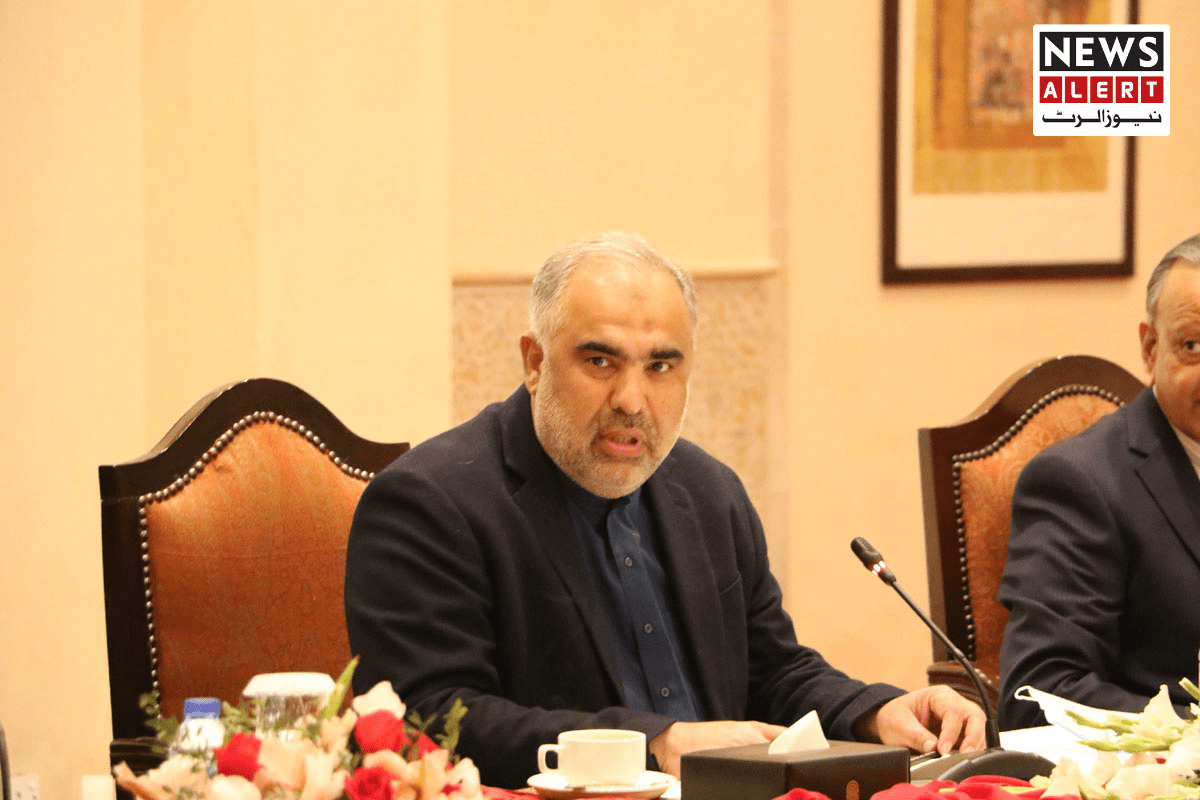
Pakistan Tehreek-e-Insaf (PTI) leader Asad Qaiser claims his party’s candidate holds a strong lead in the Haripur by-election. According to him, Form-45 data collected from polling stations shows a margin of almost 25,000 votes. His remarks have intensified debate over the credibility of Pakistan’s electoral system.
PTI Reports a Clear Lead From Form-45
During a briefing with journalists, Qaiser said PTI volunteers gathered Form-45 documents from most polling stations. He argued that these forms show a decisive margin for the PTI-backed candidate. Moreover, he stressed that his team checked the forms carefully and compared them across stations.
Form-45 records the vote count at each polling station, and presiding officers sign it on-site. Political parties often trust this document because it reflects votes before transportation of ballot bags. As a result, many analysts consider Form-45 one of the most reliable sources in local contests.
Qaiser added that the team used simple verification steps to avoid errors. In his view, the evidence points to a strong and undeniable lead.
Qaiser Accuses Election Commission of Misreporting
However, Qaiser directed sharp criticism at the Election Commission of Pakistan (ECP). He said the results posted on the commission’s website do not match PTI’s data. Furthermore, he argued that this mismatch undermines public confidence.
The staff is uploading wrong results, he told reporters. He insisted that these issues raise serious concerns over transparency. Additionally, he said the ECP has failed to meet basic expectations. According to him, the commission has once again lost the trust of voters.
PTI has expressed similar concerns in recent years. After the 2024 general elections, the party accused the ECP of mishandling the result-tallying process. Qaiser said those earlier problems have now resurfaced.
Concerns Over Election Management
Qaiser also criticised the ECP’s election management. He said the commission struggled to deliver timely updates throughout the day. Consequently, the delays created confusion among observers and candidates. He described the entire process as a complete mockery.
He went further and questioned the purpose of holding polls in such conditions. If the outcome was already fixed, then the ECP should have issued a direct notification, he said. His comment reflects deep frustration within the party’s leadership.
Many analysts share concerns about result transmission. Pakistan faced similar issues in past elections, including problems with the Result Transmission System (RTS) in 2018. Although the system changed in later years, delays continued in 2024. Because of these repeated breakdowns, public trust has weakened.
PML-N Shows Strong Performance in Punjab
While PTI highlights its lead in Haripur, the situation in Punjab looks different. Pakistan Muslim League-Nawaz (PML-N) appears to be leading on most contested seats. These constituencies became vacant after PTI lawmakers left or lost their positions.
Punjab remains Pakistan’s largest and most influential province. Therefore, PML-N’s performance carries national implications. Party organisers say they rebuilt local networks and strengthened their campaign efforts. Analysts add that PML-N used its alliances more effectively during this round of polling.
These by-elections also provide insight into shifting public sentiment. Many observers believe they reflect a more competitive political landscape, especially after months of tension between major parties.
Growing Debate Over Electoral Trust
The dispute over Haripur has added new pressure on the ECP. Civil society groups continue to call for better transparency tools. Consequently, several experts want the commission to publish real-time data more clearly and consistently.
PTI argues that its Form-45 data shows the true picture. The ECP, however, usually releases final results after a verification process. Critics say these delays create space for doubt, rumours, and political friction.
The final certified results from Haripur will influence the broader debate over electoral fairness. They will also shape political narratives as Pakistan moves through another period of uncertainty.