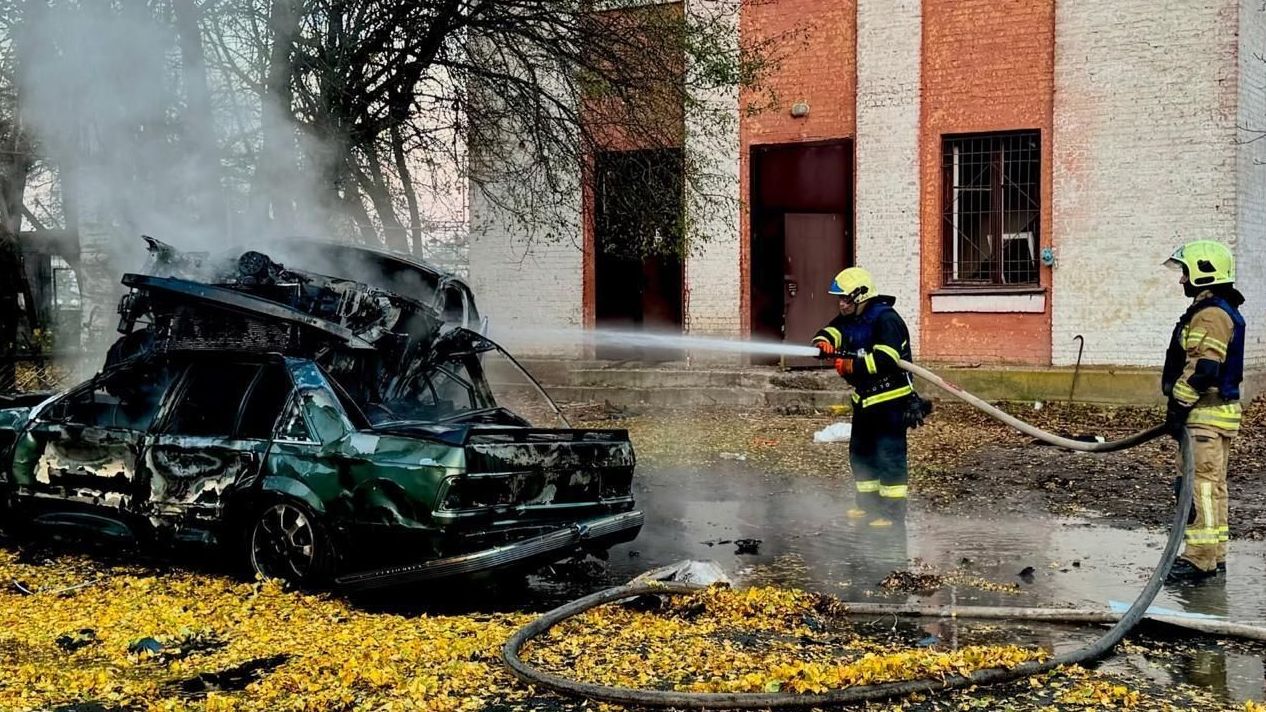
Russian strikes have killed 26 people in Ukraine following the end of a temporary ceasefire, as Moscow and Kyiv also accused each other of cyberattacks targeting emergency warning systems.
Russia’s emergency ministry said on Monday that its public warning application had come under a “massive cyberattack”, with hackers allegedly posting false information through the platform.
The app is designed to alert the public about incoming drone attacks and other potential threats.
Hours earlier, Ukraine reported a suspected compromise of its air raid alert system after false warnings about a radiation threat appeared on the application.
The incidents came as the longest temporary ceasefire of the war, which was limited to Ukraine’s eastern Kherson region, ended on Sunday. Kyiv said Russia had rejected its proposal to extend the truce.
Moscow did not immediately identify those responsible for the attack on its application, while Ukraine’s Centre for Strategic Communications, SPRAVDI, blamed Russia for the alleged hacking of its system.
Temporary Truce Comes to an End
The ceasefire, which began early on October 27 and remained in effect until November 1, was brokered by US First Lady Melania Trump and provided a rare pause in fighting in the region.
It also allowed a humanitarian mission to reach Oleshky, a city under Russian occupation, as the war continued into its fifth year.
“The ceasefire, which was in effect from October 27 to November 1, has ended,” Ukraine’s Parliament Commissioner for Human Rights, Dmytro Lubinets, said.
He described the temporary arrangement as an important step in joint humanitarian efforts between the two sides.
Kherson regional governor Oleksandr Prokudin urged residents to remain alert following the end of the truce and respond immediately to warnings about possible Russian attacks.
Ukraine Reports Air Raid Alert System Hack
Ukraine’s air force warned that its Air Alarm application may have been subjected to hostile interference after false radiation warnings appeared.
“The Air Alarm application has probably been subjected to hostile interference,” the air force said in a statement, adding that there was no radiation threat.
Air force spokesperson Yuriy Ignat subsequently confirmed to AFP that the application had been hacked.
Russia’s emergency ministry later announced that its technical teams were working to resolve what it described as a massive cyberattack that allowed attackers to circulate false information among the public.
The incidents highlighted growing concerns about the vulnerability of civilian warning systems during the ongoing conflict.
Residents Fear Renewed Fighting
The Russian invasion, launched in February 2022, has devastated parts of eastern and southern Ukraine, killed large numbers of military personnel and civilians, and forced millions of people from their homes.
Several residents of Kherson told AFP that the temporary ceasefire had offered a brief period of relief.
Volodymyr Omeltchenko, a 38-year-old gardener, described the pause as a “breath of fresh air” and said people had used the opportunity to complete essential work.
“We have to use this time to get things done,” he said before the truce ended, describing how he had been pruning rose bushes for winter.
Ukrainian President Volodymyr Zelensky Offers to Step Down if War Ends
Pope Leo, who had called on Russia to agree to a ceasefire in Oleshky, expressed hope that the pause would strengthen the desire for dialogue and encourage new peace initiatives.
However, a Ukrainian military officer, speaking anonymously, warned that fighting could become “worse than before” after the ceasefire.
The officer alleged that Russian forces on the opposite side of the Dnipro River had used the pause to bring in additional troops, move ammunition supplies and gather intelligence on Ukrainian positions with surveillance drones.
Russia and Ukraine Exchange Oil Facility Strikes
Russia and Ukraine also reported attacks on infrastructure in their respective territories on Sunday.
Moscow said a drone had struck an industrial facility east of the Russian capital. Ukrainian media reports identified the target as the Kstovo oil refinery.
Ukraine has repeatedly targeted Russian oil and gas facilities, describing the attacks as retaliation for Russian strikes on its energy infrastructure.
US President Donald Trump has urged Kyiv to stop attacking Russian refineries, linking the strikes to rising diesel costs, although analysts have also attributed higher energy prices to the conflict involving Iran.
Speaking to Fox News on Sunday, Ukrainian President Volodymyr Zelensky said he had told Trump and his team that Ukraine would stop targeting Russian refineries if Moscow halted attacks on Ukrainian energy facilities.
“If you want us not to attack Russia’s refineries, they have not to attack our energy system,” Zelensky said.
He also suggested that Washington could provide Ukraine with Patriot interceptor missiles as an alternative.
Energy Infrastructure Remains Under Pressure
Ukraine’s Energy Ministry reported fresh electricity outages across the country on Sunday, including in Kyiv, following Russian attacks on energy infrastructure.
Meanwhile, US-mediated negotiations between Russia and Ukraine are expected to resume this month. The diplomatic process had effectively stalled after the United States and Israel launched joint strikes on Iran in February.
With the temporary ceasefire now over, concerns are growing that renewed attacks could further damage civilian infrastructure and complicate efforts to bring the war to an end.