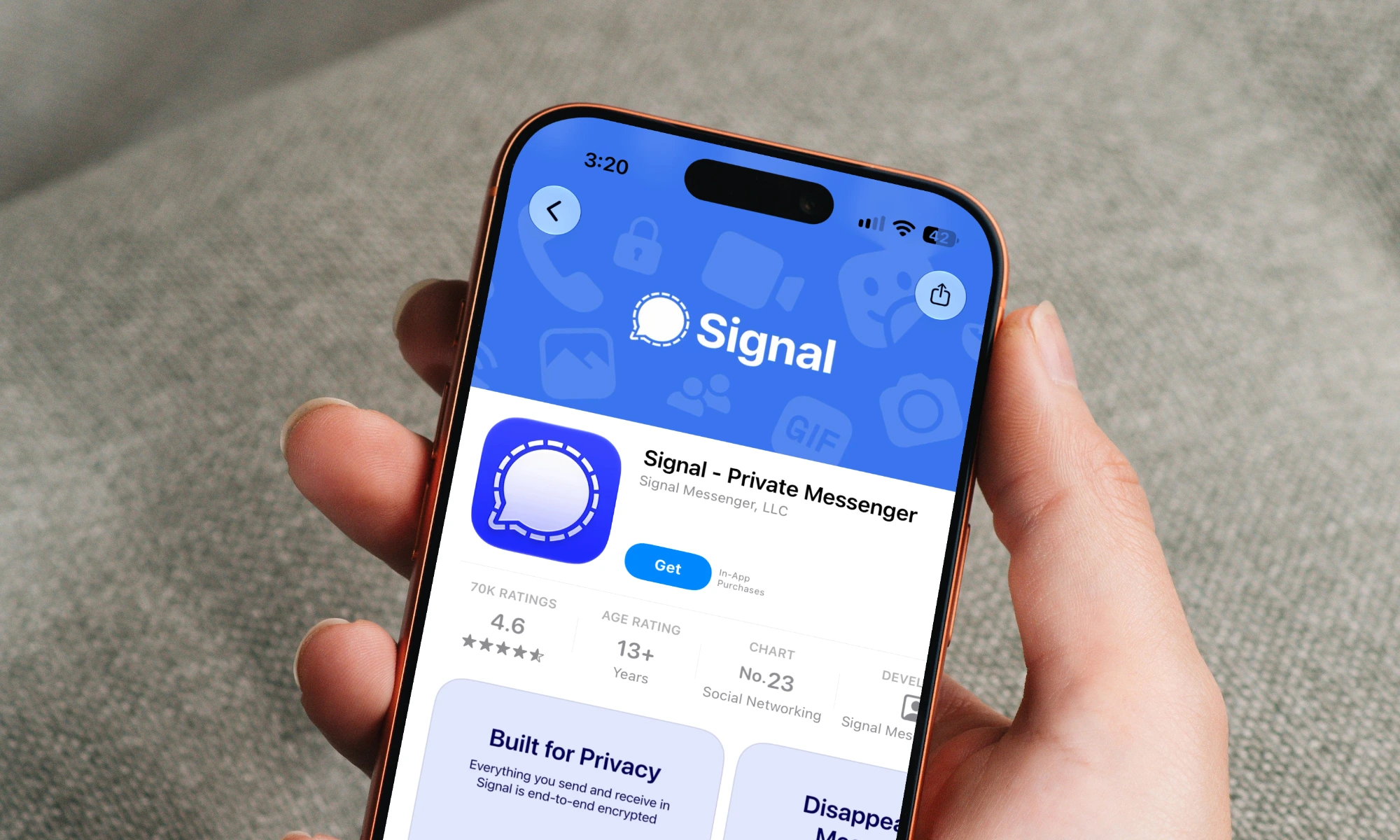
Encrypted messaging platform Signal has introduced new privacy restrictions designed to prevent artificial intelligence (AI) assistants from accessing and analysing users’ private conversations through their phone screens. The changes target AI tools such as Google’s Gemini and Apple’s Siri, which are increasingly integrated into mobile operating systems and can interact with information displayed on devices.
Announced on November 20, the measures include blocking screenshots by default on iOS 27 and automatically activating screen security on supported Android devices when Signal detects an AI assistant attempting to access its content.
How Signal’s New Screenshot Restrictions Work
According to Signal, the new protections are designed to prevent operating system-level AI assistants from capturing private messages and storing their contents outside the messaging application.
On iPhones running iOS 27, Signal has introduced a feature called “Block Siri AI”, which is enabled by default. It prevents screenshots and screen recordings within the application, restricting AI assistants from reading conversations displayed on the screen.
On supported Android devices, the approach works differently. Signal automatically activates its existing Screen Security feature when it detects an AI assistant attempting to access information displayed in the application.
The restrictions also prevent Signal conversations from appearing in recent application previews, adding another layer of protection against unauthorised screen access.
Users can disable these restrictions through Signal’s privacy settings if they need to take screenshots. However, the company warns that doing so could expose their conversations, as well as messages belonging to other participants, to AI systems.
Why Signal Is Concerned About AI Assistants
Signal President Meredith Whittaker said the growing integration of AI assistants into mobile operating systems presents a serious challenge to application-level privacy.
In a blog post titled “Signal is Serious About Protecting Your Privacy”, Whittaker explained that operating system-level AI tools can scan information displayed on a device to respond to user requests and perform tasks.
Although Signal uses end-to-end encryption to protect communications, that protection does not prevent an AI assistant from accessing messages after they have been decrypted and displayed on a phone’s screen.
Once information is captured by an operating system’s AI system, it may be stored or processed outside Signal’s control.
Whittaker argued that this creates a significant privacy concern because users may not always realise that an AI assistant is accessing information displayed inside another application.
WhatsApp to Roll Out New Feature for Enhanced Security on Linked Devices
Signal Calls on Apple, Google and Microsoft to Improve Privacy Controls
Signal has urged major technology companies, including Apple, Google and Microsoft, to provide developers with better tools to prevent AI systems from accessing sensitive application data.
The company wants operating system providers to introduce clear technical controls allowing applications to opt out of AI-related data collection and processing.
These protections should cover more than screenshots, including screen reading, notifications, access to device files and other operating system features.
Signal has also called for better technical documentation explaining how AI assistants access and process information from third-party applications.
The company said developers currently lack sufficient information and reliable controls to understand or restrict some forms of AI access.
Signal Admits Its New Protections Have Limitations
Despite introducing the restrictions, Signal has acknowledged that its solution does not completely prevent AI systems from accessing private information.
Screenshot blocking cannot stop AI agents from potentially retrieving application data through other methods, including accessing information already stored on a device.
The company also said it cannot reliably implement the same protections across every Android device or on macOS because of limitations in the available operating system controls.
Signal previously introduced screenshot restrictions on Windows 11 to prevent Microsoft’s Recall AI feature from capturing and storing conversations.
The latest changes extend its privacy efforts to mobile devices as technology companies increasingly integrate AI assistants into their operating systems.
Signal said it is engaging with major technology providers to develop more effective privacy safeguards, arguing that protecting sensitive information should not depend solely on individual applications finding ways to block AI access.
Source: The Express Tribune, based on Signal’s official announcement and reporting by Reuters.