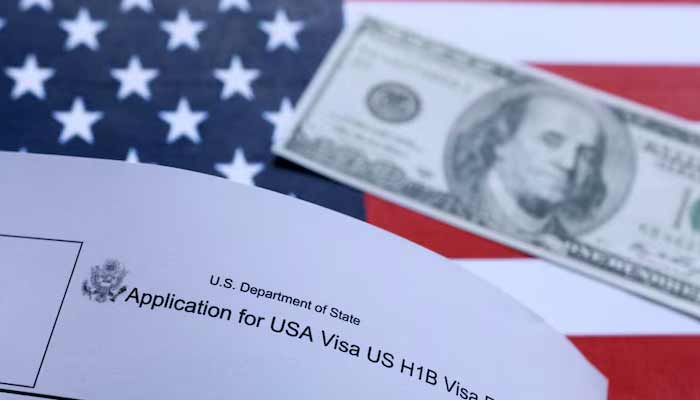
The Trump administration has proposed a new $103,265 fee for new H-1B visas, seeking to make permanent a measure that President Donald Trump first introduced last year. The proposal targets highly skilled foreign workers whose expertise is widely used by US technology companies, universities, research institutions and other employers.
The proposed regulation was released by the US Department of Homeland Security (DHS) on Monday and is expected to be formally published in the Federal Register on Tuesday. Once published, it will open a 30-day public comment period. The administration could finalise the rule by the end of 2026.
H-1B visa fee could rise dramatically
The proposed fee represents a major increase compared with the costs traditionally associated with H-1B visas. Depending on the circumstances, employers have typically paid around $2,000 to $5,000 in government fees for an H-1B application.
The H-1B programme allows US employers to hire foreign professionals for jobs requiring specialised knowledge or advanced technical expertise. The programme provides 65,000 visas each year, while an additional 20,000 places are available for foreign workers who hold advanced degrees from US institutions.
H-1B visas are generally approved for up to three years initially and can often be extended to a total period of six years, subject to applicable immigration rules.
The administration’s latest proposal follows Trump’s proclamation last year that introduced the more than $100,000 fee for certain new H-1B visas. That proclamation is due to expire in September, one year after it was issued. However, it instructed DHS to develop regulations aimed at establishing the fee on a longer-term basis.
Court challenges have blocked the fee
The proposed rule comes as the administration continues to defend the original fee in federal courts.
In June, a federal judge ruled that the fee was unlawful and prevented the Trump administration from collecting it. The decision is currently being reviewed by a Boston-based appeals court. Meanwhile, another court is considering a separate legal challenge brought by a major US business organisation.
The legal disputes centre on whether the president has the authority to impose such a substantial fee under existing immigration law.
US Court Strikes Down Immigrant Visa Suspension Affecting Pakistan, 74 Other Countries
Businesses and several states argue that presidential authority to restrict the entry of foreign nationals does not allow the administration to override the legislation establishing the H-1B programme. They also argue that DHS cannot impose fees or other revenue-generating charges without specific authorisation from Congress.
The administration, however, maintains that the charge is not a conventional tax and argues that courts have limited authority to interfere with the president’s power to regulate the entry of foreign nationals.
Businesses divided over H-1B programme
The H-1B programme has long been the subject of political and economic debate in the United States.
Trump and other critics argue that some companies use the programme to replace American workers with less expensive foreign employees. Business organisations, technology companies and other employers, however, say H-1B visas are essential because some specialised positions are difficult to fill with US workers alone.
The scale of the new fee could therefore have significant consequences for companies that depend heavily on international recruitment.
According to court filings, around 70 employers had paid the $100,000 fee for 85 visa applications by late February.
H-1B demand has already declined
The proposed fee comes amid a broader tightening of US immigration policies under the Trump administration.
US Citizenship and Immigration Services data showed that employers registered for approximately 344,000 H-1B visas last year, a decline of more than 25% from 2024. The figure was also less than half of the roughly 794,000 registrations recorded in 2023.
The administration has also introduced enhanced vetting of H-1B applicants and proposed changes to the visa selection process that would give greater preference to higher-skilled and higher-paid workers.
Earlier in August, DHS separately proposed fees of up to $4,500 for certain applications involving H-1B workers seeking to extend their stay or employees being transferred from other countries to the United States.
The latest $103,265 proposal is now subject to public scrutiny and legal uncertainty. Its ultimate impact will depend on the outcome of the ongoing court battles, the public comment process and whether the administration proceeds with a final rule later this year.