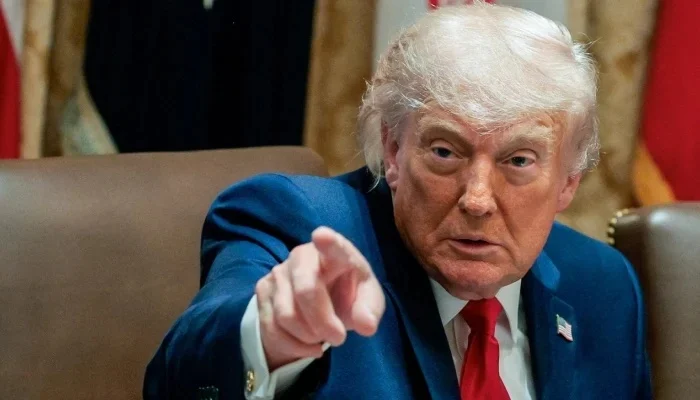
US President Donald Trump has announced what he described as the “most crushing economic operation ever taken against any country”, warning Iran and countries that continue to provide economic support to Tehran that they could face severe consequences.
In a post on Truth Social, Trump accused Iran of repeatedly rejecting opportunities to reach an agreement with his administration. He said the United States would now pursue what he called “Economic Warfare and Isolation on an unprecedented scale.”
The announcement marks another escalation in Washington’s pressure campaign against Tehran as tensions remain high over Iran’s nuclear programme, the conflict in the region and the strategic Strait of Hormuz.
Trump Warns Countries Supporting Iran
Trump said countries whose financial institutions, businesses, airports or government agencies continue to provide Iran with an economic “lifeline” would face what he described as “TREMENDOUS Economic Consequences.”
He specifically identified several areas that Washington intends to target, including oil smuggling, financial swap arrangements, cash transfers, exchange houses, ship registries and companies allegedly operating as fronts for Iranian interests.
“All needs to stop NOW,” Trump said, while calling the planned campaign an “ECONOMIC D-DAY.”
The US president also urged Washington’s allies to join the effort to isolate Iran economically, arguing that stronger international pressure would weaken Tehran’s ability to support militant groups and project influence beyond its borders.
Trump Reiterates Opposition to Iranian Nuclear Weapon
A central element of Trump’s message was Iran’s nuclear programme.
The US president again insisted that Iran would not be allowed to acquire a nuclear weapon, stating: “IRAN WILL NEVER HAVE A NUCLEAR WEAPON.”
His comments come amid continued disagreement between Washington and Tehran over the future of Iran’s nuclear activities and the conditions under which diplomatic negotiations could resume.
Trump has previously suggested that talks with Iran could take place “at some point,” although he has not provided a specific timeline or detailed conditions for renewed negotiations.
Tehran Says It Remains Open to Diplomacy
Despite the increasingly forceful language from Washington, Iranian officials have continued to say that diplomacy remains possible.
Iranian President Masoud Pezeshkian has emphasized that negotiations should not be interpreted as surrender. He has argued that any future talks should take place from a position of strength and focus on ending the conflict, easing what Tehran describes as a siege, releasing blocked resources and eventually addressing nuclear issues.
Trump says US could claim Strait of Hormuz as territory amid Iran conflict
Pezeshkian has also said that Iran’s objective is not war, while emphasizing the country’s determination to defend its territorial integrity.
Iranian Parliament Speaker Mohammad Bagher Ghalibaf, however, has taken a considerably tougher position. Speaking in Baghdad, he accused Washington of seeking to exploit the resources of countries across the region and described the United States as a major source of regional instability.
Strait of Hormuz Remains a Major Flashpoint
The Strait of Hormuz has also remained central to the confrontation.
Trump claimed that the strategically important waterway remained open despite what he described as an effective US naval blockade. He said vessels were continuing to pass through the strait and suggested that the situation could evolve further.
The waterway is critical to global energy markets because a substantial portion of international oil shipments passes through the Persian Gulf and the Strait of Hormuz.
Any prolonged disruption could therefore have consequences well beyond the countries directly involved in the confrontation, potentially affecting energy prices, shipping and global markets.
Pakistan and Iran Maintain Diplomatic Contact
While Washington and Tehran continue to exchange increasingly sharp statements, diplomatic channels in the region remain active.
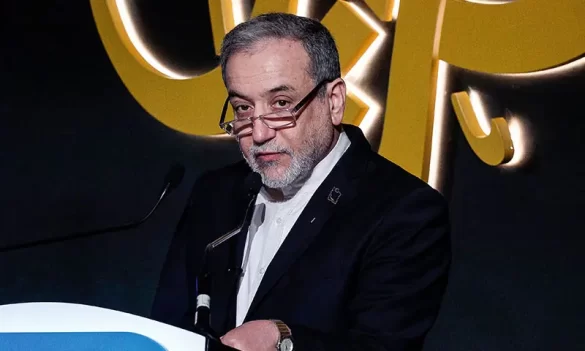
Iranian Foreign Minister Abbas Araghchi recently spoke by phone with Pakistan’s Chief of Defence Forces, Field Marshal Asim Munir. According to the Iranian government, the two officials discussed regional developments, diplomatic efforts and possible political solutions.
They also discussed ways to strengthen bilateral consultations and cooperation.
Pakistan has maintained diplomatic engagement with both regional and international actors, providing another channel for discussions as efforts continue to find a way out of the confrontation.
Economic Pressure Could Deepen Regional Tensions
Trump’s latest announcement signals a potentially broader economic campaign against Iran, extending beyond direct US sanctions to countries and businesses accused of helping Tehran maintain financial and commercial links with the outside world.
However, the effectiveness and consequences of such measures will depend heavily on how widely Washington’s allies cooperate and how Iran responds.
With the nuclear issue, the Strait of Hormuz and the wider regional conflict all intertwined, the competing positions of Washington and Tehran leave little indication of an immediate resolution.
For now, Trump is calling for maximum economic pressure and international isolation, while Tehran continues to insist that it is prepared for diplomacy but will not negotiate under what it considers conditions of weakness.