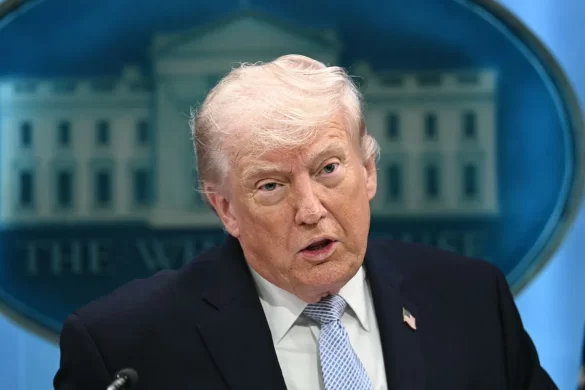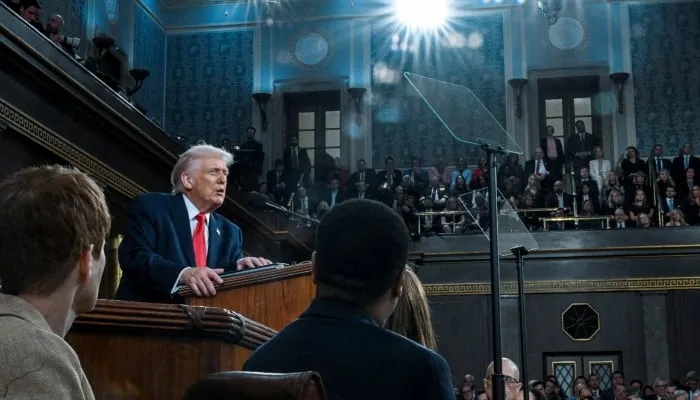
WASHINGTON: During his latest State of the Union address, US President Donald Trump laid out his justification for potential military action against Iran, while also promoting his economic record amid slipping approval ratings ahead of midterm elections.
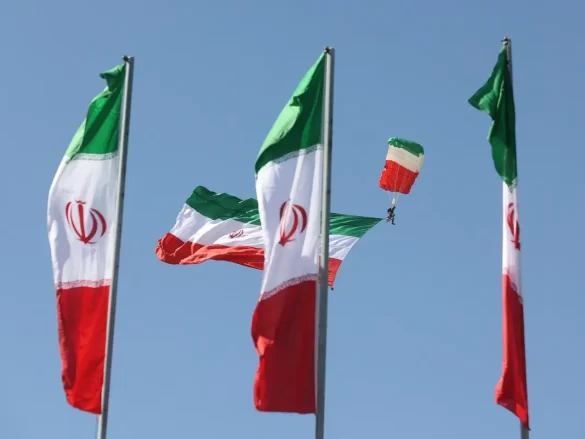
Speaking before a joint session of Congress, Trump said he would never allow what he described as the world’s leading state sponsor of terrorism to obtain a nuclear weapon. He accused Tehran of supporting militant proxies, suppressing protesters, and advancing its missile and nuclear programmes.
“The regime and its murderous proxies have spread nothing but terrorism and death and hate,” Trump said, adding that Iran was again pursuing nuclear ambitions.
Iran, however, maintains that its nuclear programme is intended for civilian energy purposes.
Military Buildup and Diplomatic Pressure
The speech came amid reports of a significant US military buildup in the Middle East, raising concerns about a potential confrontation. Trump expressed frustration that Iranian officials had not explicitly renounced nuclear weapons ambitions.
While emphasizing diplomacy as his preference, Trump stated he would not hesitate to confront threats to American security. He referenced previous US strikes on Iranian facilities and claimed Tehran was attempting to revive its nuclear efforts.
Iran signals willingness to compromise for nuclear deal with US
Public opinion appears cautious about deeper foreign entanglements. A January Reuters/Ipsos poll showed a majority of Americans believe the US military should only be used in response to a direct and imminent threat.
Economic Focus Amid Political Pressure
For much of the nearly two-hour address — the longest of his presidency — Trump concentrated on domestic achievements. He declared that the US had entered a “golden age,” pointing to tax cuts, stock market performance, and efforts to curb inflation.
“Our nation is back — bigger, better, richer and stronger than ever before,” he told supporters in Congress.
However, recent economic data has shown signs of slowing growth alongside persistent inflationary pressures. Polling cited in the report indicates that public approval of Trump’s handling of the economy remains mixed.
Clashes with Democrats
The speech featured sharp exchanges with Democratic lawmakers, particularly on immigration. Trump defended his administration’s crackdown and criticised Democrats for opposing funding measures tied to border enforcement.
Representative Ilhan Omar interrupted during the speech, accusing the administration of deadly consequences linked to enforcement actions. Representative Al Green was removed from the chamber after staging a protest for the second consecutive year.
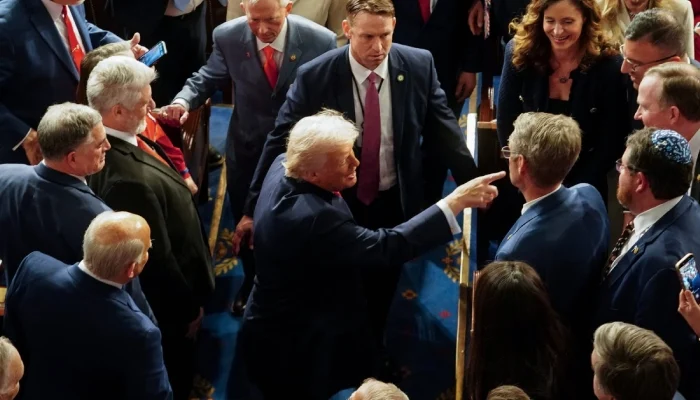
US President Donald Trump gestures as he leaves the House Chamber after his State of the Union address at the U.S. Capitol in Washington, DC, US, on February 24, 2026. — Reuters
Trump also criticised Democrats over voting legislation and revisited claims about election integrity — a longstanding point of contention between the parties.
Limited Detail on Iran Strategy
Despite strong rhetoric, Trump offered limited specifics regarding his next steps on Iran. While reaffirming a willingness to pursue diplomacy, he reiterated that preventing Iran from acquiring nuclear weapons remains a core objective of his administration.
The address underscored a balancing act: projecting strength abroad while seeking political momentum at home, as Republicans face a challenging midterm landscape and voters remain wary of both economic uncertainty and new foreign conflicts.