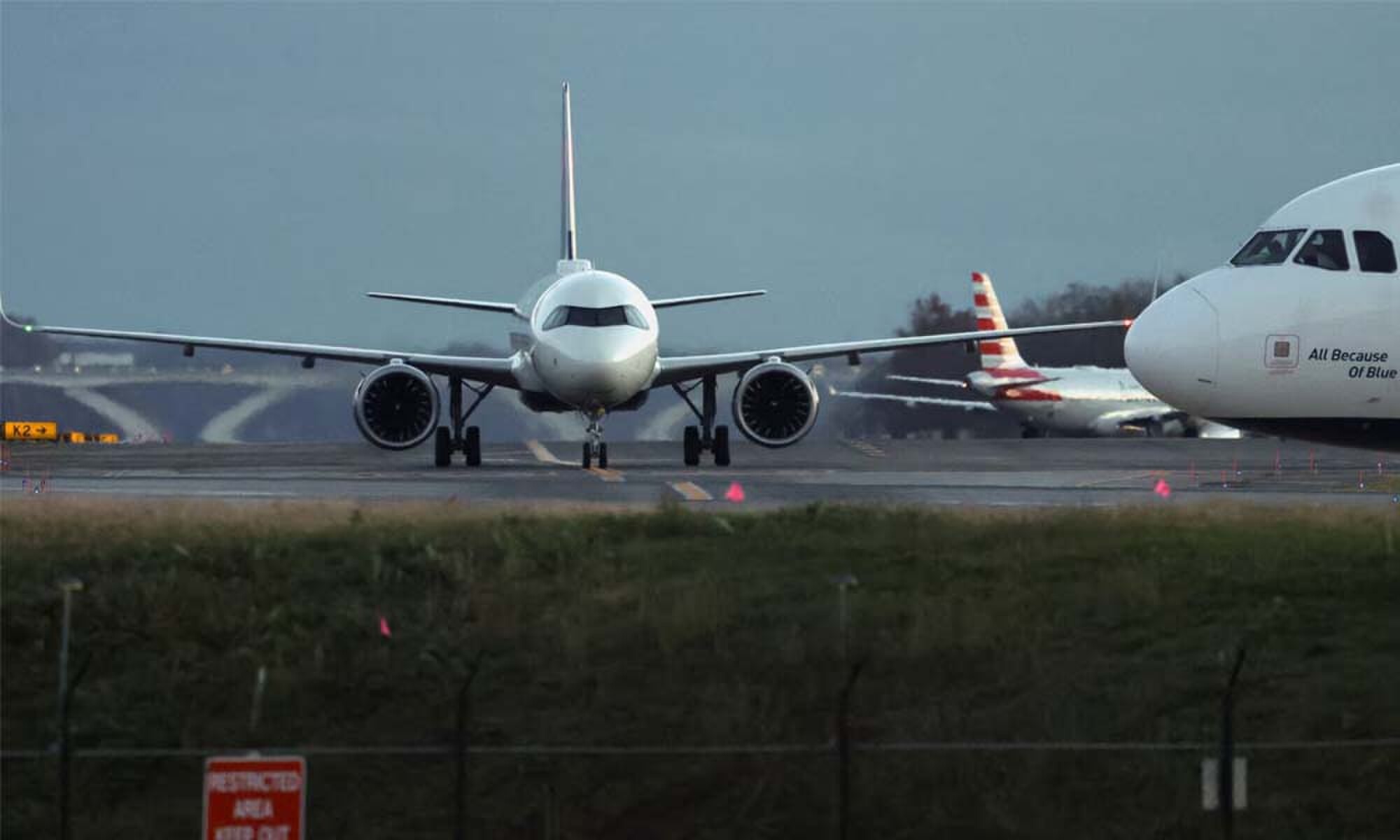
The Trump administration has increased its funding request for modernising the United States’ air traffic control system to $50 billion after a major communications failure disrupted flights across the country and forced aviation authorities to ground departing aircraft nationwide. Transportation Secretary Sean Duffy said the incident exposed serious weaknesses in outdated aviation infrastructure and highlighted the urgent need for a comprehensive technology upgrade.
Communications Failure Disrupts Thousands of Flights
The Federal Aviation Administration (FAA) lifted its nationwide ground stop on Friday, November 13, after a communications failure affected air traffic control centres across the United States.
The disruption began at approximately 3:36pm Eastern Time when problems with radar and communications systems affected air traffic control operations.
According to Duffy, outdated network switches and routers became overloaded with data, resulting in inconsistent information and prompting authorities to suspend departures as a safety precaution.
US airspace reopened at approximately 8:15pm Eastern Time, although officials warned that flight operations would take time to return to normal.
Nearly 10,000 flights had been cancelled by 11:30pm, according to flight-tracking website Flightradar24. Major airlines, including Delta Air Lines, American Airlines and United Airlines, were among those affected.
Thousands of passengers were stranded at airports, while airlines faced difficulties repositioning aircraft and crews.
Trump Administration Raises Funding Request to $50 Billion
Following the incident, Duffy said the administration was seeking $50 billion to modernise the country’s ageing air traffic control infrastructure.
Earlier on Friday, the White House and Department of Transportation had requested $30.1 billion from Congress for improvements to airports and aviation systems.
The revised $50 billion demand reflects the administration’s increased focus on replacing outdated equipment and preventing similar disruptions.
“This is an emergency,” Duffy said, emphasising the importance of having a reliable air traffic control system.
He also criticised the lack of sufficient congressional funding for modernisation, arguing that continued reliance on outdated technology was creating unnecessary risks for the aviation industry.
Where Will the Modernisation Funding Go?
The administration’s earlier $30.1 billion proposal included several major infrastructure investments.
According to a request submitted to lawmakers by Duffy and White House Office of Management and Budget Director Russell Vought, the proposed allocation included:
$10.1 billion for air traffic control modernisation.
$7.2 billion for a common automation platform and updated controller workstations.
$2 billion for cloud computing infrastructure.
$2 billion for replacing and improving FAA control towers.
$18 billion for airport-related infrastructure projects, including $10 billion to modernise or replace ageing terminals.
The administration has called on Congress to approve the funding quickly, arguing that the investment is necessary to improve aviation safety, communications reliability and airport operations.
Major US airlines, including American Airlines, Delta Air Lines, United Airlines and Southwest Airlines, have expressed support for the proposed funding.
Trump Administration Reportedly Plans to Deport Afghan Refugees to Pakistan
Ageing Technology Raises Concerns Over Aviation Safety
The latest incident has renewed concerns about the condition of America’s air traffic control infrastructure.
The FAA continues to rely on decades-old computer systems and outdated technology in several areas of its operations. Some facilities also use legacy equipment for critical aviation information.
Last week, the agency announced plans to replace floppy disks used for weather and other essential information at more than 400 air traffic control facilities by the end of 2028.
The administration has also reported that 68% of the FAA’s legacy copper telecommunications network has been replaced with high-speed fibre infrastructure.
Congress previously approved $12.5 billion over five years in July 2025 to improve air traffic control technology and increase the recruitment of air traffic controllers.
However, repeated technical failures and flight disruptions have intensified calls for faster and more comprehensive reforms.
Officials Rule Out Cyberattack as Initial Cause
Homeland Security Secretary Markwayne Mullin said investigators had found no evidence that the latest communications failure resulted from a cyberattack or an artificial intelligence-related incident.
He said the initial findings suggested a mechanical problem, although investigations were continuing.
The National Security Agency was also working with the Department of Homeland Security to examine the incident.
Two airline officials reportedly said the disruption appeared to involve a telecommunications network overseen by L3Harris Technologies, which handles critical radio frequencies used by air traffic controllers to communicate with pilots.
The company had not publicly responded to requests for comment at the time of the report.
Airlines Face Delays as Operations Gradually Recover
Although the FAA lifted the nationwide ground stop, the impact continued beyond the restoration of airspace operations.
Airlines had to reorganise schedules, reposition aircraft and arrange crews to manage the backlog of disrupted flights.
The incident has added to a series of aviation infrastructure problems in the United States, including communications failures in September that caused thousands of delays and cancellations across the northeastern region.
The Trump administration is now urging Congress to approve additional funding before Democrats take control of Congress in January.
The latest disruption has strengthened the argument that modernising the country’s air traffic control system is no longer simply an infrastructure priority but an urgent operational and safety requirement.
Sources: The Express Tribune and Reuters, including reporting published on November 13–14, 2026.