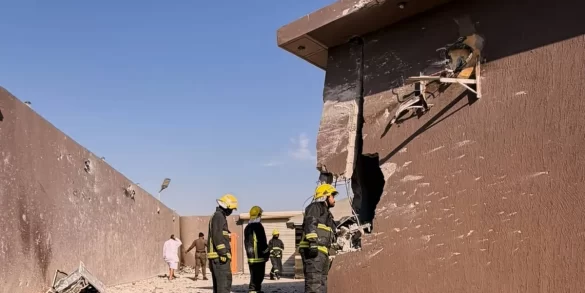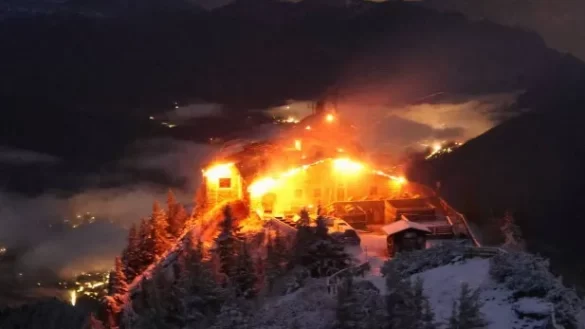
Violent protests have erupted in northeastern India over a proposed Himalayan mega-dam, with demonstrators reportedly throwing stones at police, vandalising government and company offices, and setting buildings on fire, officials said.
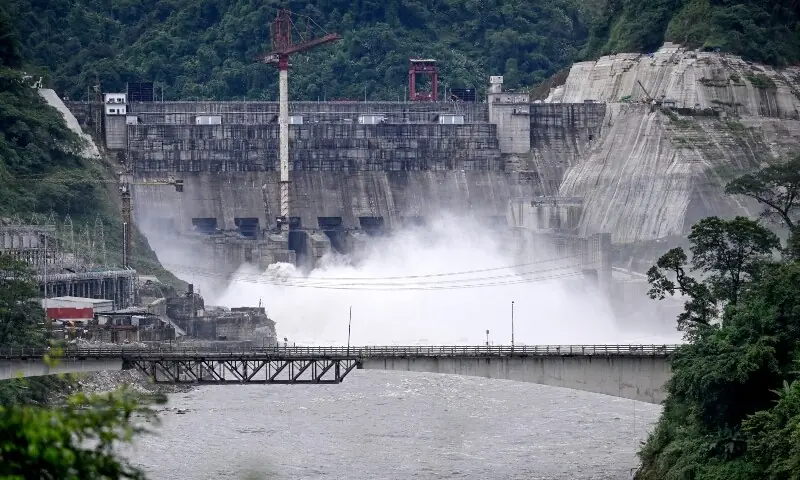
The unrest broke out late Friday in Arunachal Pradesh during demonstrations against the proposed Siang Upper Multipurpose Project, an 11,200-megawatt hydropower scheme planned by state-run company NHPC.
Chief Minister Pema Khandu described the damage at a news briefing on Saturday, saying that protesters had vandalised the NHPC office, damaged a police station and ransacked the homes of several elected representatives.
Around 40 police personnel were injured after protesters threw stones, according to officials. Police used tear gas to disperse the crowd as the situation escalated.
Khandu urged opponents to raise their concerns through dialogue rather than violence.
“Question us, have dialogue with us, instead of violence,” he said.
Why India Wants to Build the Mega-Dam
The proposed Siang Upper Multipurpose Project is intended to generate electricity and provide India with greater control over water storage and management in a strategically important border region.
Indian authorities have linked the project to concerns about China’s planned Yaxia hydropower scheme in Tibet, reportedly valued at $167 billion and expected to become one of the world’s largest hydropower projects.
New Delhi fears that large-scale water infrastructure upstream in Tibet could affect river flows into India, particularly during periods of changing seasonal conditions.
Indian officials say the proposed dam would create a large reservoir that could help regulate water flows into the Brahmaputra River, which is known as the Yarlung Tsangpo in Tibet.
China, however, has said its project will have no negative impact on downstream areas.
The competing projects highlight how water resources and hydropower development have become increasingly important strategic issues between the two countries.
Local Communities Fear Displacement
Despite the Indian government’s strategic and energy-related arguments, the proposed dam has faced strong opposition from local communities.
Residents fear that the project could lead to the loss of homes, land and livelihoods, while large-scale construction could also affect the region’s environment and traditional ways of life.
The latest violence reflects the difficulties authorities face in advancing major infrastructure projects in sensitive Himalayan areas where local communities have raised concerns about their future.
Khandu has called on opponents to engage with the government, but the clashes demonstrate the depth of resistance to the proposal.
The project’s long-term impact will depend on its final design, environmental implications, land requirements and how authorities address the concerns of affected communities.
India-China Border Dispute Adds to Tensions
The dam dispute is unfolding against the backdrop of longstanding tensions between India and China, which share a disputed Himalayan border monitored by tens of thousands of troops.
China claims Arunachal Pradesh as part of southern Tibet, while India maintains that the state is an integral part of its territory.
The competing territorial claims have contributed to recurring military and diplomatic tensions along the border.
Mohmand Dam Cost Surges 115% to Rs666 Billion as CDWP Defers Decision
India’s Foreign Ministry said on Friday that both countries remained in regular contact to manage the situation following reports of encounters between Indian and Chinese forces.
Foreign Ministry spokesperson Randhir Jaiswal said border conditions sometimes become disturbed when Chinese forces depart from established patrolling patterns.
He added that both sides continued to use existing diplomatic and military mechanisms to resolve outstanding issues and prevent misunderstandings or miscalculations.
Water Security Becomes a Strategic Concern
The proposed Indian dam illustrates the growing connection between energy development, water security and regional geopolitics.
For India, the project is intended to strengthen hydropower capacity and improve the management of river flows originating in Tibet. For China, its own hydropower development forms part of its broader infrastructure expansion in the region.
However, the competing plans have raised concerns over the potential environmental, social and strategic consequences of large-scale dam construction in the Himalayas.
As India seeks to advance the Siang Upper Multipurpose Project, authorities face the challenge of addressing local opposition while managing broader concerns linked to China’s upstream infrastructure and the disputed border.
The latest clashes underscore how a major infrastructure proposal can become a flashpoint involving local livelihoods, environmental concerns and the wider rivalry between Asia’s two largest countries.