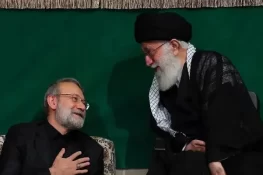
The reported assassination of veteran Iranian politician Ali Larijani marks a significant turning point for Iran’s political and security landscape. Long regarded as one of the most influential figures in the Islamic Republic, his absence leaves a deep void in Tehran’s decision-making circles, particularly in national security, diplomacy, and nuclear policy.
Iranian media confirmed that Larijani was martyred at the age of 67, while Israeli Defence Minister Israel Katz stated that he was killed in an Israeli strike. His death comes at a time of heightened regional tensions and internal power shifts following the reported killing of Supreme Leader Ali Khamenei in an airstrike last month.
Architect of Iran’s strategic doctrine
Larijani was widely seen as an architect of Iran’s modern statecraft. A close confidant of Khamenei, he played a central role in shaping Tehran’s policies on nuclear development, regional alliances, and internal security.
Over decades, he held several key positions — from commander in the Islamic Revolutionary Guard Corps during the Iran-Iraq War to head of state broadcaster Islamic Republic of Iran Broadcasting, secretary of the Supreme National Security Council, and speaker of parliament for 12 years.
His influence extended across multiple domains:
- Leading sensitive nuclear negotiations with Western powers
- Managing Iran’s ties with allies such as Russia and China
- Overseeing responses to domestic unrest
Even in his final months, he remained active, warning against external aggression and internal dissent as tensions escalated following U.S.-Israeli strikes on Iran.
A legacy shaped by revolution and war
Born in 1958 in Najaf, Larijani came from a prominent clerical family deeply tied to Iran’s revolutionary movement. After the Iranian Revolution brought Ruhollah Khomeini to power, Larijani joined the newly formed Revolutionary Guards.
The Iran-Iraq War became a defining period in his career, where he rose through the ranks as a key organizational commander. This experience, combined with his family’s influence, helped cement his long-term role within Iran’s power structure.
Post-war, he transitioned into politics and media, serving as culture minister and later as head of IRIB — a powerful institution in shaping public opinion in Iran.
Iran has confirmed that Ali Larijani has been killed, making him the highest-ranking official assassinated since Supreme Leader Ali Khamenei. A central figure, he shaped Iran’s politics for decades. pic.twitter.com/B4CUTSdZRx
— Al Jazeera Breaking News (@AJENews) March 17, 2026
Chief nuclear negotiator and global interlocutor
As Iran’s chief nuclear negotiator from 2005 to 2007, Larijani defended Tehran’s right to uranium enrichment amid growing international pressure. He was instrumental in navigating the crisis that followed revelations about undisclosed nuclear facilities in 2003.
Though considered pragmatic, he remained firm on Iran’s red lines, famously rejecting Western incentives to halt nuclear activity. His diplomatic engagements included high-level meetings with Russian President Vladimir Putin and efforts to deepen ties with China, culminating in a long-term cooperation agreement in 2021.
As parliament speaker, he also played a role in facilitating the 2015 nuclear deal, later undermined when U.S. President Donald Trump withdrew from the agreement in 2018.
Power shifts after Khamenei
Even before his death, Larijani’s influence was facing challenges. Following Khamenei’s reported killing, Iran’s power structure began shifting increasingly toward the Revolutionary Guards, reducing the role of traditional political figures.
Larijani, once a central strategist and communicator of the supreme leader’s vision, was navigating a rapidly changing landscape where military institutions were gaining dominance over civilian leadership.
End of an era
The death of Ali Larijani represents more than the loss of a senior السياسي — it marks the نهاية ایک پورے دور کی۔
بسم الله الرحمن الرحیم
ملت عزیز و سربلند ایران!
الشعوب المسلمة وأحرار العالم:
«بندهی خدا، به خدا پیوست.»
لقد لحق عبدٌ من عباد الله بربّه شهيدًا. pic.twitter.com/G1kZUqbg1L— Ali Larijani | علی لاریجانی (@alilarijani_ir) March 17, 2026
For decades, he embodied the blend of ideology, pragmatism, and strategic thinking that defined Iran’s leadership. His ability to engage with global powers while maintaining loyalty to the النظام made him a unique figure in Iranian politics.
With his passing, Iran not only loses an experienced statesman but also a key bridge between its revolutionary foundations and modern geopolitical challenges.