The freedom to travel across borders is increasingly seen as a measure of global standing. Every year, the Henley Passport Index, compiled by London-based Henley & Partners, ranks passports based on travel access. In this context, the latest rankings for January–June 2026 again reveal deep inequalities in global mobility.
Also Read: Pakistani Passport Falls in Global Rankings, Now on Par with Yemen
While citizens of some countries enjoy almost unrestricted movement, others, including Pakistan, continue to face strict limitations. Unfortunately, Pakistan once again appears among the weakest passports worldwide.
What Is the Henley Passport Index?
The Henley Passport Index is considered one of the most reliable passport rankings globally. Importantly, it relies on data from the International Air Transport Association (IATA), which manages the world’s largest travel database.
Specifically, the index counts how many destinations passport holders can enter without a prior visa or with a visa on arrival. As a result, higher scores indicate stronger diplomatic access. Moreover, these rankings often reflect political stability, security perceptions, and international trust.
Singapore Retains the Top Position
According to the 2026 index, Singapore holds the world’s most powerful passport. Notably, Singaporean citizens can access 192 destinations without requiring a prior visa. This figure remains the highest globally.
Consequently, Singapore’s position reflects its strong diplomacy, stable governance, and global credibility. Over the past decade, the country has consistently remained at or near the top of passport rankings.
Asia Continues to Lead Global Mobility
Asian nations continue to dominate the upper tiers of the index. In particular, Japan and South Korea share second place. Their citizens enjoy visa-free or visa-on-arrival access to 188 countries.
Meanwhile, Europe follows closely. Denmark, Luxembourg, Sweden, Spain, and Switzerland jointly hold third place. Together, they provide access to 186 destinations, reinforcing Europe’s long-standing mobility advantage.
Europe and Developed Nations Remain Strong
At fourth place, a large group of European countries stands together. These include France, Germany, Italy, the Netherlands, Norway, Finland, Greece, Belgium, Ireland, and Austria. Collectively, their citizens can travel to 185 destinations without advance visas.
In addition, the United Arab Emirates continues its upward trend. Alongside Hungary, Portugal, Slovakia, and Slovenia, the UAE ranks fifth. As a result, its passport now allows access to 184 destinations. Notably, this marks a dramatic improvement compared to two decades ago.
Pakistan Among the Weakest Passports Globally
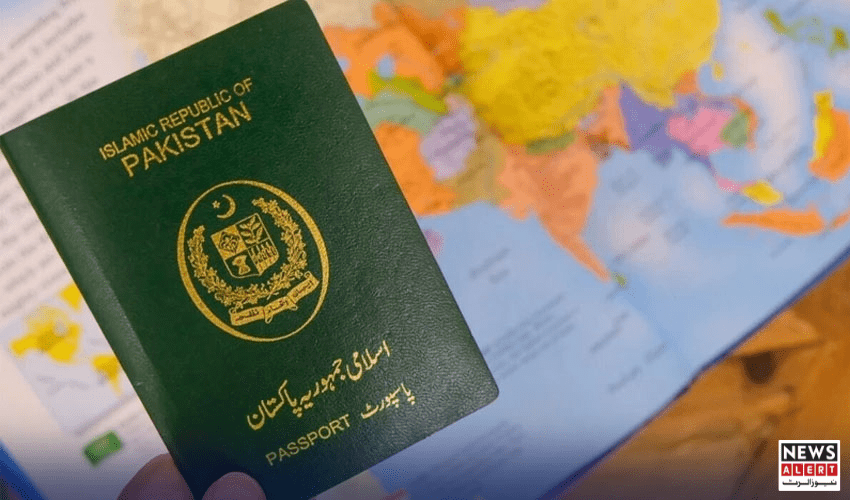
In contrast, Pakistan’s passport remains near the bottom of the rankings. According to the Henley Passport Index 2026, Pakistan is placed at 98th position. Therefore, it is classified as the fourth weakest passport worldwide.
Pakistani passport holders can currently travel to only 31 countries visa-free or with a visa on arrival. At the same time, Yemen shares the same ranking. Below Pakistan, Iraq ranks 99th, Syria 100th, and Afghanistan 101st.
Pakistan’s Position in the Regional Context
Regionally, Pakistan continues to trail several neighboring countries. Somalia ranks slightly higher at 97, while Nepal stands at 96. Furthermore, Bangladesh performs significantly better at 84.
Among larger regional players, India ranks 80th, China 59th, Iran 92nd, and Saudi Arabia 54th. Taken together, these rankings highlight clear differences in diplomatic reach across the region.
Why Passport Strength Matters
Experts emphasize that passport power goes beyond travel convenience. Instead, it reflects diplomatic relations, economic credibility, and political stability.
For Pakistan, the current ranking signals broader challenges. Limited mobility affects students, professionals, and business communities. Moreover, it can discourage foreign investment and global engagement. Therefore, analysts argue that improving passport strength requires consistent diplomacy, internal stability, and improved global perceptions.
A Reflection of Global Confidence
Ultimately, the Henley Passport Index acts as a measure of international trust. While top-ranked countries benefit from openness and confidence, weaker passports indicate caution. For Pakistan, the 2026 rankings underline the need for long-term reforms to improve its global standing and restore international confidence.