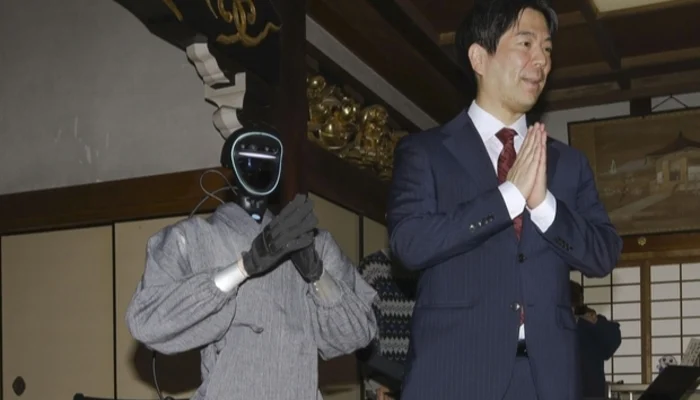
Researchers at Kyoto University have introduced an AI-powered robot monk designed to provide spiritual guidance and potentially help address a shortage of human clergy in Japan’s ageing society.
The two-legged humanoid, nicknamed “Buddharoid,” has been trained on Buddhist scriptures — including highly specialized texts — and is capable of answering sensitive personal questions. Developers say it may be especially helpful for individuals who feel uncomfortable discussing personal concerns with other people.
Blending AI and Robotics
The project is led by Professor Seiji Kumagai of the university’s Institute for the Future of Human Society.
The robot integrates updated “BuddhaBotPlus” software — built using AI models from companies including OpenAI — with a Chinese-made Unitree G1 humanoid platform.
During a media demonstration at a temple, the grey-clad robot walked, placed its hands together in prayer, and responded to questions from journalists. In one exchange with a reporter from NHK, the robot offered advice rooted in Buddhist teachings about calming the mind and not being overly driven by intrusive thoughts.
Indian University Faces Backlash for Presenting Chinese Robot as Its Own
A Growing Trend in Religious AI
AI-powered religious chatbots are already used across multiple faiths worldwide, though they remain controversial in some communities. Kyoto previously unveiled “Mindar,” a non-AI android that delivers sermons, while other countries have experimented with robotic religious figures capable of offering blessings.
What distinguishes Buddharoid is its combination of conversational AI and physical humanoid movement, allowing it to engage in spiritual dialogue while maintaining a physical presence in temples.
Ethical and Cultural Questions
Kyoto University acknowledged that ethical discussions are ongoing about how such technologies should be used in religious contexts. However, Japan’s shrinking and ageing population — which has strained various sectors, including religious institutions — may increase demand for technological assistance.
Researchers suggest that in the future, AI humanoids could assist with or even perform certain religious rituals traditionally conducted by human priests, potentially reshaping aspects of religious culture.
Whether embraced as a helpful innovation or viewed with caution, the AI monk represents a significant step in the merging of artificial intelligence, robotics, and spiritual life.