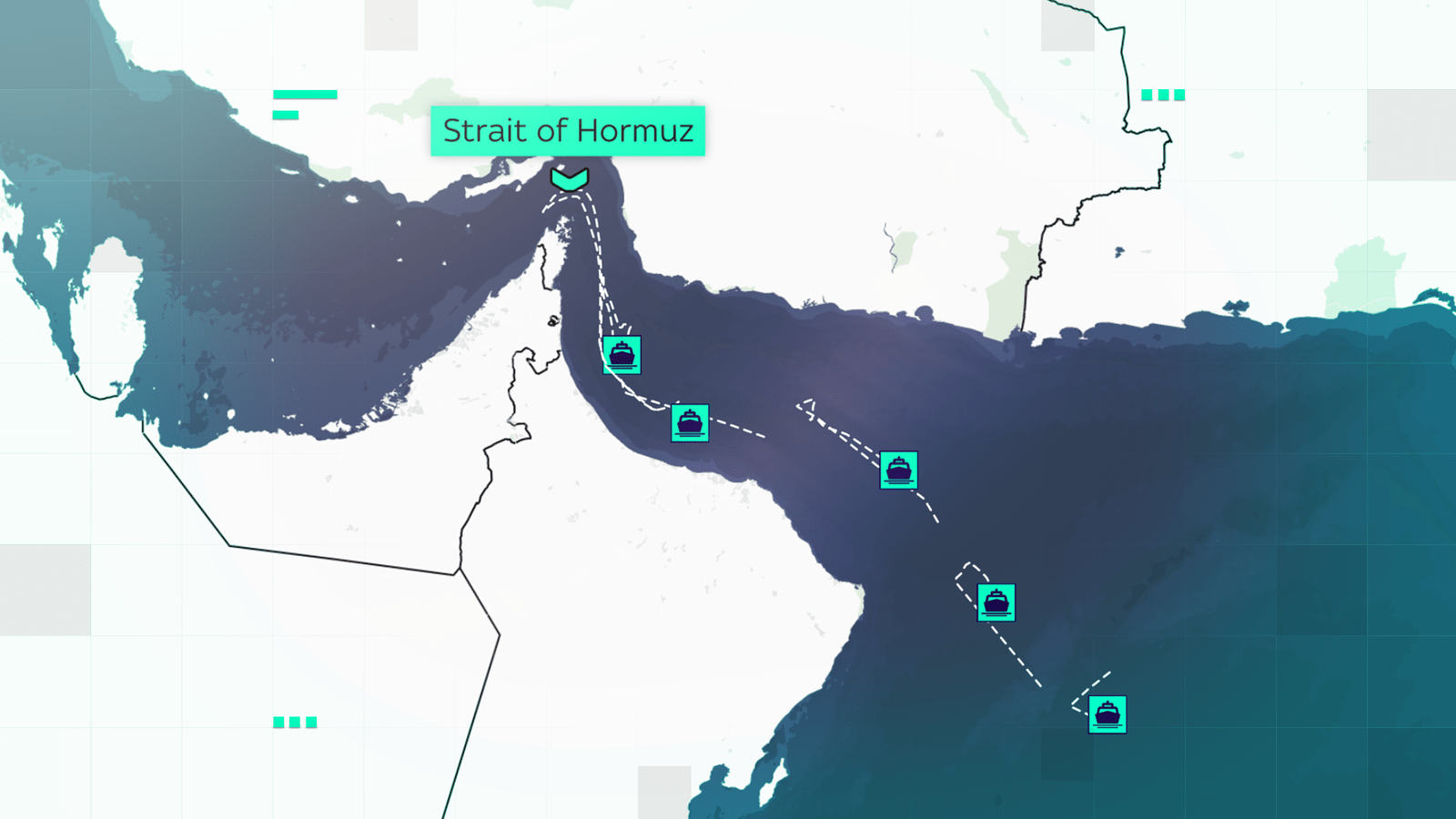
A number of oil and commercial tankers briefly crossed the Strait of Hormuz before new restrictions were reportedly reimposed, according to ship-tracking data and maritime sources.
The developments highlight ongoing instability in one of the world’s most critical energy transit routes.
Temporary Movement After Blockade Lifted
Ship-tracking data indicated that more than a dozen tankers, including several sanctioned vessels, passed through the Strait after a reported 50-day blockade was temporarily lifted on Friday.
The vessels reportedly moved through the narrow waterway during a short window of eased restrictions before conditions changed again.
Iran’s Position on Limited Passage
According to a spokesperson for the Islamic Revolutionary Guard Corps, arrangements had been made to allow limited passage of oil tankers and commercial ships following prior understandings reached during negotiations.
However, the situation shifted quickly, with maritime sources reporting that new instructions were later issued.
Renewed Restrictions and Radio Warnings
Shipping sources stated that some merchant vessels received radio communications from Iran’s naval authorities informing them that the Strait was closed again and that no further ships were permitted to pass.
This sudden reversal added to uncertainty for commercial shipping operators already navigating a volatile security environment.
Trump Demands Iran Reopen Strait, Calls It the “Strait of Trump”
LNG Tankers Reported Near Entry Point
Tracking data also showed that at least five liquefied natural gas (LNG) tankers from Qatar’s Ras Laffan terminal were approaching the Strait on Saturday morning when the new restrictions were reported.
These movements underscore the strategic importance of the route for global energy supplies, particularly for LNG exports from the Gulf region.
Strategic Importance of the Waterway
The Strait of Hormuz remains one of the most vital maritime chokepoints globally, handling a significant portion of international oil and gas shipments.
Even temporary disruptions can have immediate effects on energy markets, insurance costs, and global supply chains.
Uncertain Maritime Conditions
With restrictions appearing to change rapidly, shipping companies are closely monitoring the situation to assess risks and adjust routing decisions.
Analysts say the fluctuating access to the Strait reflects broader regional tensions and highlights the fragility of maritime stability in the Gulf.