Negotiating teams from the United States and Iran are expected to travel to Doha this week, but uncertainty remains over whether the two sides will hold direct talks as tensions continue following recent military exchanges.
Although both countries are sending delegations to Qatar, Iran’s Foreign Ministry has stated that no negotiations with the United States are scheduled in the coming days.
Foreign Ministry spokesperson Esmaeil Baghaei said Iran’s technical delegation would be in Qatar, but stressed that its visit was unrelated to the presence of the American team.
“We will not have any negotiation meetings at any level with the American side in the coming days,” Baghaei said.
US Sends Senior Negotiating Team
According to White House Press Secretary Karoline Leavitt, US President Donald Trump has appointed his son-in-law Jared Kushner and Special Envoy Steve Witkoff to lead the American delegation.
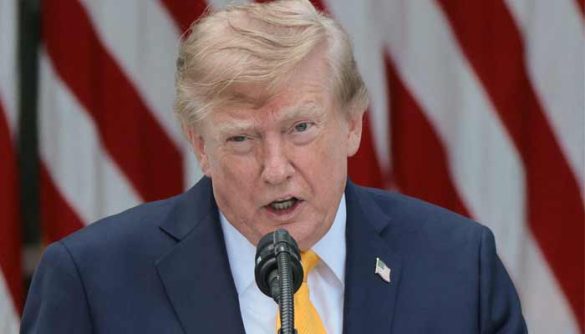
President Trump acknowledged the uncertainty surrounding the diplomatic efforts, telling reporters at the White House that the Doha meeting “may be important, perhaps not,” while reiterating that preventing Iran from acquiring a nuclear weapon remains a key US objective.
The differing public statements from Washington and Tehran underscore the fragile state of the June 17 interim agreement aimed at reducing tensions in the region.
Ceasefire Faces Fresh Challenges
The current diplomatic efforts follow several days of renewed military exchanges that have tested the interim ceasefire reached earlier this month.
The 14-point Memorandum of Understanding (MoU) gave both sides at least 60 days to implement confidence-building measures, reopen maritime traffic through the Strait of Hormuz, discuss Iran’s nuclear programme, and work toward a permanent ceasefire.
However, progress has been slow, with both Washington and Tehran accusing each other of violating the agreement.
The conflict has significantly disrupted shipping through the Strait of Hormuz, one of the world’s most important energy corridors, contributing to higher global oil prices and renewed concerns over international energy security.
Iran and US Agree to Halt Hostilities, Resume Talks on Strait of Hormuz
Separate Meetings with Mediators Expected
A senior Iranian official said discussions are expected to take place in Doha on Tuesday, although the focus would primarily be on managing tensions in the Strait of Hormuz rather than broader political negotiations.
Another official familiar with the planning said technical teams from both countries are expected to meet separately with Qatari and Pakistani mediators on Wednesday instead of holding direct bilateral talks.
These reports suggest that indirect diplomacy may continue even if face-to-face negotiations between the United States and Iran do not take place immediately.
Strait of Hormuz Remains Central Issue
The Strait of Hormuz continues to be at the centre of the dispute.
Iran has maintained that it intends to retain full control over the strategic waterway, including responsibility for all demining operations. Tehran has also indicated that it plans to impose transit fees on vessels using the strait and has warned ships against deviating from designated navigation routes.
Meanwhile, French President Emmanuel Macron said France was working with Oman and international partners to help reduce tensions and support demining efforts in the region.
Iran’s Deputy Foreign Minister Kazem Gharibabadi rejected that proposal, insisting that mine-clearance operations should be conducted exclusively by Iran under the terms of the interim agreement.
Frozen Assets and Political Debate in Washington
Iranian President Masoud Pezeshkian announced that $6 billion of Iran’s $12 billion in frozen assets held in Qatar would be released and returned to Tehran.
He described the interim memorandum as “a great victory for the Iranian people,” noting that it also includes US sanctions waivers covering parts of Iran’s oil and petrochemical sectors.
The reported release of Iranian assets has sparked political debate in Washington. While some Republican lawmakers described recent congressional briefings by US officials as constructive, senior Democratic leaders criticized the administration for providing limited details and questioned the concessions being offered to Tehran.
With military tensions still unresolved and both sides presenting conflicting accounts of the diplomatic process, the success of the Doha initiative remains uncertain. Even so, continued engagement through mediators is viewed as an important step toward preventing further escalation and preserving the fragile ceasefire.