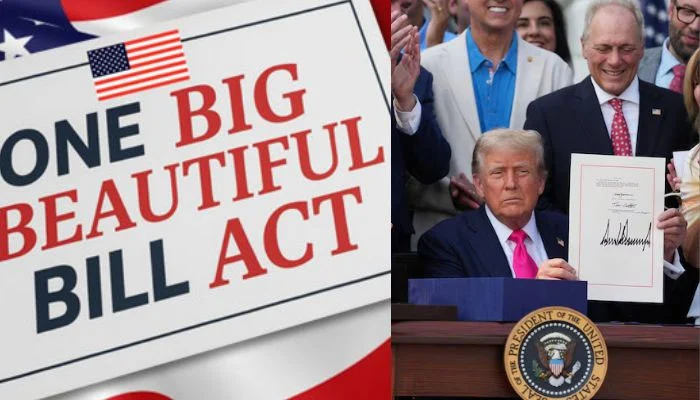
Millions of student loan borrowers across the United States are facing significant changes as the student loan provisions of President Donald Trump’s One Big Beautiful Bill Act take effect on July 1, 2026.
According to the U.S. Department of Education, the reforms are designed to simplify the federal student loan system by introducing new repayment options, setting clearer borrowing limits, and strengthening the long-term sustainability of the federal student loan program.
For current and future borrowers, the changes could affect monthly payments, repayment timelines, and the availability of existing income-driven repayment plans.
Why the Changes Matter
Federal student loans play a crucial role in helping Americans finance higher education. According to the Federal Student Aid office, approximately 43 million borrowers collectively owe around $1.7 trillion in federal student loan debt as of March 2026.
Because of the size of the federal loan portfolio, even relatively small policy changes can have a significant financial impact on millions of households.
Borrowers currently enrolled in certain repayment programs will need to review their options carefully, while new borrowers will enter a simplified repayment system created under the new law.
Two New Repayment Options
The legislation introduces two primary repayment plans for new federal student loan borrowers.
Tiered Standard Repayment Plan
Under the new Tiered Standard Repayment Plan, borrowers will repay their loans over a period ranging from 10 to 25 years, depending on the total amount borrowed.
Those with larger loan balances will qualify for longer repayment terms, helping reduce their monthly payments while extending the repayment period.
US Proposes Visa Time Limits for Foreign Students and Journalists
Repayment Assistance Plan (RAP)
The law also establishes the Repayment Assistance Plan (RAP), a new income-driven repayment option.
Under RAP, monthly payments will be calculated based on a borrower’s income and the number of dependents, with the goal of making repayments more affordable for lower-income households.
What Happens to SAVE Plan Borrowers?
Borrowers currently enrolled in the Saving on a Valuable Education (SAVE) Plan will be required to switch to another eligible repayment plan within 90 days of July 1, 2026.
Those who fail to choose a new option within the required period will automatically be enrolled in the new standard repayment plan.
Borrowers who do not expect to take out additional federal student loans may still have several repayment choices available during the transition.
Older Repayment Plans Will Be Phased Out
The reforms also begin phasing out two long-standing federal repayment programs:
- Income-Contingent Repayment (ICR)
- Pay As You Earn (PAYE)
Both plans are scheduled to be discontinued by July 1, 2028, after which new enrollment will no longer be available.
What It Means for Borrowers
The new rules are intended to simplify a federal student loan system that has grown increasingly complex over the years. While some borrowers may benefit from longer repayment periods or income-based monthly payments, others could face higher monthly costs or fewer repayment options than under previous programs.
Current borrowers are encouraged to review their repayment status and understand how the new regulations apply to their individual circumstances before making any changes to their loan repayment plans.