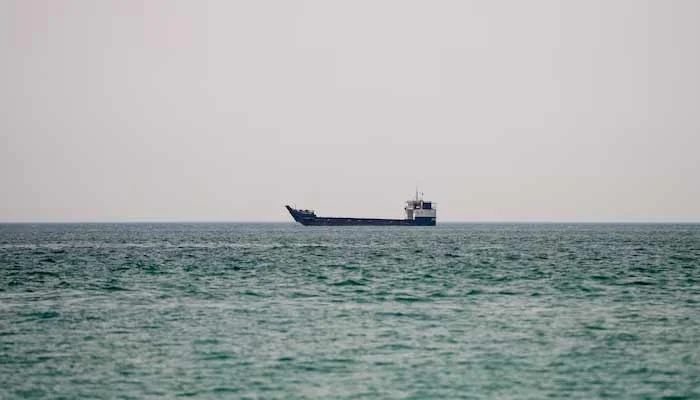
Major international shipping companies and maritime labour unions have decided to continue classifying the Strait of Hormuz as a warlike operations area, despite the ceasefire between Iran and the United States.
The decision follows fresh attacks on two commercial vessels after the ceasefire, highlighting ongoing security risks for ships and their crews navigating one of the world’s most important energy shipping routes.
Security Risks Remain High
In a joint statement issued on Wednesday, the International Transport Workers’ Federation (ITF) and the Joint Negotiating Group (JNG) said the designation would remain in force until at least July 9, after which it will be reviewed on a weekly basis.
The organisations said the decision reflects the continuing danger to seafarers and the rapidly changing security situation in the region.
A source familiar with the discussions told AFP that the designation might have been lifted this week if commercial shipping had continued without further incidents. However, attacks on two separate vessels since last Thursday convinced industry representatives that the threat level remains too high.
What the Designation Means
The Strait of Hormuz was first designated a warlike operations area on March 5, after attacks on vessels attempting to transit the strategic waterway.
The classification applies to ships whose owners are signatories to the International Bargaining Forum (IBF) labour agreements, covering approximately 15,000 commercial vessels worldwide.
Under these agreements, seafarers operating in designated war-risk areas are entitled to additional protections, including double pay, enhanced insurance coverage, and the right to refuse assignments in particularly dangerous circumstances. While these measures provide greater protection for crews, they also increase operating costs for shipping companies.
Iran and US Agree to Halt Hostilities, Resume Talks on Strait of Hormuz
Conflict Has Disrupted Global Shipping
Commercial shipping through the Strait of Hormuz has faced significant disruption since March 1, when Iran closed the waterway following U.S. and Israeli military strikes, according to the report.
The conflict has had serious consequences for the maritime industry, with at least 14 seafarers reported killed and more than 40 commercial vessels attacked during the period of heightened tensions.
The latest reported attacks occurred on Thursday and Saturday of last week, reinforcing concerns that the ceasefire has not fully eliminated the risks facing merchant vessels in the region.
Vital Global Energy Route
The Strait of Hormuz is one of the world’s most strategically important maritime chokepoints, linking the Persian Gulf with the Gulf of Oman and the Arabian Sea. A substantial share of globally traded crude oil and liquefied natural gas passes through the narrow waterway each day, making any disruption a concern for international energy markets and global supply chains.
The continued security threats have also affected humanitarian efforts. According to the report, the International Maritime Organization (IMO) has suspended a recently announced plan to evacuate approximately 11,000 seafarers who remain stranded in the Gulf until conditions improve.
The latest decision by shipping companies and maritime unions underscores that, despite the ceasefire, the industry continues to view the Strait of Hormuz as a high-risk operating environment requiring enhanced safety measures and ongoing monitoring.