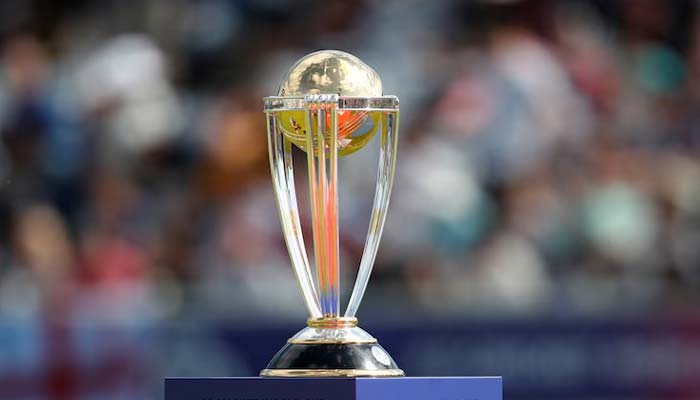
KARACHI: The International Cricket Council (ICC) has approved sweeping changes to the formats of its premier men’s global tournaments following its annual Board meetings in Edinburgh.
The decisions, based on recommendations from the ICC Chief Executives’ Committee, are intended to increase the competitiveness of matches, ensure every game has greater significance and enhance the overall experience for players, teams and fans.
Alongside the revised tournament structures, the ICC Board also approved the qualification pathway for the 2028 ICC Men’s T20 World Cup.
ODI World Cup to Feature Three-Stage Format
Although the ICC Men’s Cricket World Cup will continue to feature 14 teams, the tournament will now follow a new three-stage format before the knockout rounds.
Opening Super Series
Under the revised structure, the teams ranked 12th, 13th and 14th will first compete in a round-robin “Super Series.”
The winner of this preliminary stage will qualify for the main tournament.
Group Stage
The second phase will consist of two groups of six teams each.
At the end of the group stage:
- The top three teams from each group will qualify automatically.
- The next highest-ranked team across both groups will also progress.
This will create a new “Super 7” stage featuring seven teams.
Super 7 and Knockout Stage
The Super 7 will be played in a round-robin format.
The top four teams at the end of this stage will advance to the semi-finals, where:
- 1st place will face 4th place
- 2nd place will play 3rd place
The winners of the semi-finals will then compete in the World Cup final.
According to the ICC, the revised format is designed to ensure that every match—from the opening fixture to the championship decider—carries meaningful consequences while still providing emerging cricket nations with opportunities to compete at the highest level.
Major Changes Introduced for T20 World Cup
The ICC has also approved a new structure for the Men’s T20 World Cup, while retaining the tournament’s 20-team format.
Five Groups Instead of Four
Under the new system, the opening round will feature:
- Five groups of four teams, replacing the previous format of four groups containing five teams each.
The top two teams from each group will qualify for the next phase.
Super 10 Replaces Super Eights
The qualifying teams will progress to a newly created Super 10 stage.
The Super 10 will consist of:
- Two groups of five teams each
The winners of both groups will qualify directly for the semi-finals.
New Eliminator Stage
A new Eliminator round has also been introduced to keep more teams in contention.
Under this format:
- The second-placed team from one Super 10 group will face the third-placed team from the other group.
- The same format will apply to the remaining second- and third-placed teams.
The winners of the two Eliminator matches will secure the remaining two places in the semi-finals.
The ICC said the revised format was influenced by the strong performances of emerging teams during the 2026 Men’s T20 World Cup and is intended to ensure that more matches remain meaningful until the latter stages of the competition.
ICC Releases Latest Player Rankings: Pakistani Cricketers Show Mixed Results
New Tournament Proposed for Associate Nations
The ICC Board has also endorsed plans for a new 16-team international tournament exclusively for Associate Member nations.
The proposed competition is expected to be held before future Men’s T20 World Cups and is aimed at improving the standard of cricket among Associate Members while giving them a prestigious global event of their own.
The proposal still requires final approval from the ICC Finance and Commercial Affairs Committee, which is expected to consider it during its meeting in November.
Qualification Pathway for 2028 T20 World Cup Confirmed
The ICC also finalised the qualification process for the 2028 ICC Men’s T20 World Cup.
Under the approved pathway:
- Scotland will advance directly to the Europe Regional Final because of exceptional circumstances related to its participation in the 2026 tournament.
- Teams that competed in the 2026 T20 World Cup but did not secure automatic qualification for 2028 will progress directly to the Global Qualifier.
The remaining eight places in the Global Qualifier will be allocated through regional qualification:
- Africa: 2 teams
- Asia: 2 teams
- Europe: 2 teams
- Americas: 1 team
- East Asia-Pacific: 1 team
Following the Global Qualifier, the highest-ranked team from each region, along with the next three best-performing teams overall, will qualify for the 2028 ICC Men’s T20 World Cup, subject to meeting the ICC’s minimum performance requirements.
Aim Is More Competitive Global Tournaments
The ICC believes the new formats will make both the ODI and T20 World Cups more competitive by increasing the importance of every match and allowing more teams to remain in contention deeper into the tournaments.
The governing body says the changes are designed to strike a balance between maintaining high-quality competition and providing greater opportunities for emerging cricket nations to compete on the global stage, while enhancing the excitement for players, broadcasters and cricket fans worldwide.