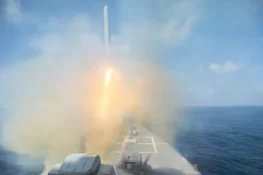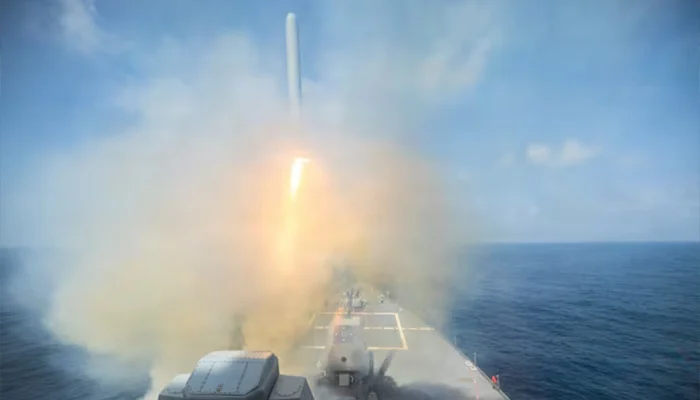
WASHINGTON: The United States has launched a fresh round of military strikes against Iran after accusing the country’s Islamic Revolutionary Guard Corps (IRGC) of attacking a commercial container ship in the Strait of Hormuz, further intensifying an already volatile regional conflict.
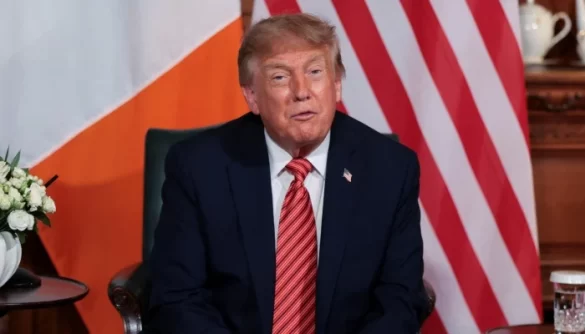
According to the US Central Command (Centcom), the operation began at 7:15pm Washington time (2315 GMT) on Saturday and was carried out on the orders of President Donald Trump.
The latest military action comes amid growing fears that continued hostilities between Washington and Tehran could further disrupt global energy supplies and derail ongoing diplomatic efforts aimed at reducing tensions.
US Says Strikes Responded to Attack on Commercial Vessel
Centcom said the strikes were launched after IRGC forces allegedly attacked a Cyprus-flagged container ship transiting the Strait of Hormuz.
In a statement, the US military said the operation was intended to reduce Iran’s ability to threaten international shipping.
“The United States is imposing a heavy cost by continuing to degrade Iran’s ability to attack civilian mariners and commercial ships freely transiting the strait,” the statement said.
US Defence Secretary Pete Hegseth also commented briefly on the operation, saying:
“Iran made a poor choice. Now they pay.”
The United States has not immediately disclosed the specific targets or the extent of the damage caused by the strikes.
Iran Announces Closure of Strait of Hormuz
Following the US operation, Iran’s Revolutionary Guards announced that the Strait of Hormuz would remain closed “until further notice,” according to Iranian state media.
Iranian reports said the Guards had earlier fired warning shots at a vessel travelling along what Tehran described as an unauthorised route through the strategic waterway.
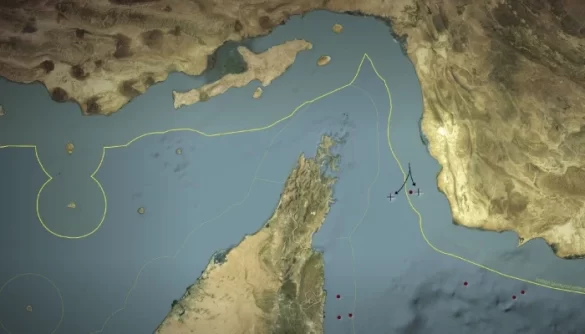
The latest announcement raises fresh concerns over international shipping, as the Strait of Hormuz is one of the world’s busiest maritime routes and serves as a vital corridor for global oil and gas exports.
Strategic Waterway at Centre of Dispute
The Strait of Hormuz remains a major point of disagreement between Washington and Tehran.
Iran insists that it has the right to regulate shipping passing through its territorial waters, while the United States maintains that international vessels must be allowed unrestricted passage under international maritime law.
Recent attacks on commercial ships have already prompted military exchanges between the two countries, increasing concerns about regional stability.
Iran and US Agree to Halt Hostilities, Resume Talks on Strait of Hormuz
Analysts warn that prolonged disruption to shipping through the strait could place additional pressure on global energy markets, where oil prices have already risen sharply in response to the conflict.
Diplomatic Efforts Continue in Oman
Despite the military escalation, diplomatic contacts remain underway.
According to Reuters, Iranian Foreign Minister Abbas Araqchi met his Omani counterpart Badr Albusaidi in Muscat to discuss possible mechanisms for ensuring the safe movement of vessels through the Strait of Hormuz.
Oman’s state news agency said technical and political discussions between the two sides would continue.
Meanwhile, CNN reported that Oman has proposed a draft plan that would allow unrestricted navigation through the southern shipping corridor within Omani territorial waters, while vessels using the northern route through Iranian waters would require prior approval from Tehran. The proposal reportedly does not include transit fees.
Neither the White House nor the US State Department immediately commented on the reported proposal.
Ceasefire Efforts Under Pressure
The latest military action further complicates efforts to preserve a fragile diplomatic framework established after previous rounds of fighting.
Iranian Foreign Minister Abbas Araqchi has accused the United States of violating the ceasefire understanding, insisting that any agreement can only succeed if both sides fully honour their commitments.
Earlier this week, Washington revoked a licence allowing the sale of Iranian crude oil after attacks on commercial tankers in the Gulf. In response, the US carried out strikes on Iranian targets, while Tehran launched attacks on US military facilities in Gulf states.
Regional Tensions Remain High
With military operations continuing, the future of negotiations between the United States and Iran remains uncertain.
International observers continue to monitor developments closely, warning that any further escalation around the Strait of Hormuz could have significant consequences for regional security, global trade and international energy markets.