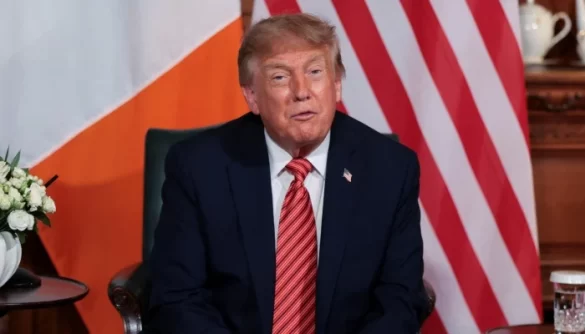
US President Donald Trump publicly expressed frustration with Israeli Prime Minister Benjamin Netanyahu ahead of their White House meeting, highlighting growing differences between the two allies over the ongoing Iran conflict and Washington’s future role in the region.
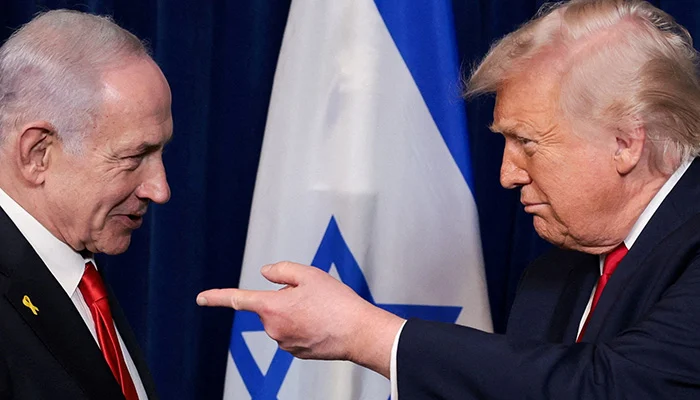
Despite the public remarks, the White House later described the meeting as “positive and productive,” while photographs released by Netanyahu’s office showed the two leaders smiling during their Oval Office discussions.
Trump criticises Netanyahu over Iran comments
Speaking during an interview with Fox & Friends, Trump questioned why Netanyahu had publicly discussed intelligence related to Iran before meeting him.
Responding to reports that Netanyahu intended to brief him about Pickaxe Mountain, a heavily fortified underground site linked to Iran’s nuclear programme, Trump said he did not need the Israeli leader to explain the issue.
“I don’t need Bibi to tell me that,” Trump said, using Netanyahu’s nickname.
He added that Netanyahu appeared to be trying to keep the United States engaged in the conflict and questioned why such discussions had been made public before their meeting.
The remarks came after reports suggested Netanyahu planned to present intelligence claiming Iran was expanding activity at the underground facility while misleading the international community about its willingness to pursue peace.
White House calls meeting productive
Despite Trump’s criticism, both leaders met at the White House alongside Vice President JD Vance, Secretary of State Marco Rubio, and Defence Secretary Pete Hegseth.
White House Press Secretary Karoline Leavitt described the discussions as “positive and productive.”
Trump also held separate talks with Ukrainian President Volodymyr Zelenskyy before meeting Netanyahu.
Iran conflict remains key issue
The meeting took place as the conflict involving Iran remains at a critical stage.
Following the collapse of a previous ceasefire, Trump has paused further US airstrikes in an effort to allow diplomacy another opportunity.
However, divisions remain over how actively the United States should remain involved in the conflict.
Some of Trump’s political supporters have criticised the possibility of deeper American military involvement in the Middle East, increasing pressure on the administration.
Just One in Three Americans Back Iran War as Most Question Trump’s Goals: Reuters Poll
Netanyahu seeks political support
According to sources familiar with the discussions, Netanyahu hopes to strengthen ties with Trump ahead of Israel’s scheduled general election on October 27.
A public display of cooperation with the US president could provide a political boost as Netanyahu faces declining support in opinion polls.
The leaders were also expected to discuss expanding the Abraham Accords, the US-backed agreements that normalised relations between Israel and several Arab countries.
Trump continues to push for Saudi Arabia to join the accords, although Riyadh has maintained that normalisation with Israel depends on meaningful progress toward Palestinian statehood.
Ukraine also discussed
Earlier in the day, Trump met Ukrainian President Volodymyr Zelenskyy, with both leaders discussing military cooperation and diplomatic efforts aimed at ending Russia’s war in Ukraine.
According to Zelenskyy, the talks included cooperation on Patriot air defence interceptor production as well as future drone manufacturing initiatives.
The Ukrainian president was also expected to meet members of the US Senate following his White House visit.
Diplomatic balancing act continues
The meetings underscored the complex challenges facing the Trump administration as it attempts to balance support for key allies while preventing wider regional conflicts.
With tensions surrounding Iran, Ukraine and Middle East diplomacy continuing to evolve, Washington remains engaged on multiple geopolitical fronts simultaneously.