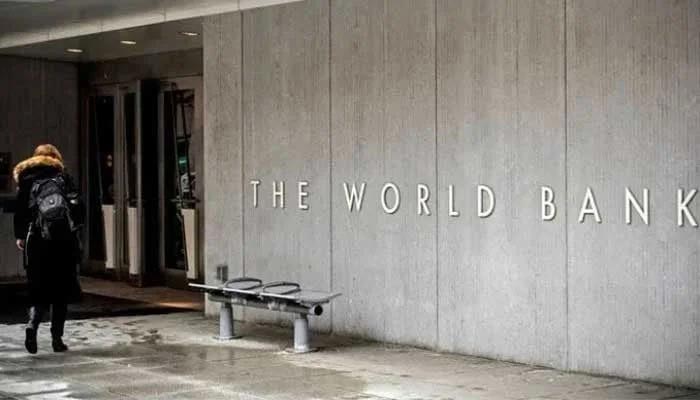
The World Bank (WB) has recommended that Pakistan undertake a comprehensive review of the National Finance Commission (NFC) Award to improve the country’s fiscal federalism framework and create a more equitable system for distributing public resources among the provinces.
Launching its report, “Strengthening Fiscal Federalism in Pakistan,” World Bank Lead Economist Tobias Haque said the existing revenue-sharing mechanism should be revised both vertically—between the federal and provincial governments—and horizontally—among the provinces themselves. The report was unveiled alongside World Bank Country Director Bolormaa Amgaabazar in Islamabad.
Fiscal Equalisation Proposed
The report recommends replacing the current resource distribution formula with a fiscal equalisation model, under which provincial allocations would be based primarily on expenditure needs and each province’s projected revenue-raising capacity rather than population alone.
According to the World Bank, such a system would better address regional disparities while encouraging provinces to improve their own tax collection efforts. Similar equalisation mechanisms are used in countries including Australia, Canada, China, Nigeria, and South Africa.
The report also suggests that, if a complete overhaul is not immediately possible, the existing NFC formula should assign greater weight to indicators such as poverty, backwardness, and inverse population density.
Unified GST Collection Mechanism Recommended
One of the report’s major recommendations is the reunification of the General Sales Tax (GST) system.
The World Bank argued that the current split between GST on goods and GST on services has fragmented Pakistan’s tax system, increased compliance costs for businesses, and discouraged interprovincial trade.
To address these issues, the report proposes a centralized GST collection mechanism under which taxes would be collected through a unified system and later distributed among the provinces according to an agreed formula. The Bank noted that implementing such a model would require constitutional and legislative changes.
Concerns Over Federal Fiscal Deficit
The report argues that Pakistan’s current fiscal federalism arrangements have contributed to a structural federal fiscal deficit.
According to the World Bank, provincial revenues—including federal transfers—increased from less than 4% of GDP before the 18th Constitutional Amendment to an average of 6.5% of GDP between FY2010 and FY2024. However, federal expenditure responsibilities did not decline proportionately, leaving the federal government with persistent financing pressures and contributing to rising public debt.
The report states that the misalignment between revenue distribution and expenditure responsibilities has become a significant challenge for Pakistan’s overall fiscal sustainability.
Provincial Tax Collection Still Below Potential
While noting that the federal government has struggled to raise Pakistan’s tax-to-GDP ratio, the World Bank also said provincial governments have not fully utilized their taxation powers.
According to the report, provincial own-source tax revenues remain around 0.7% of GDP, despite an estimated potential of approximately 1.15% of GDP.
The Bank identified agricultural income tax and urban property tax as two of the country’s most underutilized revenue sources. It noted that agriculture contributes more than one-fifth of Pakistan’s GDP, yet agricultural income tax collections remain limited, while property tax revenues are significantly below international benchmarks.
Call for Cost-Sharing in BISP
The World Bank also recommended changes to the financing of the Benazir Income Support Programme (BISP).
It proposed retaining the programme’s national beneficiary registry under the federal government while introducing cost-sharing arrangements with provincial governments, arguing that social protection is largely a provincial responsibility following the 18th Constitutional Amendment.
Need for Clearer Spending Responsibilities
The report says the devolution introduced through the 18th Constitutional Amendment remains incomplete.
According to the World Bank, the federal government continues to operate in sectors that have constitutionally been devolved to the provinces, resulting in overlapping responsibilities, reduced accountability, and inefficient use of public resources.
It also noted that local governments remain financially weak, with irregular Provincial Finance Commission awards, limited fiscal autonomy, and declining shares of overall government spending.
Performance-Based Transfers Suggested
Beyond revising the NFC formula, the World Bank recommended introducing conditional federal transfers linked to measurable outcomes in sectors such as education, healthcare, climate resilience, disaster preparedness, governance, and local government performance.
The report argues that combining unconditional fiscal equalisation with targeted performance-based funding would help improve service delivery while preserving provincial autonomy.
Overall, the World Bank described its recommendations as a menu of policy options rather than fixed prescriptions, encouraging Pakistani policymakers to consider international best practices as they work toward a more balanced, transparent, and sustainable fiscal framework.
Originally published in The News