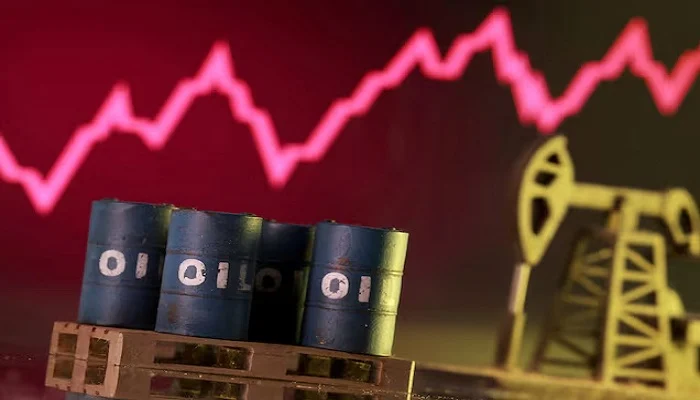
Brent crude climbs to $84.32 a barrel as uncertainty over the Strait of Hormuz continues to weigh on global energy markets and investors assess the prospects for a wider Gulf peace agreement.
Oil prices moved higher on Monday as uncertainty persisted over the reopening of the Strait of Hormuz, one of the world’s most important energy shipping routes.
Iran said negotiations with Oman over new shipping lanes were in their final stages, but indicated that the strategically important waterway would only fully reopen after the United States met additional conditions.
The uncertainty kept pressure on oil markets, with traders closely watching developments in the Gulf and assessing what a prolonged disruption to shipping could mean for global energy supplies.
Brent Crude Rises Nearly 1%
Brent crude futures rose 0.9% to $84.32 a barrel, while US West Texas Intermediate crude gained 0.7% to $78.74 a barrel.
Commercial shipping through the Strait of Hormuz remained severely disrupted, raising concerns among traders about the movement of crude oil and other energy products.
The waterway is a critical route for international energy trade, meaning any prolonged interruption can have a significant impact on oil prices and broader inflation expectations.
Markets are also assessing whether progress in talks involving Iran and Oman could eventually lead to a broader Gulf peace agreement and restore more normal energy shipments.
Global Markets Edge Higher
Asian stock markets were also slightly higher on Monday, following gains on Wall Street after a weaker-than-expected US jobs report reduced expectations of an immediate increase in interest rates.
Japan’s Nikkei index rose 0.6%, while South Korea’s benchmark index gained 0.5%. MSCI’s broadest index of Asia-Pacific shares outside Japan increased 0.3%.
Investors are now turning their attention to the latest US consumer price index report, due on Wednesday. Economists expect headline inflation to increase by 0.1%, while core inflation is forecast to rise 0.2%.
A stronger-than-expected inflation reading could revive expectations that the US Federal Reserve may raise interest rates at its September meeting.
Markets Cut Expectations for September Rate Hike
JPMorgan chief US economist Michael Feroli said the bank’s forecast for a 0.22% increase in core consumer prices was probably not strong enough by itself to prompt a rate increase in September.
However, he noted that repeated monthly readings closer to 0.3% could increase pressure on the Federal Reserve to act.
Investors are also watching whether prices for core goods begin rising again after declining for two consecutive months.
Market futures currently indicate about a 44% probability of a September rate increase, down significantly from 67% a week earlier.
The change in expectations has supported US Treasury bonds and contributed to gains in US stocks. Wall Street’s major indexes recently reached record levels as investors responded to the changing outlook for monetary policy and strong corporate earnings.
Oil Prices Edge Lower as Iran-Oman Talks Raise Hopes for US-Iran Peace Agreement
Strong Corporate Earnings Support Stocks
European markets were expected to open slightly lower, with Euro STOXX 50 and DAX futures both down 0.1%, while FTSE futures declined 0.4%.
S&P 500 futures slipped 0.1%, while Nasdaq futures were largely unchanged.
The technology-heavy Nasdaq had gained around 5% last week, supported by a series of stronger-than-expected corporate earnings reports.
Bank of America analysts said earnings per share among S&P 500 companies were approximately 30% higher year-on-year, excluding investment gains at Alphabet and Amazon.
The earnings beat rate stood at 76%, matching its strongest level since 2021.
Artificial intelligence remained a major driver of corporate earnings growth. According to the analysts, median earnings-per-share growth among AI-related companies was 28%, compared with 12% for companies without a direct AI focus.
However, analysts expect earnings growth linked to AI companies to slow to around 16% in the following quarter.
Dollar Weakens While Gold Holds Strong
In bond markets, the yield on the benchmark 10-year US Treasury note edged up to 4.673%.
Investors are also preparing for around $125 billion in new US government debt issuance during the week, which could influence bond yields and market liquidity.
The US dollar remained broadly weaker following the recent decline in Treasury yields. The euro traded near a seven-week high of $1.1557, while the dollar was little changed against the Japanese yen at around 157.85.
Gold prices remained close to $4,342 an ounce after gaining more than 7% during the previous week.
Lower bond yields have helped support gold, which does not pay interest and can become more attractive to investors when returns on government debt decline.
Hormuz Uncertainty Remains Key to Oil Outlook
For energy markets, however, developments around the Strait of Hormuz remain the immediate focus.
A sustained disruption to commercial shipping could continue to support oil prices by raising concerns about the availability and movement of crude supplies.
Conversely, a successful agreement that restores normal shipping through the waterway could ease supply concerns and potentially reduce some of the upward pressure on oil prices.
Until there is greater clarity over the proposed Iran-Oman arrangement and the conditions surrounding the reopening of the Strait of Hormuz, traders are likely to remain cautious and closely monitor developments in the Gulf.