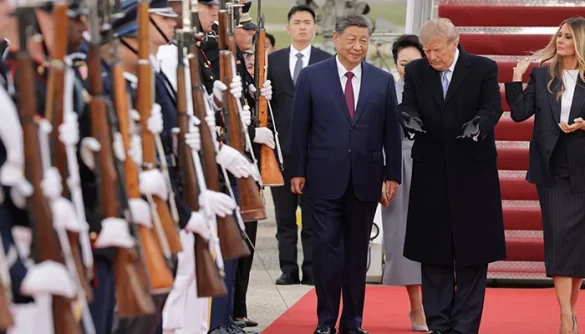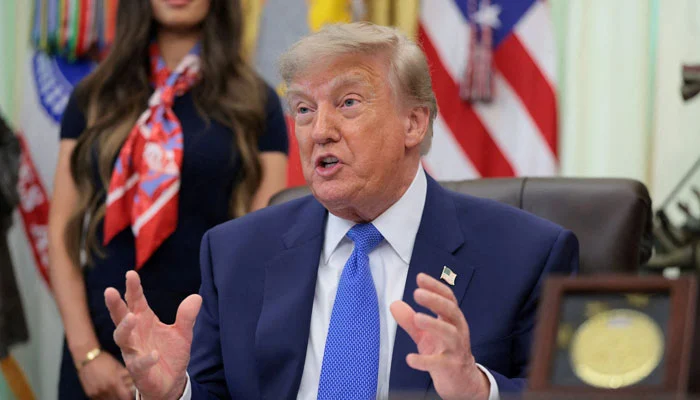
US President Donald Trump has demanded that Iran pay compensation for what he described as decades of damage, including deaths linked to conflicts, attacks and protests, adding a new condition that could further complicate efforts to reach a peace agreement and reopen the Strait of Hormuz.
Trump’s demand came after Iran called for compensation and an end to sanctions as part of conditions for a potential peace deal.
“We’re going to ask for money for the damage they’ve done over a 50-year period,” Trump said at the White House on Monday.
He said any compensation should cover deaths among civilians as well as US forces in the region.
“So if there’s damages to be paid, I think Iran should pay those damages,” Trump added.
The new demand comes as Washington and Tehran remain divided over the terms of a potential agreement to end the conflict.
Trump calls for compensation over regional conflicts
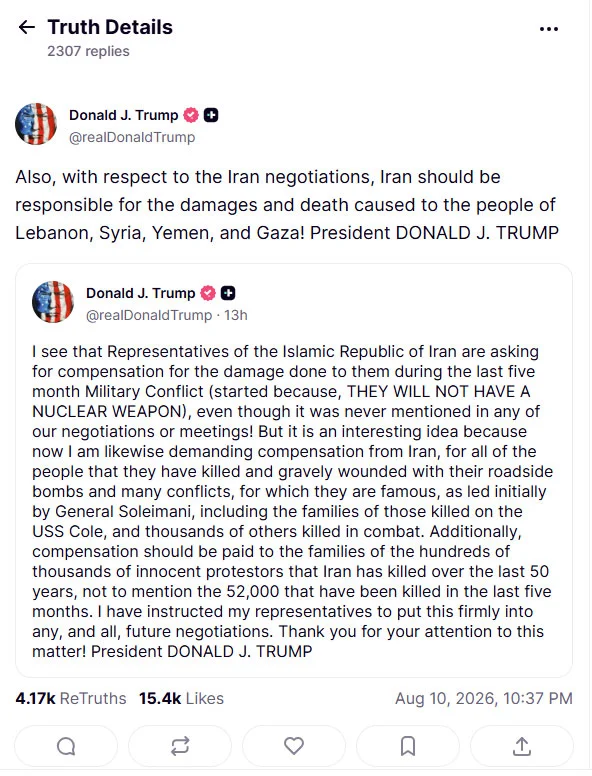
Trump also said Iran should be held responsible for damages and deaths in several countries.
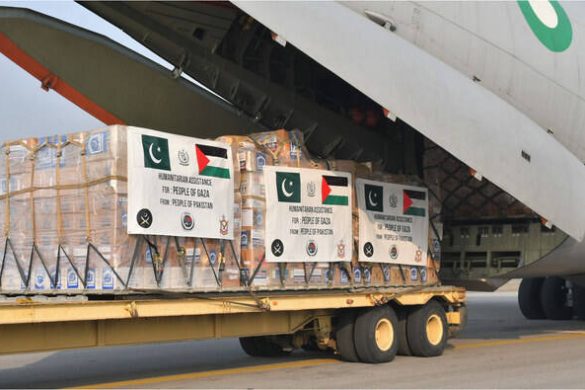
“Iran should be responsible for the damages and death caused to the people of Lebanon, Syria, Yemen, and Gaza!” he wrote in a post on Truth Social.
Trump also referred to the deaths of 17 US sailors in the 2000 attack on the USS Cole in Yemen and said Iran should compensate their families.
However, the attack was attributed to al Qaeda, rather than Iran.
Trump’s comments also referred to Iran’s crackdown on demonstrations in late 2025 and 2026. He claimed that around 52,000 protesters had been killed, although the figure was not independently verified in the report.
Oil prices rise as Hormuz deal remains uncertain
Oil prices settled around 5% higher on Monday after Trump’s latest demands reduced optimism over a deal that could lead to the reopening of the Strait of Hormuz.
Iran has said an agreement with Oman on new shipping routes through the strategic waterway is nearing completion. However, Tehran has maintained that the United States must meet additional conditions, including compensation, an end to sanctions and an end to military threats.
The Strait of Hormuz is one of the world’s most important energy corridors. Before the conflict, around one-fifth of global oil and liquefied natural gas shipments passed through the waterway.
The strait has been effectively blocked since the war began, disrupting energy supplies and contributing to higher oil prices and inflation.
Iran says Oman talks are progressing
Iranian Foreign Ministry spokesman Esmaeil Baghaei said Monday that discussions with Oman were progressing “smoothly and constructively”.
He said the two sides had reached an understanding on a map for a new shipping route, although some technical issues remained unresolved.
The discussions also covered maritime services such as safe navigation, environmental protection and efforts to combat crime.
Trump Downplays Gaza Rift With Netanyahu, Says Relationship Remains ‘Very Good’
US officials have repeatedly rejected any agreement that would allow Tehran to charge fees for access to the Strait of Hormuz.
Despite months of US military operations, including a two-week campaign of strikes in July, Iran continues to maintain significant influence over the waterway.
Trump again claimed Monday that the United States had control of the strait, saying the “only one that has control of the Strait of Hormuz right now is the United States Navy”.
Trump faces pressure to end conflict
Trump is facing domestic pressure to bring the conflict to an end ahead of the US midterm elections in November, while rising fuel prices have become a major concern, particularly in rural areas that have traditionally supported him.
Democratic US Representative Bill Keating said on CNN that the developments represented the beginning of a “capitulation” and reflected a growing recognition of the realities of the conflict.
Washington and Tehran agreed to a ceasefire in June, but the United States reimposed a blockade on Iranian shipping in July. Tehran has argued that the move violated the truce.
Iran has since carried out missile and drone attacks against US allies in the region and targeted commercial vessels travelling through the Strait of Hormuz without its permission.
The latest dispute over compensation and access to the waterway has added another obstacle to efforts aimed at securing a broader US-Iran agreement.