ISLAMABAD: Pakistan’s long-awaited refinery modernisation programme is gaining momentum, with five domestic refineries planning combined investments of around $4.5 billion to $5 billion in projects covering cleaner fuels, bottom-of-the-barrel processing, capacity expansion and related infrastructure.
A major development is the decision by Pak-Arab Refinery Company (PARCO) to proceed with a proposed $600 million green fuel project after completing studies to determine the most suitable configuration for its refinery upgrade.
The developments come under the government’s recently amended Brownfield Refineries Upgradation Policy, which aims to encourage local refineries to modernise their facilities and increase production of higher-value petroleum products.
PARCO Moves Ahead With $600 Million Project
PARCO, Pakistan’s largest refinery, is a joint venture between Pakistan and the United Arab Emirates, with a 60:40 shareholding structure.
The company had commissioned two separate studies to evaluate different options for upgrading its facilities. Following the assessment, PARCO has informed the government that it intends to proceed with the green fuel project and sign its implementation agreement within the required timeframe.
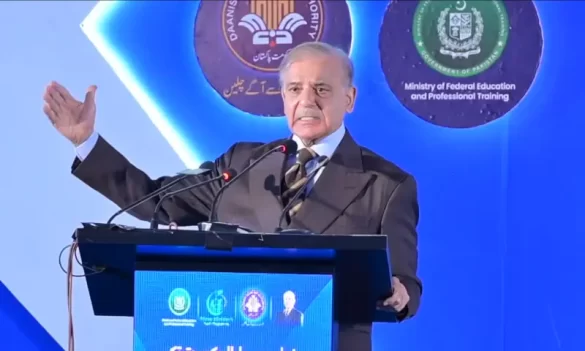
A senior Petroleum Division official said the government was finalising agreements with all local refineries and expected the agreements to be signed together at a high-level ceremony in the presence of Prime Minister Shehbaz Sharif.
Under the amended policy, refineries are required to sign implementation agreements within 45 days, compared with the previous deadline of 60 days.
PARCO has already reduced its furnace oil share from around 20% to 14% through operational measures. The green fuel project is expected to bring it down further to around 10% to 11% during the first phase, with the longer-term objective of eliminating furnace oil production altogether.
PARCO to Shift to Euro-V Standards
PARCO has opted for the green fuel project instead of pursuing a standalone bottom-of-the-barrel project.
Under the approved upgrade plan, the refinery will have to move completely from its existing Euro-III fuel standard to Euro-V specifications.
Its motor gasoline production is projected to increase from around 3,678 tonnes per day to 4,023 tonnes per day, while diesel output is also expected to rise.
The shift towards cleaner fuel standards is aimed at improving the quality of petroleum products available in the domestic market.
PRL Plans $2 Billion Expansion
Pakistan Refinery Limited (PRL) is preparing one of the largest upgrade projects among the country’s refineries.
The company plans to invest approximately $1.8 billion to $2 billion in a bottom-of-the-barrel project designed to eliminate furnace oil production and improve its overall product mix.
The project is also expected to double PRL’s crude refining capacity from 50,000 barrels per day (bpd) to 100,000 bpd.
An expansion of this scale could significantly increase the refinery’s ability to process crude oil and produce higher-value petroleum products.
Govt Plans Major Reforms to Accelerate Construction Industry Growth
ARL Preparing $600 Million Upgrade
Attock Refinery Limited (ARL) has also confirmed its readiness to sign its upgrade agreement with the Petroleum Division.
The company’s approximately $600 million project, initially announced in 2023 under the original Brownfield Refineries Upgradation Policy, includes several major components.
These include a Continuous Catalytic Reformer (CCR), an upgraded Diesel Hydro Desulphurising Unit, a Kerosene Hydrotreating Unit, additional storage and utility facilities, as well as a biofuel facility required under the amended policy.
The project is expected to help ARL meet Euro-V specifications and increase motor gasoline production by around 25%.
Cnergyico Plans $1.2 Billion Investment
Cnergyico Pakistan Limited (CPL), the country’s largest private refinery, is planning an investment programme worth approximately $1.2 billion.
Its proposed programme covers green fuel production, a bottom-of-the-barrel project, expansion of refining capacity and the construction of a new Single Point Mooring (SPM) facility.
CPL currently has crude refining capacity of around 156,000 bpd and plans to increase it to approximately 200,000 bpd.
The company’s programme is divided into three phases. The first focuses on producing Euro-V/VI petroleum products, with work already underway.
The second phase involves the bottom-of-the-barrel project, for which studies are being conducted. The third phase will focus on increasing refining capacity and installing the SPM facility to facilitate the import and export of crude oil and finished petroleum products.
Under the government’s policy projections, CPL could increase gasoline production to around 6,500 tonnes per day and diesel production to nearly 11,000 tonnes per day, while significantly reducing furnace oil output.
NRL Considering Hybrid Upgrade
National Refinery Limited (NRL) is considering a hybrid green fuel and bottom-of-the-barrel project estimated at between $300 million and $800 million.
The refinery has already achieved production of Euro-V high-speed diesel, while further technical studies are being carried out to determine the most appropriate configuration for motor spirit and other petroleum products.
The proposed project is expected to significantly reduce furnace oil production.
NRL is also considering increasing its crude refining capacity from 50,000 bpd to 70,000 bpd. However, the final scope and configuration of the upgrade have yet to be determined.
Major Transformation for Pakistan’s Refining Sector
Taken together, the planned investments by PARCO, PRL, ARL, Cnergyico and NRL represent a potential $4.5 billion to $5 billion transformation of Pakistan’s refining industry.
The projects are focused not only on increasing production but also on shifting refineries towards cleaner and higher-value petroleum products, reducing furnace oil output and expanding domestic refining capacity.
The amended Brownfield Refineries Upgradation Policy has also introduced a tighter timeline for the industry, putting pressure on refineries to move from announced investment plans towards formally signed implementation agreements.
If the proposed projects are completed as planned, they could significantly reshape Pakistan’s refining landscape and increase the sector’s ability to meet domestic fuel requirements with more modern and higher-quality petroleum products.