Pakistan’s armed forces have rejected India’s portrayal of Operation Sindoor as a military success, accusing New Delhi of using a heavily dramatized documentary to present a different version of events surrounding the confrontation between the two nuclear-armed neighbours.
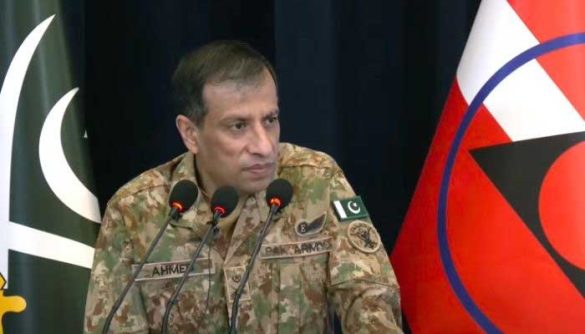
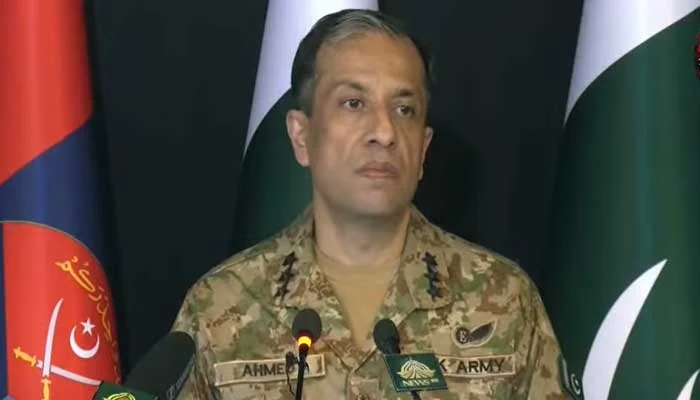
In a statement issued on Monday, the Inter-Services Public Relations (ISPR) said India was refusing to acknowledge what Pakistan describes as the outcome of the 2025 conflict and was instead attempting to reshape history through a cinematic reconstruction.
“More than a year after Marka-e-Haq, India refuses to face the harsh reality,” ISPR said, alleging that India had attempted to present a more favourable version of events for domestic audiences.
ISPR Criticises Documentary’s Presentation
According to ISPR, Indian content creators produced what it described as a highly dramatized and factually inaccurate account of Operation Sindoor.
The military’s media wing said the production featured senior political and military figures and relied on selectively edited interviews, emotional narration and cinematic reconstruction.
ISPR characterised the documentary as both a “tragedy and a comedy” because of what it called a lack of seriousness, nuance and factual accuracy.
The statement alleged that the documentary contained fundamental contradictions and was designed to provide a domestically acceptable interpretation of the conflict rather than an objective military assessment.
Dispute Over the Pahalgam Timeline
One of ISPR’s central objections concerns the timeline connecting the Pahalgam attack with the subsequent military confrontation.
The Pakistani military said the documentary attempted to establish a connection between remarks made by Pakistan’s army chief on April 16, 2025, and the Pahalgam incident on April 22.
ISPR described this as an attempt to construct a conspiracy theory and questioned the documentary’s account of who India was targeting during Operation Sindoor.
According to ISPR, India later claimed that three alleged perpetrators of the Pahalgam attack were identified and killed on July 28, 2025.
Pakistan’s military therefore questioned how those individuals could have been punished during the May 7 military operation if India’s own account placed their elimination more than two months later.
“If the alleged perpetrators were eliminated on 28 July, India must explain who it claims to have punished on 7 May 2025,” ISPR said.
Pakistan Disputes ‘100% Mission Success’ Claim
ISPR also rejected claims that Operation Sindoor achieved complete military success.
The Pakistani military said that during what it calls Marka-e-Haq, Pakistan’s armed forces successfully responded to Indian military action and claimed that eight Indian military aircraft were shot down.
Pakistan subsequently launched Operation Bunyanum Marsoos, which ISPR said involved Fatah precision-guided rockets and missiles, Pakistan Air Force precision munitions, long-range loitering munitions and precision artillery.
According to the military’s account, strikes targeted 26 military targets, including facilities Pakistan says were involved in attacks against its citizens and entities allegedly linked to terrorism.
These claims remain part of the competing narratives surrounding the 2025 conflict, with India and Pakistan presenting significantly different accounts of the military engagement and its outcome.
ISPR Rejects Indian Army Chief’s Remarks, Calls Them “Warmongering”
Indian Military Statements Highlighted
ISPR further argued that the documentary itself undermines its portrayal of a clear Indian victory.
Pakistan’s military pointed to what it described as acknowledgements by Indian military officials regarding Pakistani missile, drone and air activity, continued engagements along the Line of Control (LoC) and the activation of Indian air-defence systems.
According to ISPR, such acknowledgements are difficult to reconcile with repeated claims that Pakistan was decisively defeated.
The military also challenged the documentary’s portrayal of how the hostilities ended.
Dispute Over Ceasefire Narrative
ISPR said the documentary’s own narration reportedly acknowledges that the cessation of hostilities followed communication between the two countries’ Directors General of Military Operations (DGMOs).
Pakistan’s military argued that this contradicts the presentation of Operation Sindoor as a unilateral Indian victory.
It also pointed to the role of the United States in facilitating the cessation of hostilities, saying that an agreement to stop military action could not later be presented as evidence of unconditional victory.
The documentary was also accused of presenting conflicting explanations for India’s escalation strategy. ISPR said it simultaneously highlighted surprise, precision strikes and escalation dominance while claiming that India deliberately limited the conflict and gave Pakistan an opportunity to de-escalate.
ISPR Warns Against Future ‘Misadventure’
ISPR said no cinematic production could alter the chronology of events, remove aircraft losses, conceal casualties or change the military engagements that took place.
The military media wing maintained that Pakistan did not need to manufacture a narrative around Marka-e-Haq, arguing that operational records, battlefield evidence, diplomatic communications and subsequent statements by India were sufficient to establish what happened.
ISPR also reaffirmed Pakistan’s stated commitment to regional peace and stability while warning that the country’s armed forces remained prepared to defend its sovereignty and territorial integrity.
It further warned that any future military action would receive what it called a firm and decisive response.
Background to the May 2025 Conflict
India and Pakistan fought for four days in May 2025 after India launched strikes inside Pakistan on May 7. The Indian action followed a deadly attack on tourists in Pahalgam in Indian-administered Jammu and Kashmir weeks earlier.
India named its military campaign Operation Sindoor, while Pakistan responded with Operation Bunyan-un-Marsoos on May 10.
The confrontation ended later that day following an agreement to halt military action, with then-US President Donald Trump announcing a ceasefire between the two countries.
The latest dispute over the documentary shows that, more than a year after the fighting, India and Pakistan continue to hold sharply different views over what happened during the conflict and which side achieved its military objectives.