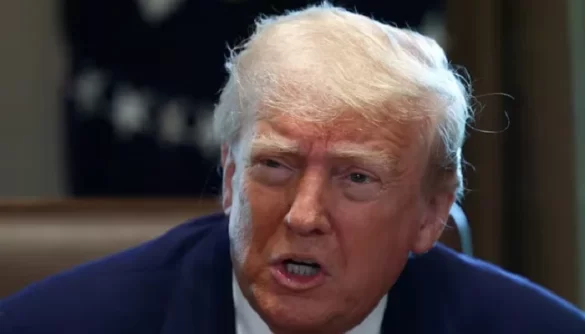
US President Donald Trump has claimed that North Korea possesses 57 “very powerful” nuclear weapons, offering an unusually specific figure for Pyongyang’s nuclear arsenal while also announcing plans for another meeting with North Korean leader Kim Jong Un.
Trump discussed his relationship with Kim and said he intends to meet the North Korean leader later this year. However, he did not provide a confirmed date or location for the proposed meeting.
The US president also questioned how North Korea had been allowed to develop such a significant nuclear capability, saying he would not have permitted the country to build up its arsenal if he had been president when the programme was being developed.
No Public Confirmation of the 57-Weapon Figure
Trump did not explain how he arrived at the figure of 57 nuclear weapons.
There has been no public confirmation from US officials based on a recent intelligence assessment that North Korea possesses exactly that number. Previous estimates by experts and institutions have generally placed North Korea’s nuclear stockpile at several dozen warheads, although estimates vary because analysts use different methods to assess the country’s nuclear materials, production capacity and weapons programme.
The lack of an independently confirmed figure makes Trump’s statement difficult to verify at this stage.
Nevertheless, the number is notable because US presidents rarely publicly disclose such a specific estimate of another country’s nuclear arsenal.
North Korea’s Nuclear Programme
North Korea has been developing its nuclear weapons programme for decades. The country conducted its first nuclear test in 2006 and has carried out a total of six announced nuclear tests since then.
Pyongyang has also continued developing ballistic missiles capable of carrying nuclear payloads, raising concerns in Washington, Seoul and other countries in the region.
The country’s nuclear and missile programmes have been at the centre of repeated international diplomatic efforts, including negotiations involving the United States and North Korea.
Despite periods of dialogue, efforts to reach a broader agreement on denuclearisation have repeatedly stalled.
Trump Orders Reduction in US-South Korea Military Drills, Citing ‘Good Relations’ With Kim Jong Un
Trump Plans Another Meeting With Kim Jong Un
Trump also said he plans to meet Kim Jong Un later this year, potentially renewing the personal diplomacy that characterized his earlier engagement with the North Korean leader.
However, no official timeframe has been announced for the meeting.
Some reports have suggested that discussions could take place before or after Trump’s expected trip to China for the Asia-Pacific Economic Cooperation, or APEC, Summit in November. At present, however, neither a date nor a venue for a Trump-Kim meeting has been formally confirmed.
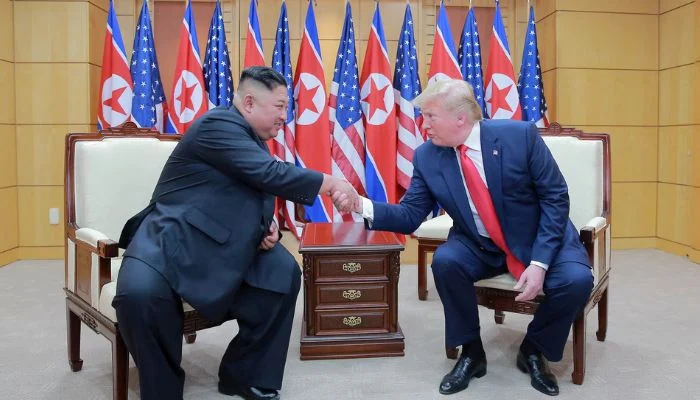
Trump and Kim previously held several high-profile meetings during Trump’s first presidency as the two countries attempted to negotiate over North Korea’s nuclear programme.
Sensitive Moment for US-South Korea Relations
Trump’s latest comments come at a sensitive time for the United States and South Korea.
Washington recently reduced the scale of some joint military training exercises with Seoul, a move that has been viewed in the context of efforts to create space for renewed dialogue with Pyongyang.
Joint US-South Korean military exercises have long been criticized by North Korea, which regards them as a threat to its security. Washington and Seoul, however, have consistently described such exercises as defensive in nature.
Kim Jong Un has not accepted the reduction in exercises as evidence of a meaningful change in US policy and has continued to view Washington’s military posture with suspicion.
Nuclear Issue Remains a Major Challenge
The reported size of North Korea’s nuclear arsenal adds another layer of complexity to any potential future negotiations between Washington and Pyongyang.
If Trump and Kim meet again, the North’s nuclear weapons and missile programmes are likely to remain among the most difficult issues on the agenda.
For now, Trump’s figure of 57 nuclear weapons remains an unverified claim rather than a publicly confirmed intelligence assessment. Any future meeting with Kim Jong Un could therefore provide an important opportunity for Washington to clarify its position on North Korea’s nuclear capabilities and determine whether diplomatic engagement can produce meaningful progress.