The Permanent Court of Arbitration (PCA) in The Hague has ruled that the Indus Waters Treaty (IWT) between Pakistan and India remains fully in force, dealing a significant blow to New Delhi’s decision to place the decades-old water-sharing agreement in abeyance.
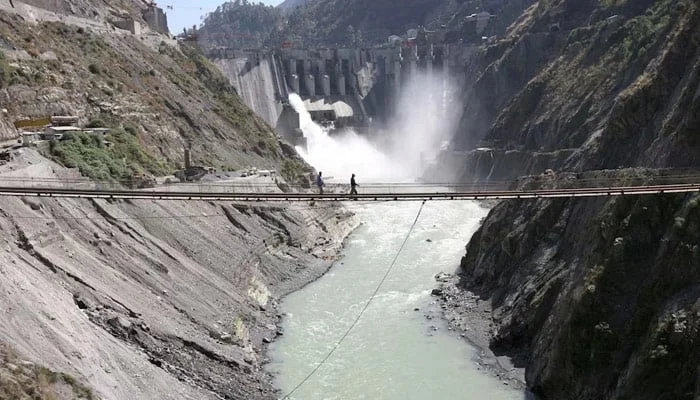
In its ruling issued Monday, the Hague-based court said India had no valid basis to suspend or terminate the treaty. The decision also imposes interim restrictions on construction at India’s Ratle Hydroelectric Plant in the Kashmir region while a separate neutral expert process examines whether the design of certain Indian hydropower projects complies with the treaty.
The ruling follows India’s decision in April 2025 to put the treaty in abeyance after an attack in Indian-administered Kashmir. New Delhi linked Pakistan to the attack, an allegation Islamabad has denied.
Court says treaty remains fully in force
The Court of Arbitration examined whether India could suspend or terminate the Indus Waters Treaty on the grounds it had cited publicly.
It concluded that none of those grounds provided a legal justification for unilateral suspension or termination. As a result, the court said the treaty continues to bind both countries, including provisions governing the design and operation of Indian hydroelectric projects on the western rivers.
The PCA’s proceedings are part of a broader dispute between the two countries over Indian hydropower projects on rivers covered by the treaty. The court had previously rejected India’s objections to its jurisdiction, allowing the arbitration initiated by Pakistan to continue.
Construction restrictions imposed on Ratle project
The court also considered Pakistan’s request for interim measures concerning the Ratle Hydroelectric Plant.
Pending a determination on whether the project complies with the treaty, India has been restricted from carrying out certain concreting work on the Ratle dam wall and power intake structure above specified levels.
‘Unilateral Interference’ With Indus Waters Treaty Has ‘Profound’ Implications, Warns Dar
The restrictions will remain in place until 90 days after the Neutral Expert issues a final decision. The decision is expected in July 2027, according to the ruling reported by Reuters.
The court has also introduced a reporting requirement concerning the project’s construction schedule.
Kishenganga and Ratle projects at centre of dispute
The wider arbitration concerns the interpretation and application of treaty provisions governing the design of run-of-river hydroelectric projects that India is permitted to construct on the Indus, Jhelum and Chenab rivers and their tributaries before they enter Pakistan.
Two projects are particularly important to the dispute: the Kishenganga Hydroelectric Plant and the Ratle Hydroelectric Plant.
At the same time, a separate proceeding before a Neutral Expert appointed by the World Bank is examining certain technical differences concerning the two projects. The PCA maintains separate case records for the arbitration and the Neutral Expert proceedings.
This distinction is important because the Hague Court’s latest ruling concerns the status of the treaty and Pakistan’s arbitration, while the Neutral Expert is separately assessing specific technical questions related to the projects.
Pakistan initiated arbitration in 2016
Pakistan initiated the arbitration proceedings in August 2016, challenging aspects of India’s hydropower projects under the dispute-resolution mechanism provided by the Indus Waters Treaty.
India subsequently objected to the arbitration process and its jurisdiction. However, the Court of Arbitration rejected those objections in a 2023 award, allowing the proceedings to move forward. The court later issued decisions addressing the interpretation of the treaty and the technical limits applicable to Indian projects.
The PCA issued an award in August 2025 concerning general interpretation of the treaty and another award in May 2026 concerning maximum pondage, further advancing Pakistan’s case.
A major development in the water dispute
The Indus Waters Treaty, signed in 1960, has governed the sharing and use of the Indus River system between Pakistan and India for decades and has remained in place through periods of serious tension between the two nuclear-armed neighbours.
The latest ruling does not, however, resolve every dispute surrounding Indian hydropower projects. Technical questions concerning the Kishenganga and Ratle projects remain before the relevant dispute-resolution mechanisms.
For Pakistan, the decision nevertheless represents an important legal development because the arbitration court has affirmed that India cannot unilaterally place the treaty in abeyance. The next significant stage will be the Neutral Expert’s assessment of the disputed hydropower projects, expected by 2027.
The ruling is therefore likely to remain a key reference point in the continuing Pakistan-India dispute over the management and use of the Indus river system.