Wildfires and heatwaves are increasingly threatening air quality, human health and ecosystems, the World Meteorological Organization (WMO) said Monday, highlighting the growing links between climate change and air pollution.
The United Nations weather and climate agency said more frequent and intense heatwaves and wildfires are creating additional sources of microscopic airborne pollutants, potentially undermining progress made in reducing pollution from industry and transport.
The warning was issued alongside the WMO’s latest Air Quality and Climate Bulletin, which calls for stronger coordination between climate and air-quality policies.
Wildfire Smoke Can Be Highly Toxic
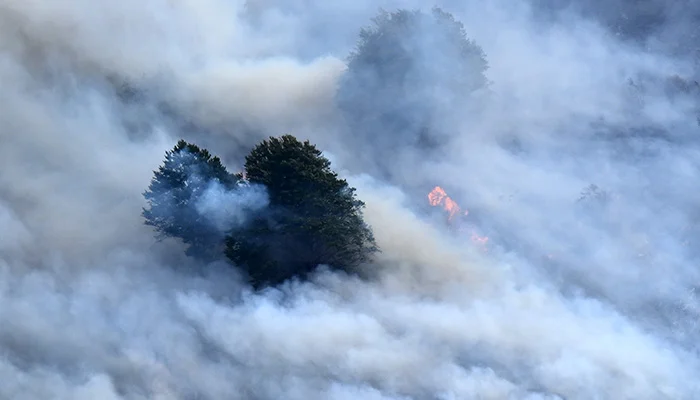
The WMO said extreme wildfires are becoming more common and are producing smoke with serious health consequences.
While regulations in Europe and North America have helped reduce industrial and transport-related emissions of fine particulate matter, exposure to wildfire-related PM2.5 has increased.
PM2.5 refers to microscopic particles and droplets measuring less than 2.5 micrometres in diameter. Because of their extremely small size, these particles can travel deep into the lungs and, in some cases, enter the bloodstream.
They can come from a range of sources, including fossil-fuel-powered industry, agriculture, household heating and transport. Wildfires and dust storms are also major sources.
According to Lorenzo Labrador of the WMO’s Global Atmosphere Watch network, fine particles produced by large forest fires can be considerably more toxic than particles from some other pollution sources.
Pollution Can Travel Far Beyond Fire Zones
The health impact of wildfire smoke is not limited to communities located immediately next to burning forests.
Smoke particles can be carried long distances by wind, exposing people and wildlife far from the original fire. The WMO warned that the toxic effects of wildfire smoke may not be fully reflected in conventional air-quality assessments.
The agency said traditional risk models based on overall PM2.5 concentrations could underestimate deaths attributable to wildfire smoke by as much as 93%.
One study cited by the WMO found that extreme fire-smoke events have tripled globally since the 1990s. It estimated that these events contributed to nearly 100,000 additional deaths each year between 2010 and 2018, although the actual figure could be higher.
Wildfires spread across UK as Natural England warns south at highest risk this week
Heatwaves Also Increase Ozone Pollution
Wildfires are not the only concern. The WMO also highlighted the risks associated with ground-level ozone, a pollutant that can build up when temperatures are high, atmospheric conditions are stagnant and sunlight is intense.
Such conditions have been observed during heatwaves in parts of China, Europe and the southeastern United States.
Increased exposure to ground-level ozone could contribute to tens of thousands of additional premature deaths, particularly from respiratory diseases, the WMO warned.
The combination of extreme heat and deteriorating air quality can therefore create a particularly serious health threat, especially for vulnerable populations.
Black Carbon and Microplastics Raise Further Concerns
The WMO also called for improved monitoring of aerosols and other pollutants, including black carbon, fine particles and airborne microplastics.
Black carbon, commonly known as soot, can travel considerable distances and eventually settle on snow and ice. This dark material reduces the surfaces’ ability to reflect sunlight and can accelerate melting.
Microplastics are another emerging concern. They are created when plastic products break down through sunlight and other environmental processes and have now been detected in the air, soil and oceans.
A simulation cited by the WMO estimated that around 51 million tonnes of microplastics are associated with land and 22 million tonnes with the ocean, which can in turn contribute microplastics to the atmosphere.
WMO Calls for Coordinated Action
The agency stressed that climate change and air pollution cannot be addressed independently because changes in one can worsen the other.
It called for better monitoring of pollutants that remain insufficiently measured despite their widespread presence and potential harm to ecosystems.
The WMO said governments need complementary and coordinated policies covering both air quality and climate. Such an approach, it argued, would help authorities better understand the health consequences of wildfire smoke, heat-related ozone pollution and other emerging airborne pollutants.
As extreme weather events become more frequent and intense, the agency’s warning underscores the need to treat air pollution and climate change as interconnected environmental and public-health challenges rather than separate problems.