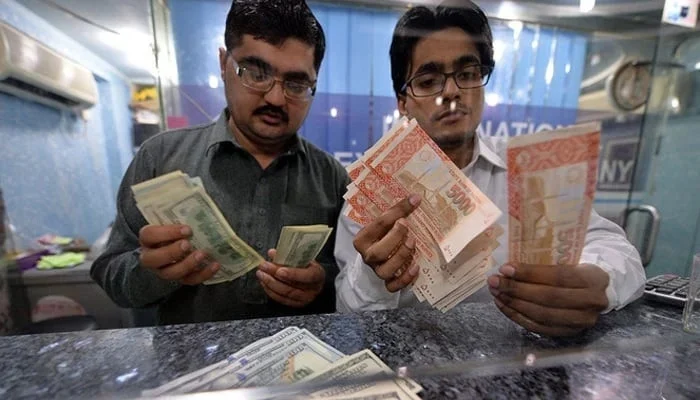
ISLAMABAD: Pakistan received $3.66 billion in workers’ remittances in August 2026, marking a 16.5% increase compared with the same month last year, according to data released by the State Bank of Pakistan (SBP) on Wednesday.
The latest figures provide further support to Pakistan’s external account as overseas workers continue to send substantial amounts of money to their families and businesses in the country.
Adviser to the Finance Minister Khurram Schehzad said in a post on X that remittances during the first two months of fiscal year 2026-27 (FY27) reached $7.29 billion, representing a 14.7% increase compared with the corresponding period of the previous fiscal year.
August inflows also increased by 0.7% month-on-month, indicating that remittance receipts remained relatively stable despite fluctuations in monthly flows.
Saudi Arabia Remains Top Source
Saudi Arabia continued to be Pakistan’s largest source of workers’ remittances in August, sending $873 million.
According to data compiled by Topline Securities, Saudi inflows increased by 19% year-on-year, compared with $737 million received in August 2025. However, the figure was 4% lower than the $914 million recorded in July 2026.
The United Arab Emirates ranked second, with Pakistani workers sending $750 million home in August. UAE remittances increased 17% year-on-year from $643 million in August 2025 and were also 2% higher than the $737 million received in July.
The United Kingdom contributed $564 million, while remittances from the United States stood at $309 million during the month.
Remittances Reach $7.29 Billion in Two Months
The strong August performance contributed to a significant increase in cumulative remittance inflows during the first two months of FY27.
Remittances from Saudi Arabia totalled $1.787 billion during July-August, up 15% from $1.56 billion during the same period of FY26.
Meanwhile, inflows from the UAE reached $1.487 billion, representing a 14% increase from the $1.308 billion recorded during the corresponding period last year.
PM Directs All Overseas Remittances to Be Processed Digitally to Promote Cashless Economy
Other Gulf Cooperation Council (GCC) countries contributed $327 million during the first two months, showing an 8% year-on-year increase.
Remittances from other destinations around the world added another $338 million, rising 16% compared with the same period last year.
Overall, Pakistan received $7.29 billion in workers’ remittances during the first two months of FY27, with growth recorded across the country’s major remittance corridors.
Remittances Support Pakistan’s External Account
Finance Ministry adviser Khurram Schehzad said the latest inflows build on Pakistan’s record $41.6 billion in remittances during FY26.
He described sustained remittance flows as an important pillar of Pakistan’s external account, saying they support household incomes, foreign exchange liquidity, official reserves and the country’s broader external-sector resilience.
For Pakistan, remittances from overseas workers are a major source of foreign exchange and provide financial support to millions of families. Stronger formal inflows can also help improve liquidity in the foreign exchange market and strengthen the country’s external financing position.
The latest figures suggest that remittance growth has remained strong at the beginning of FY27, with Saudi Arabia and the UAE continuing to account for a substantial share of total inflows.
With Pakistan recording $7.29 billion in remittances in just the first two months of the fiscal year, sustained growth in overseas worker transfers could remain an important source of support for the country’s economy and external account in the months ahead.