ISLAMABAD: Prime Minister Shehbaz Sharif has directed that all remittances sent by overseas Pakistanis be processed through digital channels as part of the government’s efforts to accelerate the country’s transition to a cashless economy and improve financial transparency.
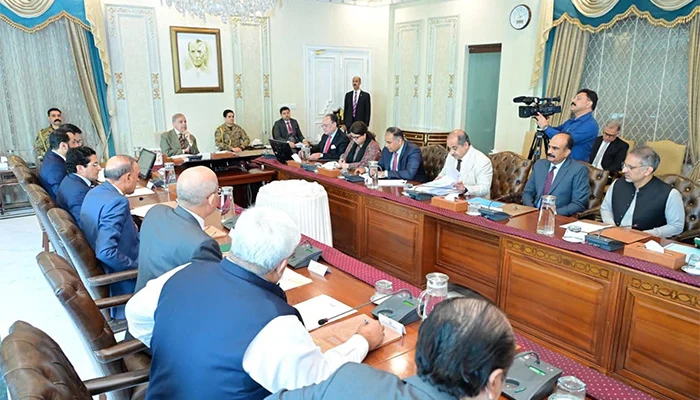
The directive was issued during a high-level meeting on promoting digital payments, where the prime minister reviewed progress on the government’s cashless economy initiative and praised the economic team for significant advances in digital financial services over the past year.
Government Pushes Digital Remittances
Chairing the meeting, Prime Minister Shehbaz said expanding digital payment systems would help strengthen transparency, improve efficiency and encourage greater financial inclusion across the country.
He instructed the relevant authorities to ensure that overseas remittances are increasingly routed through secure digital platforms, describing the move as an important step in modernising Pakistan’s financial system.
The prime minister also called for stronger public awareness campaigns to encourage wider adoption of QR code-based digital payment methods among businesses and consumers.
Sharp Growth in Digital Payments
Officials informed the meeting that the number of active merchants accepting QR code-based digital payments increased by 300% between June 2025 and June 2026, reaching 2.003 million.
Prime Minister Shehbaz described the achievement as a major milestone in the government’s drive to reduce reliance on cash transactions.
The meeting was also told that the number of mobile banking application users had risen significantly—from 95 million to 137 million within a year—reflecting rapid growth in digital banking services across Pakistan.
Banks Asked to Play Greater Role
The prime minister urged banks and financial institutions to take a more proactive role in expanding digital payment infrastructure and encouraging customers to use electronic payment methods.
Officials said the Pakistan Banks’ Association has already assigned digital payment targets to member banks, including greater promotion of the Raast instant payment system, Pakistan’s national digital payment platform.
Pakistan’s Workers’ Remittances Rise to $3.5 Billion in April: SBP
BISP and NADRA Payments Largely Digitised
The meeting was informed that the government’s digital transformation has also extended to public services.
According to the briefing, 99% of payments made through the National Database and Registration Authority (NADRA) are now processed digitally, while the share of cash payments has fallen sharply from 71% to just 1%.
Officials also said that all payments to approximately 10 million beneficiaries of the Benazir Income Support Programme (BISP) are now being made through digital wallets, a move the prime minister described as more transparent, efficient and convenient for recipients.
Digital Transactions Continue to Rise
Between July 2025 and June 2026, Pakistan recorded approximately 11.9 billion digital transactions, highlighting the country’s increasing adoption of electronic financial services.
During the same period, officials said 92% of remittances sent by overseas Pakistanis were already received through digital channels, demonstrating growing confidence in digital payment systems.
Independent Review Underway
The meeting was further informed that an independent third-party assessment of the government’s cashless economy initiative is currently in progress.
The final evaluation report, along with recommendations for further improvements, is expected to be submitted in November 2026.
High-Level Meeting Attended by Key Officials
The review meeting was attended by several senior government officials, including Federal Ministers Ahad Khan Cheema, Muhammad Aurangzeb, Attaullah Tarar, Shaza Fatima Khawaja and Ali Pervaiz Malik, Minister of State for Finance Bilal Azhar Kayani, State Bank of Pakistan Governor Jameel Ahmad, the NADRA chairman, and senior representatives from relevant institutions.
Analysts say the government’s continued focus on digital payments, electronic remittances and financial technology reflects broader efforts to modernise Pakistan’s economy, improve transparency and expand access to formal financial services for individuals and businesses alike.