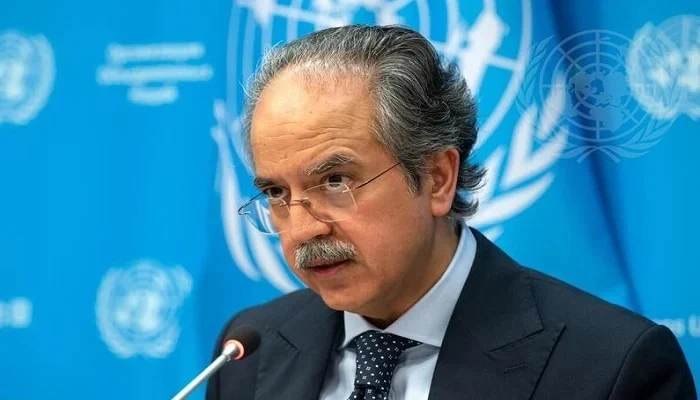
ISLAMABAD: Pakistan is stepping up diplomatic efforts to help end the conflict in the Middle East, with Foreign Secretary Asim Iftikhar Ahmad saying Islamabad is pushing for a peaceful resolution through dialogue and international mechanisms.
Speaking to Geo News, the foreign secretary said Pakistan was working to promote a ceasefire, reduce tensions and encourage the parties involved to return to the negotiating table as the regional situation continues to deteriorate.
“Our effort is to find a peaceful and international solution to the conflict under UN laws,” Ahmad said, emphasising that the immediate priority was to stop the fighting and de-escalate tensions.
He said the UN Charter provides a framework for resolving international disputes through negotiations rather than military confrontation.
“The Security Council’s Charter is meant to resolve conflicts through negotiations, not war,” he said.
Pakistan seeks role in preventing escalation
Ahmad acknowledged that the situation was moving in a negative direction but said Pakistan was conscious of the need to contribute to efforts aimed at preventing further escalation.
“We acknowledge that the situation is moving in a negative direction. We are aware of it and believe that we have to play our role,” he said.
The foreign secretary also highlighted Pakistan’s diplomatic engagement during the Iran-US confrontation, saying Islamabad had been among the countries actively involved in efforts to contain the conflict.
“The world was watching to see what would happen in the Iran-US conflict,” Ahmad said, adding that Pakistan was “at the forefront” of countries that played a role in the diplomatic efforts.
BRICS nations call for maximum restraint amid Middle East tensions
Makkah agreement adds to Pakistan’s role
Ahmad also referred to the Makkah agreement involving Pakistan, Saudi Arabia and Turkiye, saying the arrangement had given Islamabad an additional responsibility to work for regional peace and stability.
“The Makkah agreement has all three countries involved. Our objective is peace and stability in the region,” he said.
The remarks come as the regional crisis continues to widen, with fighting and attacks affecting Gulf security, energy infrastructure and important maritime routes.
According to Reuters, the conflict has created additional challenges for Pakistan as it seeks to balance its diplomatic role with its defence commitments to Saudi Arabia under the Makkah agreement.
Pakistan has repeatedly called for dialogue and de-escalation during the US-Iran confrontation. Islamabad has also sought to keep diplomatic channels open through the Islamabad MoU framework and urged the parties to resume negotiations.
UN still has a role, says Ahmad
The foreign secretary rejected suggestions that the United Nations was no longer contributing meaningfully to peace efforts.
He said the UN continued to have an important role in resolving international disputes and stressed that conflicts should be addressed through established international mechanisms.
Ahmad also said the Palestinian and Kashmir disputes should be resolved in accordance with the relevant UN Security Council resolutions, reiterating Pakistan’s position that international law and multilateral diplomacy should remain central to resolving longstanding conflicts.