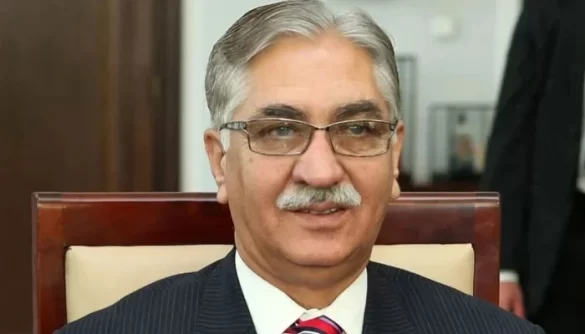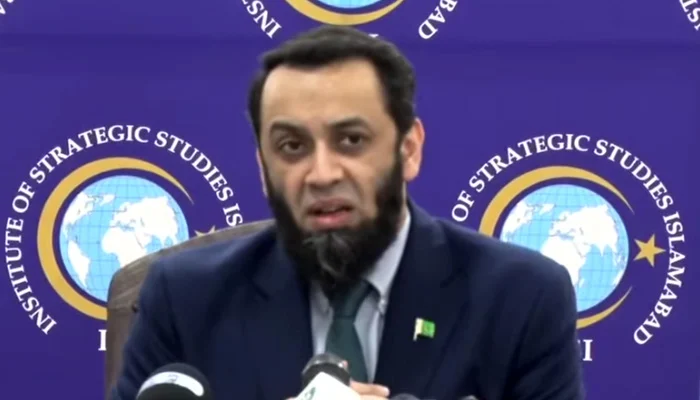
Information Minister Attaullah Tarar has said Pakistan believes in peace but will not allow India to use water as a weapon, reiterating Islamabad’s position that the Indus Waters Treaty (IWT) cannot be unilaterally altered, revoked or placed in abeyance.
Tarar made the remarks on Wednesday while addressing the launch of a special report titled Weaponising Waters: Historical, Legal, and Strategic Dimensions of IWT Suspension at the Institute of Strategic Studies Islamabad (ISSI).
He said Pakistan had pursued the matter through diplomatic channels and presented its position before the international community and relevant forums.
Arbitration court upholds treaty status
Tarar referred to the recent ruling by the Court of Arbitration under the Permanent Court of Arbitration, which found that the Indus Waters Treaty remains in force and that India’s decision to place the agreement in abeyance did not remove its obligations under the treaty.
The arbitration panel also issued interim measures concerning India’s Ratle hydroelectric project. The ruling was delivered on August 31, 2026.
India, however, has rejected the authority of the arbitration process and said the ruling would not affect its sovereign decisions or ongoing hydroelectric projects.
The dispute intensified after India announced in April 2025 that it was placing the treaty in abeyance following an attack in Indian-administered Jammu and Kashmir that killed 26 people. India accused Pakistan of involvement, while Islamabad denied the allegation. The two countries subsequently engaged in military hostilities before a ceasefire in May 2025.
Hague Court Orders India to Uphold Indus Waters Treaty With Pakistan
Pakistan warns of wider implications
Tarar said the IWT had historically served as an instrument of peace and stability between the two countries and argued that allowing a binding international water-sharing agreement to be suspended unilaterally could have consequences beyond South Asia.
He urged the international community to consider the broader implications for transboundary water governance, particularly for countries that rely on treaties governing shared rivers and water resources.
The minister also referred to Prime Minister Shehbaz Sharif’s recent address to the 81st United Nations General Assembly, where the Pakistani leader warned that any attempt to stop, impede or divert Pakistan’s share of Indus waters would be treated as an “act of war.”
Tarar said Pakistan would continue engaging internationally on the issue and defend what it considers its vital national interests in accordance with international law.
The IWT, brokered by the World Bank in 1960, remains a central element of water management between Pakistan and India despite decades of political and military tensions.