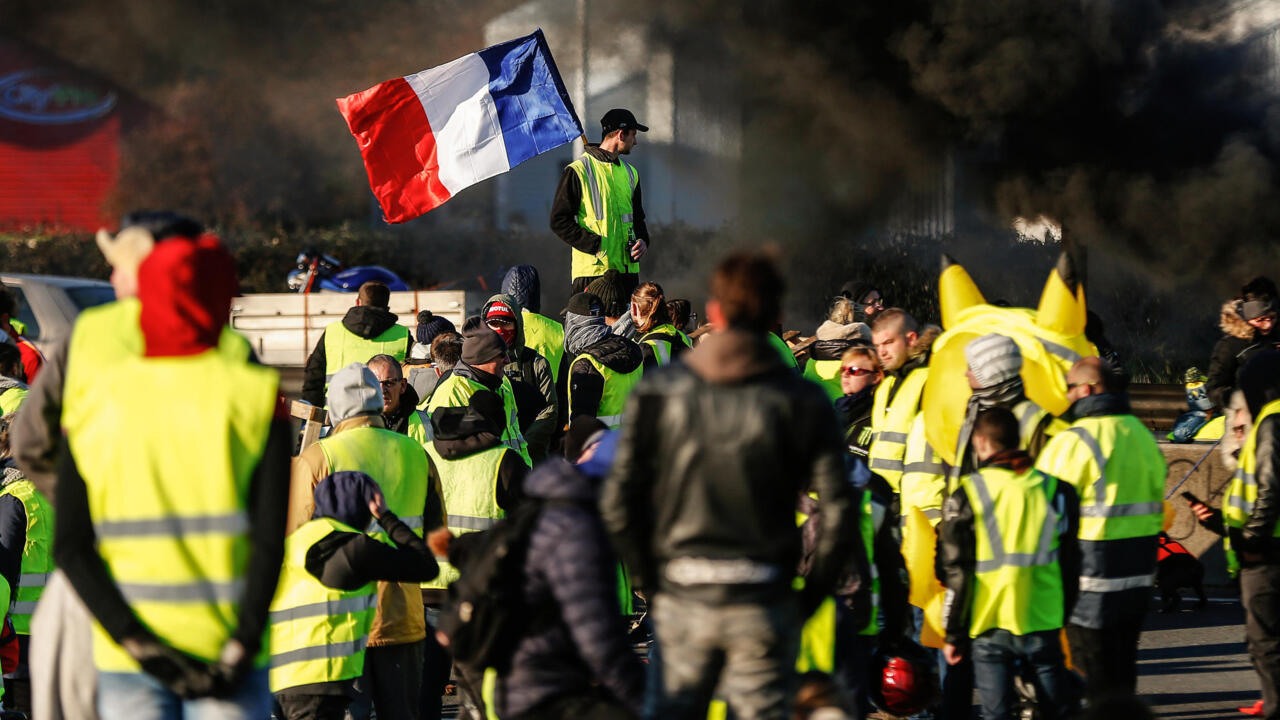
PARIS: France is bracing for another round of demonstrations as the Yellow Vest movement prepares to stage a major march through the capital on Saturday, presenting a fresh challenge to the government after violent unrest swept several cities last weekend.
Prime Minister Sébastien Lecornu was due to meet union leaders on Wednesday in an effort to ease one of the country’s most serious political and social crises in recent years and prevent a repeat of the violence reported on October 17.
A representative of the Gilets Jaunes, or Yellow Vests, submitted plans for a march through central Paris, including areas affected by recent looting and destruction.
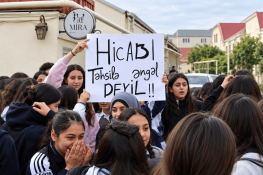
Student groups have also called for demonstrations on the same day, demanding greater investment in education. Meanwhile, Yellow Vest activists are seeking to revive their campaign against rising living costs and declining public services, which first gained national prominence in 2018.
French Borrowing Costs Rise Amid Unrest
The latest unrest has heightened concerns among investors about France’s political stability and its ability to manage public finances.
Demonstrations last weekend reportedly escalated into widespread violence in Paris, Marseille, Lyon and Limoges, placing heavy demands on police forces and requiring hours to bring some areas under control.
French government borrowing costs have risen sharply amid the uncertainty. The benchmark 10-year government bond yield reached 5%, its highest level since July 2002, according to the report.
Analysts said investors were concerned that continued unrest could complicate efforts to address France’s strained public finances at a time of mounting budget pressures.
President Emmanuel Macron was scheduled to meet intelligence officials on Thursday ahead of the planned demonstrations.
Government Promises Stronger Security Measures
The government has pledged to strengthen security arrangements after acknowledging shortcomings in its initial response to the recent violence.
Additional police and military personnel are expected to support security operations as authorities prepare for further protests. The government has also considered partial curfews in areas affected by riots and looting.
In a letter to union leaders ahead of Wednesday’s meeting, Lecornu said discussions should focus on protecting the “indispensable freedom to demonstrate”.
He warned against attempts to associate the right to protest with unacceptable acts of violence.
Trump Blames Immigration for France Riots, Urges Border Closure
However, union leaders have argued that the government must address the underlying causes of public anger rather than rely primarily on security measures.
Sophie Binet, head of France’s CGT trade union, told RTL radio that the country was experiencing widespread and legitimate anger.
She said repression was not the answer and called for a political response to the crisis.
France’s main unions have separately announced a nationwide mobilisation for November 5.
Political Opposition Intensifies Pressure on Macron
The unrest has triggered a political backlash as France approaches another presidential election cycle.
A second consecutive night of local curfews passed without major incidents in affected areas, offering the government some temporary relief. Nevertheless, opposition parties have intensified their criticism of the administration’s handling of the crisis.
Marine Le Pen, leader of the far-right National Rally, accused the government of losing control of the situation in comments to Franceinfo radio.
The hard-left France Unbowed party, meanwhile, criticised plans to deploy troops on the streets of Paris.
In a statement, the party’s parliamentary group warned against treating protesters as enemies and argued that the government should not turn against its own citizens.
The competing responses reflect the political divisions surrounding the unrest, with parties on both the far right and hard left seeking to capitalise on public dissatisfaction.
Protests Raise Concerns Across Europe
France’s turmoil comes amid wider tensions across Europe, where rising living costs, public spending pressures and dissatisfaction with government policies have contributed to protests and political uncertainty.
Demonstrations in countries including Italy and Albania have added to concerns that public anger over living standards could spread further across the continent.
Italy approved a series of security measures on Tuesday in response to recent unrest, including a new offence relating to violent participation in demonstrations and tougher penalties for rioters.
The measures reflect a broader debate across Europe over how governments should balance public order with the right to peaceful protest.
Government Faces Crucial Test Ahead of New Demonstrations
The planned Yellow Vest march and student protests will test whether French authorities can maintain public order while allowing demonstrations to proceed peacefully.
For Lecornu’s government, the immediate challenge is to prevent further violence without deepening public frustration over the cost of living, public services and political accountability.
With borrowing costs rising and opposition parties increasing their pressure, the handling of the coming demonstrations could have consequences extending beyond public security to France’s wider political and economic outlook.