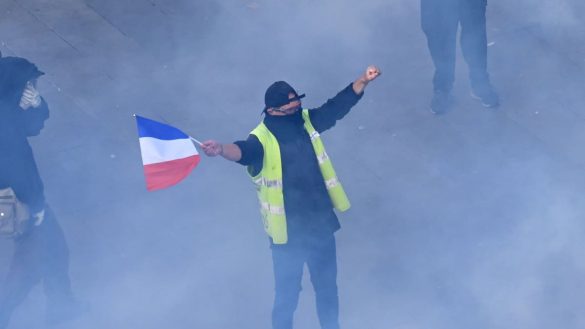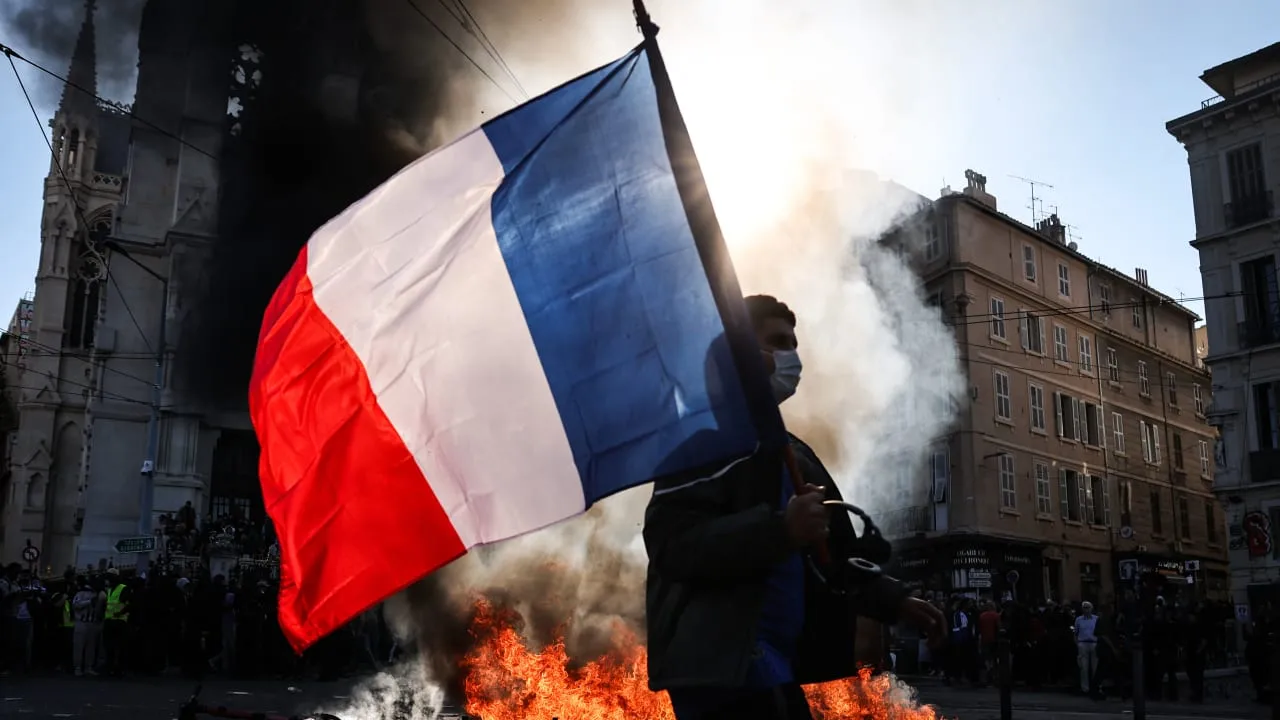
US President Donald Trump has blamed immigration for widespread unrest in France, urging French authorities to close their borders and regain control as protests and riots spread across several cities.
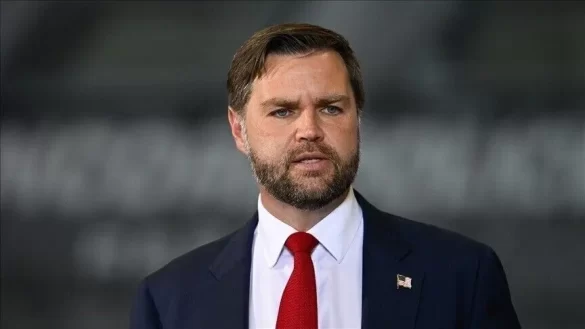
In a post on his Truth Social platform on Sunday, October 18, Trump described France as “burning” and accused immigration of damaging the country. His comments were echoed by US Vice President JD Vance, who linked the violence to immigration and what he described as failures of assimilation.
The statements have added an international political dimension to the unrest, which began with protests over conditions in schools before expanding into a broader movement focused on inequality, public spending and living standards.
Trump Calls on France to Close Its Borders
Trump argued that immigration from societies he described as culturally different had contributed to France’s problems.
“The immigration of people from an entirely different world, people with hatred in their hearts, has shattered that once great country,” he wrote.
He also urged French authorities to “close your borders and take control, before it is too late!”
Trump’s remarks placed immigration at the centre of his explanation for the unrest. However, the protests initially emerged over domestic concerns, including teacher shortages, deteriorating school facilities and wider socioeconomic grievances.
JD Vance Links Violence to Immigration and Assimilation
Vance also criticised European immigration policies while sharing a video showing a fire at the city hall in Limoges, France.
In a post on X, the vice president argued that Western governments had failed to address questions about immigration and integration.
“Western liberals imported the third world into France and other countries in the name of diversity and compassion. They ignored fundamental questions of assimilation and compatibility. They were told it would lead to this and they didn’t listen,” Vance wrote.
He also expressed concern over damage to French landmarks, saying he hoped the country would stop the violence before further destruction occurred.
Vance frequently criticises European immigration policies, which he considers too permissive. In February 2025, he addressed the issue during a speech in Munich, where he challenged European leaders over their approach to immigration and other political questions.
France Protests Turn Violent as 1,200 Arrested in Nationwide Riots
Protests Began Over School Conditions and Inequality
The unrest began last month among high school students in working-class northern suburbs of Paris. Initial demonstrations focused on teacher shortages and poor school facilities before expanding into broader demands concerning inequality, public spending and living standards.
The movement subsequently spread beyond the capital, with demonstrations and clashes reported in other French cities.
The protests have raised questions about public services, economic conditions and the government’s response to growing social discontent.
While Trump and Vance have attributed the violence to immigration and integration challenges, the initial grievances cited in reports on the demonstrations centred on domestic social and economic concerns.
Vance Draws a Connection to US Midterm Elections
Vance also used the unrest to criticise political opponents in the United States ahead of the congressional midterm elections scheduled for November 3.
“And I hope Americans are paying attention. This is the future congressional Democrats seek for your country,” he wrote.
The comments connected the French unrest to the US domestic political debate over immigration, national identity and public order.
Vance, 42, is widely discussed as a potential Republican presidential contender in 2028 and represents a nationalist current within the party that advocates tighter immigration controls.
Immigration Debate Intensifies Amid French Unrest
Trump and Vance’s comments reflect their broader criticism of European immigration policies and their argument that governments should place greater emphasis on border controls and integration.
However, the causes of unrest can involve multiple factors, and political claims linking immigration to the violence should be distinguished from the grievances that initially prompted the demonstrations.
As protests continue to draw attention in France, the government’s response and the movement’s evolving demands are likely to remain central to the debate over public services, inequality, immigration and social cohesion.