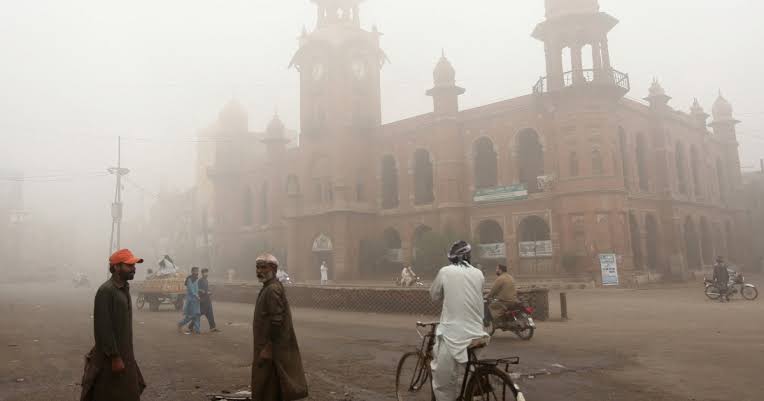
LAHORE: Air pollution intensified across Punjab on Monday, with Lahore recording an Air Quality Index (AQI) of 535 at 8am, as dangerously polluted air affected millions of residents. Fine particulate matter (PM2.5) reached 343 micrograms per cubic metre, according to readings reported by IQAir and confirmed by the Punjab Environmental Protection Department (EPD).
The reading was among the highest pollution levels recorded during the 2026 smog season. Thick smog and polluted air also affected several parts of Lahore and surrounding areas.
The situation was even more concerning in other cities. Gujranwala recorded an AQI of 606 in the morning, while Faisalabad and Multan registered readings of 310 each. Sialkot’s AQI stood at 260. Lahore also topped IQAir’s early morning ranking of pollution levels in major cities, although international rankings fluctuated throughout the day.
The worsening conditions renewed questions about the effectiveness of the government’s anti-smog measures, as agricultural burning, industrial emissions, vehicle exhaust and construction dust continued to contribute to pollution across Lahore and neighbouring districts.
Pollution Across Punjab
The pollution crisis extended beyond Lahore, with Sheikhupura, Kasur, Gujranwala, Nankana Sahib and other agricultural and industrial districts forming part of the wider pollution belt surrounding the provincial capital.
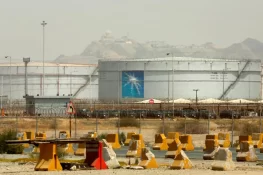
Industrial fuel consumption, brick kilns, crop residue burning, waste disposal practices and transport emissions collectively added to the regional pollution burden.
Satellite observations also highlighted the scale of agricultural fires across Punjab. An analysis of data from NASA satellites found 13,241 fire spots in Pakistani Punjab between October 1 and 29, compared with 3,158 in Indian Punjab.
Around 92 per cent of the detected fires in Pakistani Punjab were located on farmland and were considered likely to be linked to crop residue burning.
Okara recorded the highest number of fire spots at 2,144, followed by Gujranwala with 1,011 and Nankana Sahib with 1,003.
The findings are significant for Lahore because these agricultural districts fall within the wider regional airshed. However, satellite fire detections alone cannot establish how much smoke from individual fires contributed to the city’s measured AQI.
The figures have raised questions about whether Lahore can achieve cleaner air while pollution-producing activities continue across surrounding agricultural and industrial districts.
Weather-Related Improvement
A recent assessment by the Pakistan Air Quality Initiative (PAQI) found that average PM2.5 concentrations across 26 monitoring sites in Lahore declined by 27 per cent in October compared with the same month last year.
However, its weather-adjusted analysis estimated that improvements attributable to factors other than weather amounted to only around four per cent.
The assessment also found that PM2.5 concentrations remained above Pakistan’s prescribed daily limit on every day of October.
These findings suggested that favourable atmospheric conditions had contributed substantially to the comparatively better air quality, rather than indicating a decisive reduction in pollution sources.
The renewed deterioration in November has therefore raised questions about whether the Punjab government’s enforcement measures are delivering sustainable results or whether temporary weather conditions provided much of the earlier relief.
Lahore Ranks Second Among World’s Most Polluted Cities as Air Quality Worsens
Serious Health Risks
The health implications of hazardous air pollution are particularly concerning. PM2.5 particles are small enough to penetrate deep into the lungs and enter the bloodstream, increasing the risk of respiratory and cardiovascular complications.
Children, older people, outdoor workers and individuals with existing respiratory conditions remain particularly vulnerable.
Pollution also affects everyday economic and social activities, including outdoor employment, school attendance, public transport and commercial operations. Residents who spend long hours commuting on motorcycles or working on roads face prolonged exposure to polluted air.
Environmental experts have repeatedly emphasised that controlling smog requires more than temporary restrictions and emergency operations. Industrial emission monitoring, cleaner transport, effective construction dust management, restrictions on open waste burning, modernised brick kilns and alternatives to agricultural residue burning are all needed as part of a sustained strategy.
Need for Regional Action
For Lahore, effective action would require extending anti-smog enforcement beyond municipal boundaries through coordinated efforts involving the Punjab Environmental Protection and Climate Change Department, district administrations, agriculture authorities, industrial regulators and local governments.
The provincial government also needs transparent, district-wise pollution monitoring, publicly available inspection and enforcement records, stronger industrial emissions testing and meaningful penalties for repeat environmental violations.
A regional airshed management mechanism could help identify major pollution sources, assess their contributions and coordinate preventive measures across districts, rather than treating each city as an isolated environmental unit.
Responding to the situation, EPD spokesperson Sajid Bashir said the department’s efforts had helped improve air quality compared with October last year, although authorities were continuing their work to tackle pollution.
“Due to the efforts of the Punjab government and the Environment Department, smog and pollution levels were better this October than last year. We are still working hard to tackle the pollution situation,” he said.
With Lahore recording an AQI above 530 and neighbouring cities also experiencing hazardous pollution, the latest episode has highlighted the scale of the challenge facing Punjab.
The issue is no longer simply how to clear smog over Lahore, but how to control pollution generated across the wider region. Without measurable reductions in emissions and coordinated enforcement across Punjab, emergency anti-smog operations risk providing only temporary relief while the underlying environmental crisis continues.