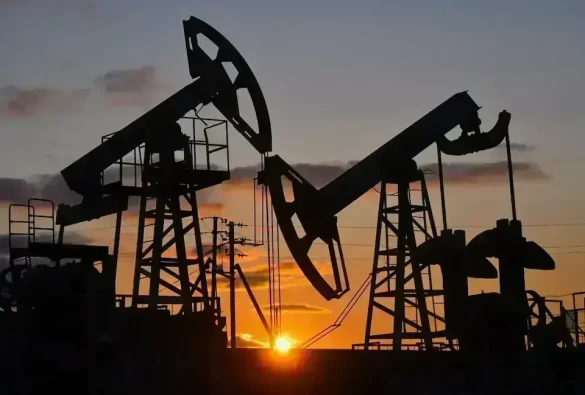
Global oil prices declined on Wednesday as rising crude and fuel inventories in the United States eased concerns about supply shortages. However, escalating military tensions between the United States and Iran and continued disruptions to shipping through the Strait of Hormuz limited the decline.
US West Texas Intermediate (WTI) crude futures fell 56 cents, or 0.65 per cent, to $85.45 per barrel, while Brent crude futures dropped 16 cents, or 0.17 per cent, to $92.98 per barrel as of 0149 GMT.
US Crude Inventories Record Significant Increase
The decline followed data showing a substantial increase in US petroleum inventories during the week ending November 13.
According to market sources citing figures from the American Petroleum Institute (API), US crude oil stocks increased by 5.28 million barrels during the week.
Gasoline inventories also recorded a significant increase of 5.12 million barrels, while distillate stocks, which include diesel and heating oil, rose by 351,000 barrels.
The increase in inventories suggested that supplies remained relatively strong, putting downward pressure on international oil prices.
Market participants are also monitoring expectations of a potential global oil supply surplus, which could further limit price gains.
US-Iran Conflict Limits Oil Price Decline
Despite the increase in US inventories, geopolitical tensions continued to support oil prices by raising concerns about possible disruptions to global energy supplies.
Bahrain’s defence force said on Wednesday that it had intercepted Iranian aerial attacks on the country, which hosts the US Navy’s Fifth Fleet. The development marked another escalation following exchanges of military strikes between Washington and Tehran.
Iranian drones had reportedly attacked a US military radar system in Bahrain on Tuesday, prompting American strikes on a missile launch site on Iran’s Qeshm Island.
Both oil benchmarks had settled higher on Tuesday as the conflict intensified, despite ongoing diplomatic efforts involving Iran and mediators from Oman and Qatar.
Oil Prices Fall as Recovering Middle East Exports Ease Gulf Supply Concerns
Strait of Hormuz Disruptions Raise Supply Concerns
Shipping disruptions around the Strait of Hormuz have remained another major concern for international energy markets.
An liquefied petroleum gas (LPG) tanker was struck by a projectile while travelling through the strait near Oman’s coast on Monday, forcing its crew to evacuate.
The incident added to concerns about the safety of vessels transporting energy supplies through one of the world’s most important oil transit routes.
Analysts at LSEG said that normal shipping flows through the Strait of Hormuz remained difficult under the prevailing security conditions, despite the possibility of regional oil supplies recovering through alternative routes.
Meanwhile, Yemen’s Iran-aligned Houthi group claimed on Tuesday that it had launched five drones towards two pumping stations along Saudi Arabia’s East-West pipeline.
Saudi Arabia has been using the pipeline to redirect oil towards its Yanbu port for exports, bypassing the Strait of Hormuz.
Global Oil Market Balances Supply and Geopolitical Risks
The latest movement in oil prices reflects competing pressures facing international energy markets.
Higher US crude and fuel inventories, combined with expectations of increased global supply, are weighing on prices. At the same time, military tensions in the Middle East and threats to major shipping routes are preventing a sharper decline.
Investors are closely monitoring developments in the US-Iran conflict, the security situation around the Strait of Hormuz and changes in global petroleum inventories.
These factors are expected to remain important in determining the direction of international crude prices in the coming trading sessions.
Source attribution: Based on Reuters reporting published on November 18, 2026, and carried by The Express Tribune. Additional market context was cross-checked against international energy market reporting.