France and Germany are pushing for the European Union to reach an agreement on its next seven-year budget and future financial assistance to Ukraine by the end of 2026, ahead of several national elections across Europe next year that could complicate negotiations.
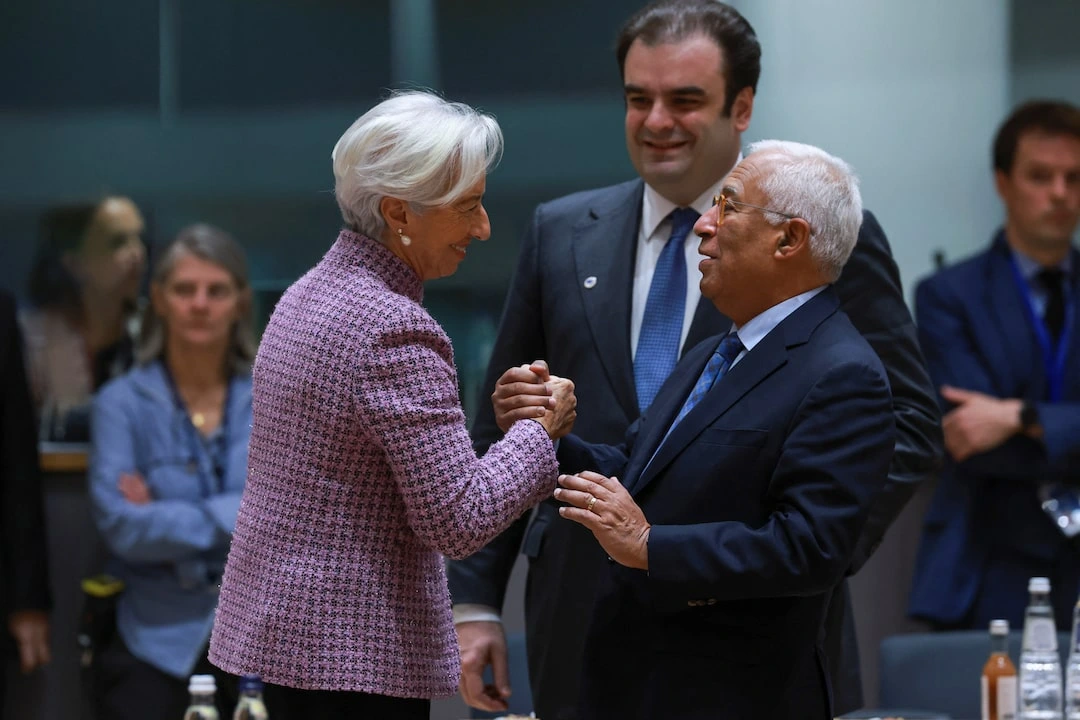
European leaders discussed the proposed 2028-2034 budget during a summit in Brussels on Thursday, but made limited progress amid disagreements over spending priorities, national contributions and continued support for Ukraine.
The proposed budget amounts to approximately €1.58 trillion ($1.8 trillion) and requires unanimous approval from all 27 EU member states.
Marine Le Pen’s Potential Election Victory Raises Concerns
The possibility of far-right French leader Marine Le Pen winning the country’s 2027 presidential election has added urgency to the negotiations.
Le Pen has pledged to end France’s financial assistance to Ukraine and substantially reduce the country’s contributions to the EU budget if she comes to power.
France is scheduled to hold its presidential election in April and May 2027. French President Emmanuel Macron has argued that an agreement must be reached before the end of this year because negotiations could become politically difficult once the country enters its election period.
Macron said he would no longer be in a position to conclude negotiations after December 31, adding that the political circumstances surrounding the presidential election would make further discussions difficult.
German Chancellor Friedrich Merz has also supported the year-end deadline, saying EU leaders should settle the main issues before the end of 2026.
Seven-Year Budget Worth €1.58 Trillion
The proposed EU budget covers the period from 2028 to 2034 and amounts to €1.582 trillion.
Around €140 billion has been allocated to repay borrowing undertaken during the coronavirus pandemic.
The largest spending component, approximately €740 billion, is intended to support European farmers and help less-developed regions catch up economically with wealthier parts of the bloc.
However, member states remain divided over the size of the budget and how the money should be distributed.
Countries that contribute more to the EU budget than they receive, including Germany, Sweden, the Netherlands and Finland, are seeking spending reductions and greater emphasis on European competitiveness.
Other countries that receive more funding than they contribute argue that agricultural support and regional development programmes must remain central priorities.
Canada could become EU’s first associate member under new proposal
Ukraine’s Funding Needs Add Pressure to Negotiations
Financial assistance to Ukraine remains another major issue.
The proposed 2028-2034 EU budget includes up to €100 billion for Ukraine, although diplomats have said this amount may not be sufficient to meet the country’s requirements.
EU governments are also discussing a separate €45 billion loan to help finance Ukraine in 2027.
Under the proposal, the European Union would borrow the money against its existing budget and lend it to Kyiv. The loan would be repaid only when Russia provides war reparations.
Non-EU countries, including Britain, Norway, Japan, Switzerland and Canada, are expected to contribute another €25 billion towards Ukraine’s financing needs in 2027.
Together, the proposed European and international contributions would provide approximately €70 billion to cover Ukraine’s projected funding gap.
Four Countries Oppose Participation in Ukraine Loan
The proposed €45 billion loan has exposed divisions among EU members.
Slovakia, the Czech Republic, Hungary and Bulgaria have objected to participating in the financing arrangement.
Germany and several other member states, however, insist that all 27 countries should contribute to the support package.
German Chancellor Friedrich Merz said Ukraine’s financial support was closely connected to the broader European budget negotiations, arguing that the European Union must act collectively.
The disagreement reflects wider differences over how member states should share the financial responsibilities of the bloc.
December Summit Expected to Be Crucial
European Council President António Costa is expected to present a revised budget proposal in the coming weeks following Thursday’s discussions.
EU leaders are scheduled to meet again on December 17 and 18, when they could seek an agreement on the proposed financial framework.
The negotiations are taking place ahead of elections in France, Italy, Poland, Greece, Estonia, Finland and Slovakia in 2027.
Although Thursday’s discussions failed to produce a breakthrough, European leaders are continuing efforts to resolve disagreements before the end of the year.
Source: The Express Tribune and Reuters.