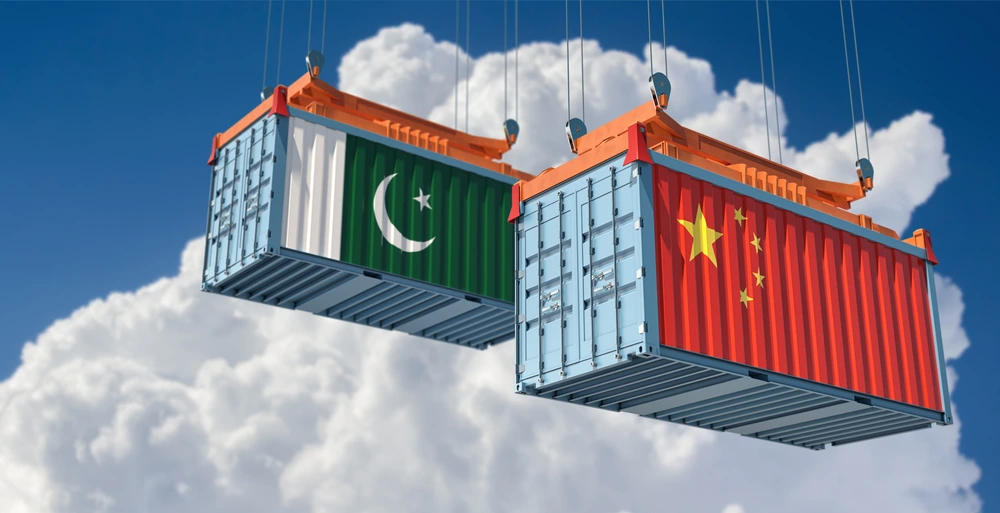
Pakistan has asked China to grant preferential zero-tariff access to Pakistani products in an effort to increase annual exports to the Chinese market from approximately $3 billion to between $20 billion and $25 billion.
Federal Minister for Planning, Development and Special Initiatives Ahsan Iqbal raised the proposal during a meeting with Liu Haixing, Minister of the International Department of the Communist Party of China (CPC) Central Committee, in Beijing on Thursday.
According to official reports, Iqbal suggested that China could extend similar tariff concessions to Pakistani goods as those provided to several African countries to improve their competitiveness in the Chinese market.
Pakistan Seeks Preferential Trade Arrangements
Iqbal said the proposed arrangement could help Pakistani exporters gain better access to one of the world’s largest consumer markets, which imports nearly $3 trillion worth of goods annually.
The proposal follows earlier discussions on November 3 and an initiative previously raised by Prime Minister Shehbaz Sharif with Chinese President Xi Jinping.
Pakistan is seeking a non-reciprocal arrangement that would allow its products to enter China without customs duties, separately from the existing bilateral free trade agreement.
According to figures shared by the government, Pakistan imported goods worth $22.34 billion from China during the 2025-26 fiscal year, while its exports to the country stood at approximately $2.71 billion.
The significant difference between imports and exports highlights the trade imbalance Islamabad hopes to address through improved market access.
However, China’s response to the latest proposal has not yet been announced.
Pakistan-China Knowledge Corridor Proposed
During the meeting, Iqbal also sought China’s support for establishing a Pakistan-China Knowledge Corridor, an initiative aimed at providing doctoral education and specialised research opportunities to approximately 10,000 Pakistani scholars over the next 10 years.
The proposed programme would include scholarships, partnerships with leading Chinese universities and joint financing arrangements.
Priority research areas would include artificial intelligence, engineering, advanced manufacturing, modern agriculture, biotechnology and mineral sciences.
The initiative is intended to strengthen Pakistan’s research capabilities and develop specialised expertise in sectors considered important for future economic growth.
Pakistan Approves Export of 416,000 Tonnes of Sugar Despite Unmet IMF Condition
CPEC’s Second Phase Focuses on Industry and Agriculture
Discussions also covered the second phase of the China-Pakistan Economic Corridor (CPEC), with Iqbal identifying industrial development, agricultural cooperation, technology transfer, mineral exploration and green growth as key areas for collaboration.
The planning minister said the first phase of CPEC had attracted approximately $25 billion in investment, added more than 8,000 megawatts to Pakistan’s electricity generation capacity and delivered 888 kilometres of highways and motorways.
He also cited an estimated 236,000 direct and indirect jobs created through the projects.
Iqbal emphasised the importance of aligning the next phase of CPEC with Pakistan’s URAAN development programme and China’s 15th Five-Year Plan, stressing the need for policy continuity to support long-term cooperation.
He also reaffirmed Pakistan’s commitment to ensuring the security of Chinese personnel and projects.
Infrastructure and Gwadar Projects Discussed
Separately, Iqbal held discussions with Zhou Haibing, Vice Chairman of China’s National Development and Reform Commission, regarding infrastructure and investment projects.
He sought early completion of the financing agreement for the 102-kilometre Thor Nullah-Raikot section of the Karakoram Highway and discussed Chinese participation in upgrading the ML-1 railway line.
For Gwadar Port, Pakistan requested Chinese support for restoring regular shipping services and proposed a joint feasibility study for strategic petroleum storage facilities.
Other proposals included developing the Gwadar Free Zone, expanding the Eastbay Expressway and establishing a corridor connecting mining areas in Chagai with Gwadar to facilitate mineral processing and exports.
Pakistan’s latest proposals reflect its efforts to expand exports, attract investment and strengthen economic cooperation with China. Their implementation, however, will depend on further negotiations and agreements between the two countries.
Source: The Express Tribune, Associated Press of Pakistan and Press Information Department