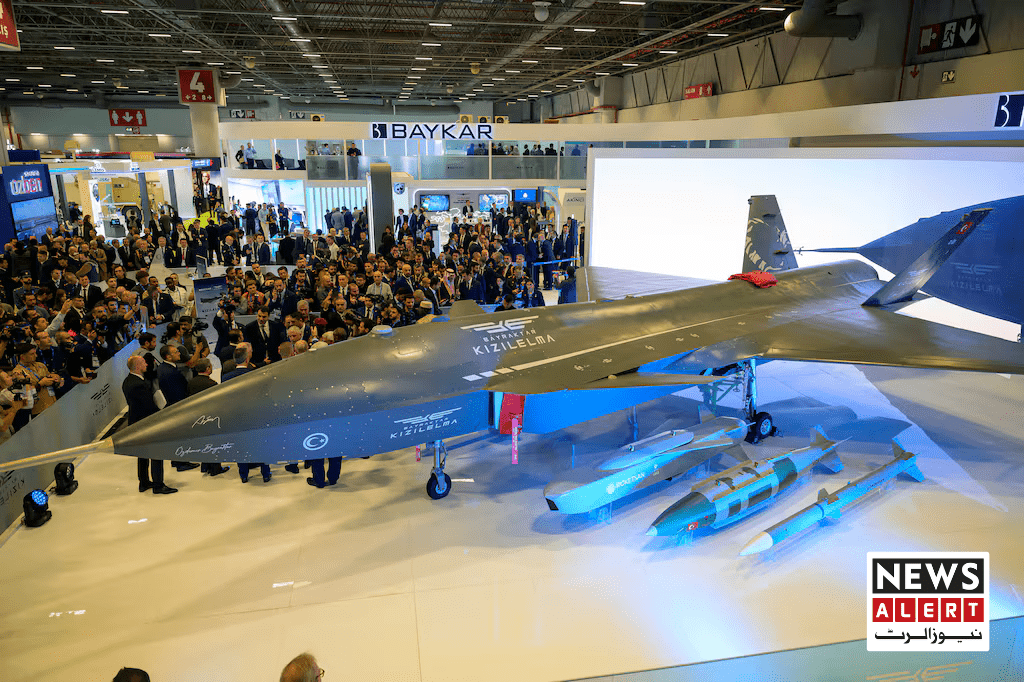
Turkey has taken an important step in its push for advanced unmanned combat systems. The latest prototype of the Kızılelma drone hit an aerial target beyond visual range during a controlled test over the Black Sea. The strike used a fully Turkish-made missile and electronics suite, marking a major breakthrough for the country’s defense sector.
Test Over the Black Sea Shows New Capabilities
The test occurred on 29 November near Sinop. Baykar, the drone’s developer, and the Ministry of Defense released joint details shortly after the event.
Kızılelma flew with an Aselsan-designed sensor package that handled detection and targeting. The drone then launched a Gökdoğan air-to-air missile, developed by TÜBİTAK SAGE. The missile locked onto a moving aerial target and destroyed it at long range.
In earlier trials, the drone completed flight tests and short-range engagements. This time, it demonstrated a more advanced role. The aircraft detected the threat, tracked it, and fired without visual aid from ground crews. The action showed that Turkey’s unmanned systems can now perform tasks once limited to crewed fighters.
Manned and Unmanned Jets Fly Together
Baykar said five F-16s from the 5th Main Jet Base in Merzifon joined the test. The jets flew alongside Kızılelma to practice joint air operations.
Many air forces view this concept as the next step in air combat. Several countries, including the United States and Australia, are developing loyal wingman drones. These systems fly with crewed fighters, expand situational awareness, and take on high-risk missions.
Turkey hopes to place Kızılelma within a similar structure. The drone uses a jet engine, carries multiple weapon types, and flies at high subsonic speeds. It may also operate from the TCG Anadolu, the Turkish Navy’s amphibious assault ship. That combination could allow Turkey to project air power from sea platforms for the first time.
Analysts Call the Test a Strategic Milestone
Defense analyst Arda Mevlütoğlu described the event as a milestone for Turkey’s broader defense strategy. He said the test shows how Ankara wants to reduce its dependence on foreign suppliers. Local production also gives the government greater freedom in exports and battlefield use.
Turkey invested heavily in domestic systems over the past decade. The Bayraktar TB2, another Baykar drone, shaped several conflicts and boosted Turkish defense exports. Kızılelma aims to operate in a higher class. It targets roles usually handled by fighter jets, such as long-range strikes and air-to-air engagements.
Air Force Commander Calls It A Historic Day
General Ziya Cemal Kadıoğlu, commander of the Turkish Air Force, watched parts of the test. He called the achievement “a historic day” and said future generations would understand its significance.
For the Air Force, Kızılelma offers new options. The service plans to modernize its fleet while preparing for next-generation aircraft. Unmanned platforms can support these goals by taking on dangerous missions and lowering operational costs.
Turkey’s Expanding Defense Industry
Turkey aims to grow its defense exports and strengthen its technological base. In 2023, the country recorded over $5.5 billion in defense and aerospace exports, a national record. Officials want to increase that number through advanced products rather than only selling mid-range systems.
Kızılelma fits into this long-term vision. If development continues successfully, the drone may allow Turkey to compete in higher-end markets that include air-to-air capable unmanned aircraft.