A Significant Addition to the Supreme Court Bench
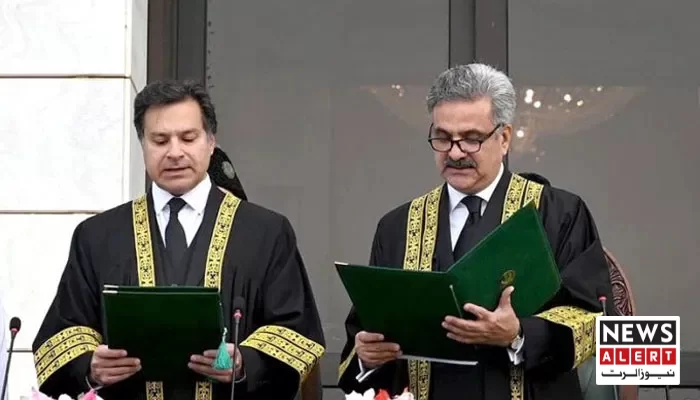
Justice Mian Gul Hasan Aurangzeb took the oath as a permanent judge of the Supreme Court of Pakistan during a dignified ceremony in Islamabad. The occasion drew senior members of the judiciary, legal advisers, and court staff. Meanwhile, Chief Justice Yahya Afridi administered the oath and welcomed the new judge to the bench.
A Ceremony Reflecting Respect and Unity
The event carried a formal atmosphere. Islamabad High Court Chief Justice Sarfraz Dogar, Justice Mohsin Akhtar Kiani, Justice Babar Sattar, Justice Tariq Mehmood Jahangiri, and Justice Sardar Ejaz Ishaq Khan attended the gathering. In addition, several Supreme Court judges joined the ceremony. Their collective presence highlighted institutional unity and reinforced the significance of this appointment.
Why the Appointment Matters Now
Pakistan’s legal system continues to face intense scrutiny. Courts must handle sensitive cases related to governance, civil liberties, and public accountability. Therefore, the Supreme Court increasingly relies on experienced judges to manage its crowded docket.
Moreover, the court needs a complete bench to improve case flow. Pakistan’s Supreme Court generally operates with 17 permanent judges, though this number often shifts due to retirements. With Justice Aurangzeb’s arrival, the court gains a judge known for clarity, discipline, and strong constitutional reasoning.
A Career Built on Constitutional Expertise
Justice Aurangzeb has a long record of professional service. He practiced law at well-known firms and appeared in major constitutional and civil cases before joining the Islamabad High Court. His family’s background in public service further shaped his commitment to rule-of-law principles.
During his years on the High Court, he heard cases involving administrative disputes, human rights violations, and constitutional petitions. Furthermore, he delivered judgments that often emphasized transparency and fairness. Because of this judicial approach, many lawyers view him as a strong defender of institutional accountability.
Swift Transition to Supreme Court Duties
After the ceremony, Justice Aurangzeb began work at the Supreme Court without delay. He will now help hear appeals, constitutional matters, and other high-profile disputes. His inclusion strengthens the court’s ability to deliver timely and well-reasoned decisions.
In addition, legal observers praised the appointment and described it as a boost for merit-based judicial selection. They expect him to support consistent legal interpretations and help reinforce the court’s credibility.
Broad Support from the Legal Community
Senior lawyers responded positively to his elevation. Many noted that Pakistan needs judges with independence, patience, and strong analytical skills—especially during periods of political polarization. Consequently, Justice Aurangzeb’s arrival adds confidence to the system.
Furthermore, legal experts believe his presence will promote the rule of law and improve judicial efficiency. They argue that the Supreme Court benefits when judges with diverse experience work together on complex cases.
A Moment Strengthening Institutional Continuity
The ceremony also reflected the judiciary’s commitment to continuity. It underscored the importance of stable leadership within the court system. As Pakistan faces legal challenges and shifting political pressures, consistent judicial appointments help maintain public trust.
Justice Aurangzeb’s entry into the Supreme Court marks another effort to strengthen institutional resilience. Through his new role, he is expected to contribute to a judiciary that values fairness, discipline, and constitutional integrity.