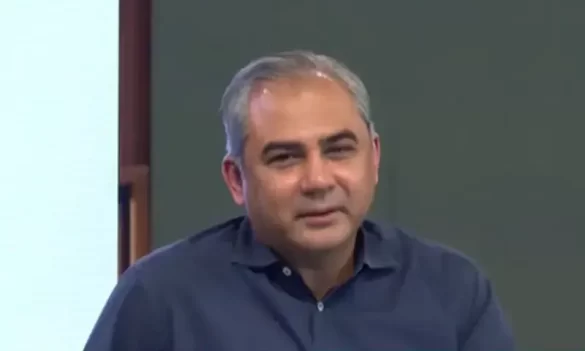
Islamabad – On May 9, a Pakistani anti-terrorism court sentenced four individuals to life imprisonment in a high-profile digital terrorism case. The accused – Adil Raja, Sabir Shakir, Wajahat Saeed, and Moeed Pirzada – were convicted for online activities against state institutions. Additionally, the court imposed a combined 35-year prison term and fines of 1.5 million Pakistani rupees (around $3,500) per person for other charges.
Also Read: Pakistan Requests Extradition of Adil Raja and Shehzad Akbar from the United Kingdom
Court Proceedings and Trial Details
The trial took place at the Anti-Terrorism Court (ATC) in Islamabad. Prosecutors called 24 witnesses to testify. Judge Tahir Abbas Supra delivered the verdict and emphasized the seriousness of the offenses.
Furthermore, the court appointed Gulfam Ashraf Goriah as the defense lawyer for the accused. Pakistan’s Anti-Terrorism Act allows trials to continue even if the accused are absent. Therefore, the court finalized the judgment without requiring their presence.
Authorities said this case represents a significant application of digital terrorism laws in Pakistan. Moreover, it highlights the government’s increasing focus on combating online threats against state institutions.
Multiple Convictions Across Cases
The court handed multiple life sentences to the accused. Adil Raja, Haider Mehdi, Wajahat Saeed, Sabir Shakir, and Moeed Pirzada each received two life terms.
In addition, a case filed at Aabpara police station led to life sentences for Sabir Shakir, Moeed Pirzada, and Syed Akbar Hussain. Shahin Sibhayi, Haider Mehdi, and Wajahat Saeed received additional penalties under other charges.
Similarly, another case registered at Ramna police station resulted in punishments for Shahin Sibhayi, Haider Mehdi, and Wajahat Saeed. These cases show that the alleged digital offenses involved harassment, incitement, and threats to national security.
Legal and Security Implications
After the verdict, the court confirmed that authorities will continue legal proceedings under the Anti-Terrorism Act. Consequently, officials will enforce strict measures against the convicted individuals.
Digital terrorism has grown in Pakistan in recent years. Moreover, the government has repeatedly warned about online platforms spreading misinformation, threatening officials, and undermining institutions. As a result, this case demonstrates Islamabad’s determination to use the judiciary to counter such threats.
Analysts noted that the ruling raises debates about balancing anti-terror enforcement with online freedom of expression. On the other hand, critics argue that Pakistan sometimes applies digital terrorism laws too broadly. However, authorities insist that such laws are essential for national security.
Moving Forward
The convicted individuals may appeal the verdict. Meanwhile, law enforcement agencies will continue strict measures against those convicted under anti-terrorism laws.
Overall, this case sends a clear warning: online actions perceived as threatening state institutions carry severe consequences. As digital platforms expand, Pakistan’s courts appear determined to enforce laws and set precedents that safeguard national security.