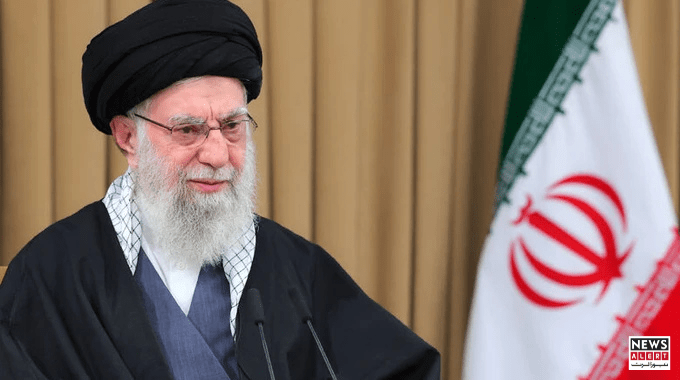
Iran’s Supreme Leader Ayatollah Seyyed Ali Khamenei has delivered a strong warning about the dangers of unchecked power, drawing historical parallels as he criticised former US President Donald Trump. His remarks come at a time of heightened tensions between Iran and the United States, alongside renewed accusations against Israel, underscoring the fragile state of diplomacy in the Middle East.
Speaking in a public statement, Ayatollah Khamenei argued that history repeatedly shows how rulers intoxicated by power ultimately face downfall. He cited figures such as Pharaoh, Nimrod and Iran’s former monarch Reza Shah as examples of leaders who appeared invincible at their peak but ended in disgrace.
According to Khamenei, modern political leaders who believe they can dominate global affairs without consequence are ignoring clear lessons from history.
Also Read: Iran Will Not Tolerate Mercenary Forces, Supreme Leader Warns
A Warning Drawn from History
Ayatollah Khamenei said that power and authority are never permanent. He stressed that many rulers once regarded as unbeatable eventually collapsed due to arrogance, oppression and disregard for justice.
Those who imagine themselves above everyone else and take it upon themselves to decide the fate of the world are making a grave mistake, he said. Such leaders, he added, fail to recognize that history consistently punishes tyranny and pride.
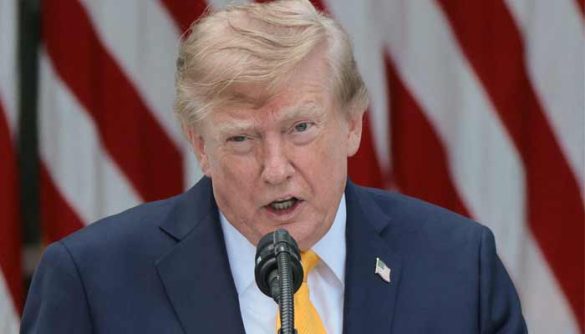
While he did not mention Donald Trump by name in every instance, the Supreme Leader directly criticised the former US president’s approach to global politics. He suggested that leaders who rely on threats and coercion rather than dialogue risk pushing the world toward instability.
Khamenei urged today’s global powers to reflect on the fate of past empires and monarchies. In his view, ignoring these lessons only accelerates political and moral decline.
Concerns Over Global Order and Morality
Beyond his criticism of Trump, Ayatollah Khamenei also expressed concern about what he described as a dangerous global trend. He said certain powerful countries now see themselves as above international law and ethical standards.
Such attitudes, he warned, threaten global peace. Decisions made by a single leader or state can have far-reaching consequences, especially when they fuel conflict or economic pressure.
He argued that policies which destabilise entire regions are not only politically reckless but also morally irresponsible. In his words, pushing the world towards chaos amounts to acting against humanity itself.
Iranian President Accuses the US and Israel
At the same time, Iran’s President Masoud Pezeshkian adopted an equally firm tone. In an interview with Iranian media, he accused the United States and Israel of actively trying to destabilise Iran.
President Pezeshkian claimed that both countries were not only plotting against Iran but also encouraging unrest and violence inside the country. He said these actions followed a long history of hostility, including past attacks and sanctions imposed on Iran.
“These are the same forces that attacked Iran before and are now seeking to create internal instability,” he said. According to him, such efforts aim to weaken Iran from within rather than through direct confrontation.
Iran Rejects Foreign Interference
President Pezeshkian made it clear that Iran would not tolerate any foreign attempts to spread division among its people. He emphasized that Iranians are politically aware and capable of recognising external manipulation.
The Iranian nation will not bow to pressure or conspiracies, he said. He added that unity and resilience remained Iran’s strongest defence against outside interference.
Iran has repeatedly accused Western powers and Israel of supporting opposition movements and protests. Washington and Tel Aviv have consistently denied these allegations.
Trump Signals Talks but Keeps Pressure On
Meanwhile, Donald Trump has claimed that Iran is interested in negotiations. He said that possible arrangements for meetings between the two sides are under consideration.
However, Trump also maintained a hard line. He warned that the United States still has very strong and powerful options available against Iran. Such statements reflect his long-standing policy of maximum pressure, which included harsh economic sanctions during his presidency.
Rising Rhetoric, Uncertain Diplomacy
International analysts say the sharp language from all sides risks further escalating tensions in an already volatile region. The Middle East has seen years of conflict, sanctions and diplomatic breakdowns, with Iran-US relations at the center of many crises.
Observers argue that despite aggressive rhetoric, diplomacy remains the only sustainable path forward. History, they note, suggests that confrontation often deepens divisions, while dialogue offers at least a chance for stability.
As statements grow more confrontational, the coming months may prove crucial in determining whether words give way to talks-or to further conflict.