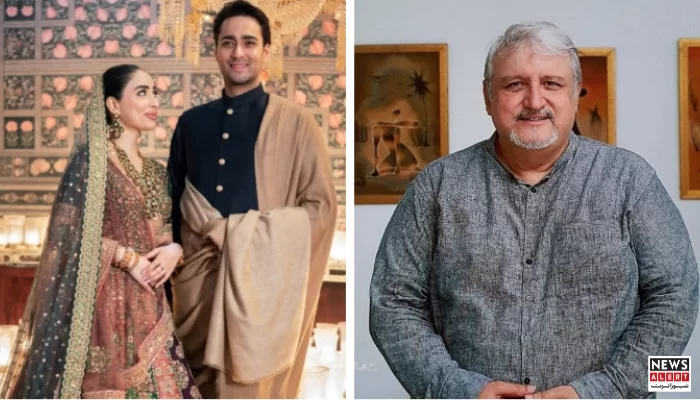
A short video by veteran Pakistani actor Khalid Anam has sparked a wider public debate about cross-border trade, fashion, and daily realities between Pakistan and India.
In his social media message, Anam raised a simple but sharp question. If powerful Pakistani families can wear clothes designed in India, can ordinary citizens also buy products from across the border?
The question emerged as two high-profile weddings in Pakistan drew massive attention online and in the news.
High-Profile Weddings and Their Fashion Choices
Two recent weddings captured public interest across Pakistan.
One wedding involved the niece of President Asif Ali Zardari, who is also the daughter of politician Faryal Talpur. The other featured Junaid Safdar, son of Punjab Chief Minister Maryam Nawaz.
Photos from both events flooded social media. Politicians, ministers, and celebrities attended in large numbers. As a result, the weddings stayed in headlines for several days.
However, public curiosity did not stop at the guest lists or venues. Media reports revealed that Indian designers created some of the bridal outfits.
According to these reports, Junaid Safdar’s wife, Shanazey, wore outfits by an Indian designer for her wedding and mehndi events. Maryam Nawaz reportedly chose an Indian designer for parts of the wedding wardrobe. Similar details also emerged about Faryal Talpur, who allegedly wore Indian-designed attire.
These details quickly triggered debate, especially in light of tense Pakistan–India relations.
Khalid Anam’s View: There Is Nothing Wrong With It
Khalid Anam responded to these reports with a calm and reflective tone.
I learned that the brides at the two grand weddings wore outfits by Indian designers, he said. There is nothing wrong with that.
Instead of criticizing the choice, Anam welcomed it. He argued that people should encourage such exchanges.
In my view, all business should remain open, he added. So does this mean our trade with India has resumed?
His words did not attack any group. Rather, he highlighted a gap between official policies and social behavior.
Can Ordinary Pakistanis Buy From India Online?
Anam then raised a question that many citizens found relatable.
If these clothes came through online orders or direct purchases, can an ordinary Pakistani do the same? he asked. Can we now buy and sell things online with India?
This question touches a sensitive and complex issue.
Pakistan and India have limited trade ties. Tensions rose sharply after the Pulwama attack in 2019 and the military standoff that followed. Pakistan later suspended most trade with India.
Although leaders have discussed resuming commerce from time to time, full normalization has not occurred.
As of today, most direct imports from India into Pakistan remain restricted. Most Pakistanis cannot shop directly from Indian websites. Payment barriers and shipping bans block such transactions.
When Indian designer outfits appear in elite weddings, people usually acquire them through indirect channels. These include personal contacts, third countries, or purchases made abroad.
Access, Privilege, and Inequality
Anam also raised a social concern.
Pakistani designers are excellent, he said. But if powerful people can buy Indian outfits, can common citizens also do so?
His comments point to a clear divide.
Wealthy families can travel abroad and use private networks. Ordinary citizens lack these options. For most people, cross-border shopping remains a distant idea.
This gap fuels frustration among many Pakistanis who watch elite lifestyles online but face daily economic limits.
Trade, Culture, and Politics
Anam’s remarks also reflect a deeper contradiction in South Asia.
Cultural exchange between Pakistan and India remains strong. Many Pakistanis watch Indian films and listen to Indian music. Fashion trends also cross borders through social media.
At the same time, formal trade ties remain weak. Before 2019, bilateral trade crossed $2 billion annually. After tensions rose, that figure dropped sharply.
As a result, demand exists, but legal channels do not fully support it.
A Small Question With Big Meaning
Khalid Anam asked a simple question. Yet, it carries serious implications.
His message goes beyond fashion or online shopping. It touches on fairness, access, and transparency.
For now, the answer remains clear. Ordinary Pakistanis still cannot easily shop online from India. Only a few privileged groups can bypass these limits.
Still, Anam’s remarks show a strong public desire for normal trade ties. Many people want everyday exchanges, not just political talks.
In that sense, his question reflects a wider hope for change across the border.