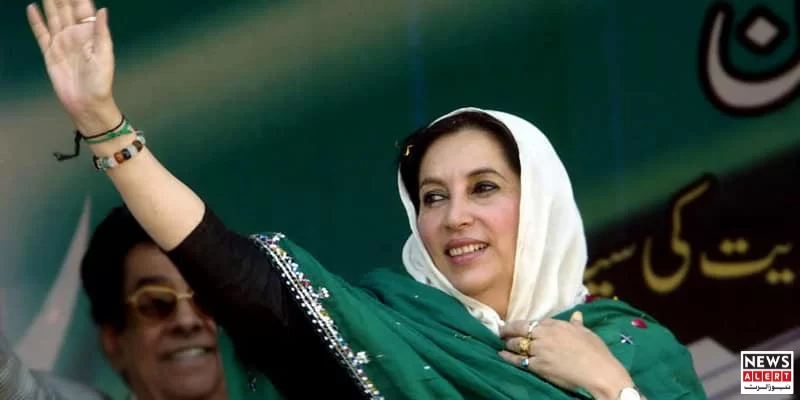
Across Pakistan, supporters of the Pakistan Peoples Party (PPP) marked the 18th death anniversary of former prime minister Benazir Bhutto by gathering at Garhi Khuda Bakhsh near Larkana. Once again, the small village turned into a major political and emotional centre, as thousands arrived to pay tribute to one of the country’s most influential leaders.
Also Read: Sindh Government Declares Public Holiday on December 27 to Mark Benazir Bhutto’s Death Anniversary
Benazir Bhutto, who was assassinated on 27 December 2007, remains a powerful symbol of democratic resistance. Even after nearly two decades, her political legacy continues to influence Pakistan’s national conversation.
Large-Scale Commemorations at Garhi Khuda Bakhsh
From early morning, PPP workers, commonly known as jiyalas, travelled in caravans from Sindh, Punjab, Balochistan, Khyber Pakhtunkhwa, and other regions. Many carried party flags, banners, and portraits of Benazir Bhutto, while chanting slogans in support of democracy and civilian supremacy.
To manage the influx, party organisers established multiple reception camps along major roads leading to the mausoleum. Volunteers actively guided visitors, distributed drinking water, and offered first aid services. Meanwhile, local authorities coordinated traffic and security arrangements to maintain order throughout the day.
Asifa Bhutto Zardari, the youngest daughter of Benazir Bhutto, visited the mausoleum along with senior PPP leader Faryal Talpur. They laid floral wreaths at Benazir Bhutto’s grave and also paid respects at the graves of Zulfikar Ali Bhutto, Mir Murtaza Bhutto, and Shah Nawaz Bhutto. Throughout the day, senior party leaders, lawmakers, and long-time activists continued to arrive and offer prayers.
Public Holidays Facilitate Public Participation
To encourage broader participation, the Sindh government declared 27 December a public holiday across the province. As a result, government offices, schools, and universities remained closed, allowing citizens to attend memorial events.
At the same time, Azad Jammu and Kashmir Prime Minister Faisal Mumtaz Rathore announced a public holiday in the region. Officials explained that the decision aimed to give people the opportunity to remember Benazir Bhutto’s role in Pakistan’s democratic history. Consequently, several commemorative gatherings also took place outside Sindh.
Early Life, Education, and Political Grooming
Benazir Bhutto was born on 21 June 1953 in Karachi into a politically prominent family. She completed her early education at the Convent of Jesus and Mary and Karachi Grammar School, where she developed a strong academic foundation.
Later, she studied political science at Harvard University and continued her education at Oxford University. There, she studied philosophy, politics, and economics and became the first Asian woman to serve as president of the Oxford Union. These experiences shaped her global outlook and strengthened her leadership skills.
Meanwhile, her father, Zulfikar Ali Bhutto, founder of the Pakistan Peoples Party and former prime minister, prepared her for national leadership. He eventually named her as his political successor, placing her at the center of Pakistan’s opposition politics.
Resistance, Exile, and Time in Office
Following General Zia-ul-Haq’s military coup in 1977, Benazir Bhutto entered one of the most difficult phases of her life. After authorities executed her father in 1979, she endured imprisonment, house arrest, and exile. Nevertheless, she continued to campaign tirelessly for democracy, both at home and abroad.
In 1988, after Zia’s death, she returned to Pakistan and led the PPP to electoral victory. At 35, she became the youngest prime minister in the country’s history and the first woman to hold the office in the Muslim world.
However, political instability marked her time in power. Her first government ended after 18 months. Later, in November 1993, she returned as prime minister for a second term. Yet again, political rivalries and institutional conflicts led to the dismissal of her government in 1996. Despite corruption allegations, she consistently defended her record and denied wrongdoing.
Return from Exile and a Tragic End
After several years abroad, Benazir Bhutto returned to Pakistan in October 2007. Her homecoming rally in Karachi faced a devastating suicide attack that killed more than 130 people. Despite the danger, she continued her election campaign, insisting on engaging directly with the public.
Tragically, on 27 December 2007, attackers assassinated her as she left an election rally at Liaquat Bagh in Rawalpindi. Her death plunged the country into grief and sparked nationwide unrest.
Authorities later buried her at Garhi Khuda Bakhsh, alongside her father and brothers.
A Legacy That Endures
Today, supporters and critics alike acknowledge Benazir Bhutto as a central figure in Pakistan’s democratic struggle. She remains a symbol of resilience, political courage, and women’s leadership in a deeply patriarchal society.
As commemorations continue each year, her life story still resonates with millions. Ultimately, her sacrifice stands as a reminder of the challenges facing democracy in Pakistan and the enduring hope for representative governance and civil rights.