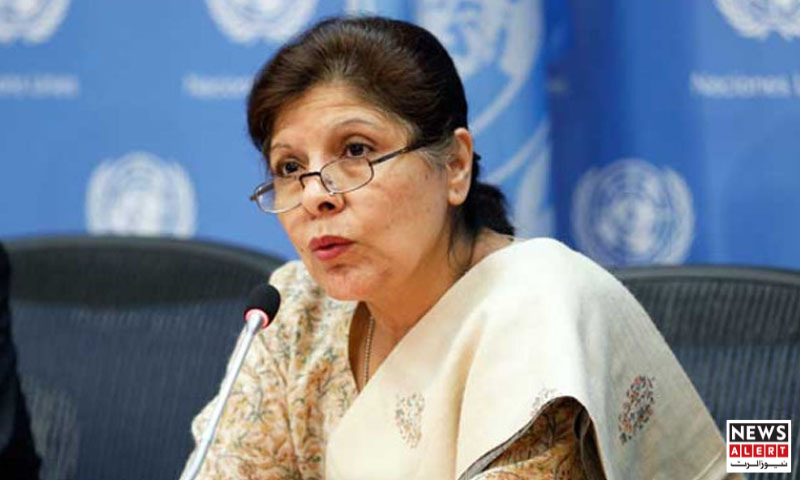
Dr Shamshad Akhtar, a former finance minister of Pakistan and ex-governor of the State Bank of Pakistan, has died. Her passing marks the loss of one of the country’s most respected economists and financial policymakers.
Funeral prayers will be held on Saturday after Zuhr in Karachi. Senior political leaders, bankers, economists, and public officials are expected to attend. Tributes continue to pour in from across Pakistan’s financial and policy community.
Also Read: Dr. Arfa Sayeda Zehra, Renowned Scholar and Educationist, Passes Away in Lahore
A historic appointment at the State Bank of Pakistan
Dr Akhtar took charge as the 14th Governor of the State Bank of Pakistan on 2 January 2006. With that appointment, she became the first woman to lead the country’s central bank, breaking a long-standing gender barrier in financial governance.
The State Bank plays a vital role in shaping monetary policy, regulating banks, and maintaining financial stability. During her tenure, Dr Akhtar oversaw banking supervision and macroeconomic coordination at a time of expanding credit and growing global economic uncertainty.
Her leadership style emphasized institutional discipline and regulatory strength. Many economists viewed her appointment as a signal of professionalism and continuity.
Extensive experience at the Asian Development Bank
Before returning to Pakistan, Dr Akhtar built a long and influential career at the Asian Development Bank (ADB). She joined the institution in 1990 and served in several senior roles over more than a decade.
She initially worked as a senior financial sector specialist. In 1998, the bank promoted her to manager, recognising her expertise in financial reform and development policy. Later, she assumed the role of Director General for Southeast Asia, overseeing development programmes across multiple economies.
Another key role saw her serving as Director for Governance, Finance, and Trade in East and Central Asia. These responsibilities placed her at the centre of regional policy coordination.
Role in international financial coordination
Between 1998 and 2001, Dr Akhtar coordinated the APEC Finance Ministers’ Process. In that position, she helped strengthen dialogue on financial cooperation among Asia-Pacific economies.
She also represented the Asian Development Bank at major global institutions, including the Bank for International Settlements and the International Organization of Securities Commissions. Through these forums, she contributed to discussions on banking regulation and capital market stability.
Her work covered Central Asia, Southeast Asia, and China. As financial integration increased across the region, her policy insight gained wider relevance.
Early career and public service in Pakistan
Before her international assignments, Dr Akhtar spent nearly ten years working with the World Bank’s resident mission in Pakistan. During that period, she advised on development policy and macroeconomic planning.
She also worked with Pakistan’s federal Planning Commission and the Sindh government’s Planning and Development Department. These roles exposed her to on-the-ground economic challenges and public sector constraints.
That experience later informed her practical approach to reform and regulation.
Research, policy reform, and thought leadership
Throughout her career, Dr Akhtar wrote extensively on Pakistan’s economic conditions and reform priorities. Her research covered public finance, industrial growth, and agricultural development.
She paid particular attention to monetary policy, banking systems, stock markets, and bond markets. Financial regulation and institutional reform remained central themes in her work.
She presented her research at international conferences and policy forums. As a result, she gained recognition as a credible voice in global economic debates.
Education and academic excellence
Born in Hyderabad, Dr Shamshad Akhtar completed her early education in Karachi and Islamabad. She earned a BA in Economics from the University of the Punjab and an MSc in Economics from Quaid-i-Azam University.
She later obtained an MA in Development Economics from the University of Sussex. Her academic journey culminated in a PhD from Paisley College of Technology in the United Kingdom.
She also received a Fulbright Scholarship and served as a visiting fellow at Harvard University. These achievements reflected her strong academic foundation.
A lasting national and global legacy
Dr Shamshad Akhtar leaves behind a legacy defined by competence, integrity, and service. She opened doors for women in Pakistan’s financial institutions and helped strengthen economic policymaking at home and abroad.
Pakistan continues to face complex economic challenges. In that context, her work remains a benchmark for future policymakers and economists.
Her death has prompted widespread reflection on a career that bridged national service and global engagement.