US federal authorities have arrested a Saudi national and former OpenAI engineer accused of installing a concealed audio recording device in an executive conference room at the artificial intelligence company, the US Department of Justice said on Tuesday.
The case has raised questions about workplace security and the protection of sensitive information as technology companies compete to develop increasingly powerful AI systems.
Abdulrahman Alfozan, 35, had worked as an engineer at OpenAI since July 2025, according to the Justice Department. He is accused of concealing a recording device inside the company’s San Francisco offices to capture private conversations about its technology.
The allegations have not been proven in court.
Hidden Recording Device Found at OpenAI Office
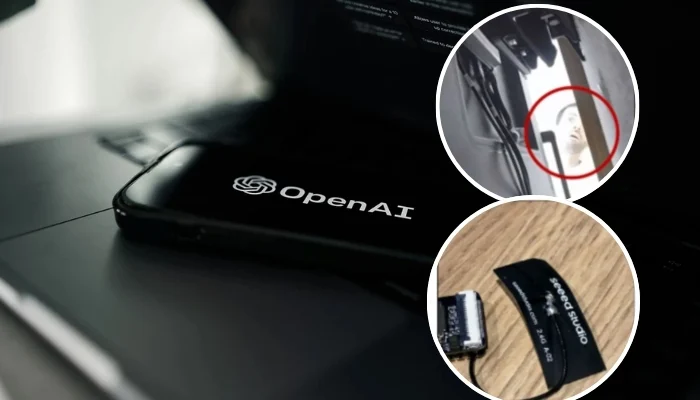
According to the Justice Department, OpenAI discovered the device on September 30 after it had been plugged into a USB port on the back of a television in an executive conference room.
An FBI complaint states that the thumb-sized device contained a microphone and could connect to a camera. It was allegedly concealed in toilet paper and installed around September 28.
Investigators said the device’s stored data was encrypted and inaccessible. They also reportedly discovered a similar customised device in Alfozan’s personal bag.
The discovery prompted an internal investigation before OpenAI referred the matter to the FBI.
OpenAI Says Internal AI Tools Helped Identify Suspect
OpenAI said it used its internal AI models to help identify the person allegedly responsible for placing the device and trace its origins.
In a statement posted on X, the company said it had evidence suggesting the employee intended to install additional recording devices in sensitive areas of its offices to secretly capture meetings.
OpenAI said it had found no indication that the employee had improperly accessed or removed model weights, source code or customer data.
The company confirmed that the employee had been terminated and said it had referred the matter to federal investigators.
The FBI is continuing to investigate the case.
FBI Alleges Attempts to Gather Meeting Information
FBI Director Kash Patel said Alfozan allegedly concealed the device to secretly record sensitive discussions concerning the company’s advanced AI technology.
According to the FBI complaint, Alfozan also used an AI productivity agent to seek information about meeting-room calendars and capabilities for approximately a month, through September 16.
The complaint forms part of the allegations against him, and the claims will be subject to the legal process.
Alfozan has been a lawful permanent resident of the United States since September 2020, according to the Justice Department.
OpenAI scraps planned October launch of GPT-6.1 Astra over safety concerns
Possible Five-Year Prison Sentence
If convicted, Alfozan faces a maximum sentence of five years in prison, a fine of up to $250,000 and three years of supervised release, the Justice Department said.
An email sent to an address associated with Alfozan did not receive a response, and it was not immediately clear who was representing him legally.
The Saudi embassy in Washington also did not immediately respond to a request for comment.
A LinkedIn profile attributed to Alfozan stated that he studied at the Massachusetts Institute of Technology and the University of California, Berkeley, and previously worked at Meta and Microsoft. Reuters said it could not independently verify the profile details.
We discovered a sophisticated recording device that was hidden inside one of our offices. We used our models to understand the device and where it had come from, identifying that a specific employee had planted it a few days earlier. We referred the matter to the FBI, and we’re grateful to the agents and prosecutors who moved quickly to make an arrest. The FBI’s investigation is ongoing and we will continue to support their work.
At this time, we have no indications of this individual inappropriately accessing or exfiltrating model weights, source code, or customer data. The employee was terminated.
We take protecting our technology, data, and people seriously, and as a matter of national importance. Our security program is designed to protect against a wide range of threat actors, from insider risks to cybercriminals to nation states, and this case is an example of how AI can help address these sophisticated security threats.
— OpenAI Newsroom (@OpenAINewsroom) October 13, 2026
AI Industry Faces Growing Security Concerns
The case comes as companies and governments increase their efforts to protect valuable AI research, proprietary technology and confidential business discussions.
Advanced AI systems are increasingly viewed as strategically important because of their potential economic, commercial and national security applications. As a result, safeguarding research facilities, internal communications and sensitive technical information has become a growing concern for technology companies.
The allegations against the former OpenAI engineer have also drawn attention to the risks associated with insider access and the need for robust security procedures.
OpenAI Also Faces Scrutiny Over Employee Dismissals
Separately, OpenAI recently said it had dismissed three researchers following an investigation into alleged violations of company policies governing sensitive information.
The researchers, Jasmine Wang, Tomek Korbak and Mikita Balesni, subsequently published a letter describing the circumstances of their dismissals and expressing concerns about the potential impact on employees and the company’s safety culture.
In another development, a report said OpenAI was in early discussions to acquire Trail of Bits, a cybersecurity company specialising in identifying and fixing vulnerabilities in open-source software. The discussions were ongoing and could still fall apart, according to people familiar with the matter cited in the report.
OpenAI and Trail of Bits did not immediately respond to requests for comment.
The investigation into Alfozan remains ongoing, and the allegations against him have yet to be established in court.