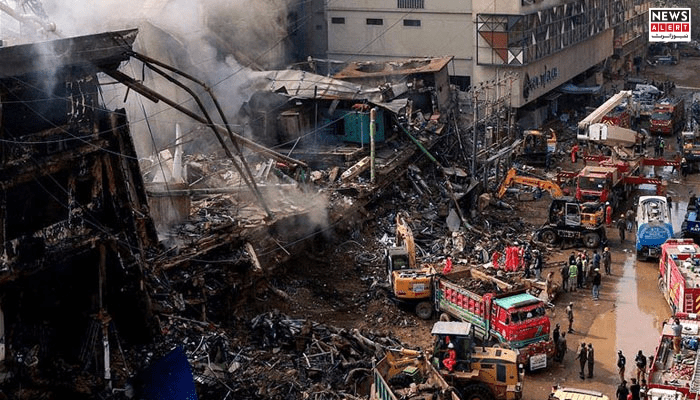
New and disturbing details have emerged about the deadly fire at Gul Plaza, a commercial building in central Karachi. Officials now say CCTV footage has helped them build a clear timeline of how the blaze unfolded and how little time people had to escape.
The fire, which broke out earlier this week, has already killed at least 61 people. It now ranks among the deadliest building fires in Karachi’s recent history. Rescue teams continue their work as families search for answers and closure.
Also Read: Tragedy in Karachi: Death Toll from Gul Plaza Fire Rises to 61
CCTV Reveals How the Fire Spread
Authorities reviewed CCTV footage from around Gul Plaza to track the fire’s movement. The video shows the fire starting at the rear of the building at 10:07 pm.
Just five minutes later, at 10:12 pm, ambulances began reaching the site. By then, smoke had already filled parts of the building and panic had set in.
The fire appeared on the main side of the plaza, along M.A. Jinnah Road, at 10:18 pm. This detail explains why many people outside did not see flames at first.
It took only 11 minutes for the fire to travel from the back to the front of the building. This rapid spread shocked emergency responders.
Fire experts say flames can double in size every minute in poorly protected buildings. This pattern matches what happened at Gul Plaza.
Death Toll Rises as Search Continues
Rescue teams are still searching the damaged structure. On Wednesday, they recovered 30 more bodies from the mezzanine floor. The new discovery raised the death toll to 61.
The mezzanine floor sat between the main floors and housed small shops and storage areas. Such floors are common in older buildings across Karachi.
The discovery of so many victims on one level has stunned rescue workers and officials alike.
Victims Found Inside a Crockery Shop
South Karachi DIG Asad Raza confirmed that shopkeepers had warned police about people trapped on the mezzanine floor.
All 30 bodies came from a single crockery shop, he said.
Investigators believe several people rushed into the shop to escape the fire. They locked the door in a final attempt to survive. Sadly, heat and smoke overwhelmed them.
Officials also traced the victims’ last mobile phone signals to the same location. This data supports the claim that they could not escape once they entered the shop.
Why Escape Became Impossible
Investigators are still studying the exact causes. Early signs point to serious safety failures.
Many commercial buildings in Karachi lack working fire exits and alarms. Few buildings have sprinklers. In past fires, blocked stairs and locked doors caused many deaths.
According to Pakistan’s National Disaster Management Authority, urban fires kill hundreds each year. Karachi accounts for a large share due to dense construction and aging buildings.
In Gul Plaza’s case, officials are checking whether emergency exits remained open. They are also reviewing whether owners followed safety rules.
Public Anger and Demands for Action
As the death toll rises, public anger continues to grow. Civic groups and urban planners now demand strict enforcement of building laws.
Residents want authorities to hold both owners and officials responsible. Many say this tragedy reflects years of neglect.
In recent years, deadly fires have triggered short-term crackdowns. However, lasting reforms rarely followed.
A City in Mourning
Karachi now mourns dozens of victims, many of them workers who came to earn a living. Families gather outside hospitals and morgues in search of missing relatives.
The coming days will test the city’s resolve. Gul Plaza could become a turning point for fire safety. It could also fade into another painful memory if officials fail to act.
For many, this disaster stands as a harsh reminder. Fire safety is not optional in a city of millions. It is a matter of life and death.