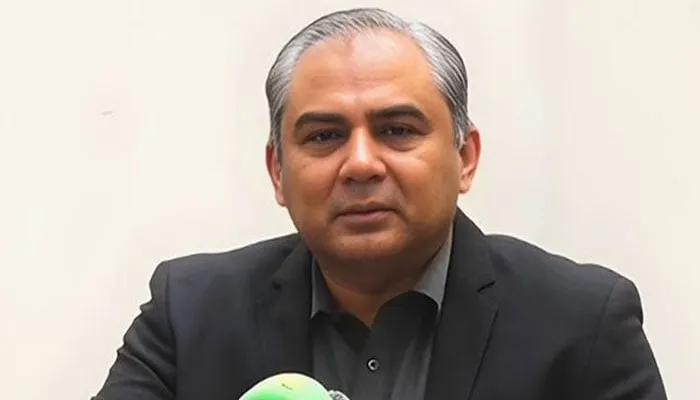
Pakistan’s Interior Minister Mohsin Naqvi said the delay in former prime minister Imran Khan’s eye examination was caused by political decisions within his own camp, particularly by his sister Aleema Khan.
Speaking at a press conference, Naqvi maintained that the government had ensured all possible medical facilities for the jailed leader and that doctors had already conducted necessary examinations at Adiala Jail. He said Khan’s medical team and party representatives were briefed and initially expressed satisfaction with the treatment process.
According to Naqvi, medical experts confirmed that all required tests had been carried out and further testing was not immediately necessary. However, he alleged that political considerations delayed the follow-up examination for three days.
Allegations of Politicising the Health Issue
The interior minister claimed Aleema Khan advised party members that accepting the medical findings could weaken their political position, resulting in hesitation and delays. He added that the issue could have been resolved earlier if it had not been politicised.
Naqvi also criticised what he described as contradictory behaviour—public concern over Imran Khan’s health alongside political mobilisation around the issue.
Medical Diagnosis and Health Concerns
The controversy intensified after a medical report submitted to the Supreme Court of Pakistan confirmed that the former prime minister had been diagnosed with central retinal vein occlusion (CRVO), a serious eye condition.
CRVO is commonly linked with age and underlying cardiovascular risk factors such as high blood pressure, diabetes, high cholesterol, and heart disease. The report stated that Imran Khan, who has been in custody since August 2023, had experienced significant vision loss—about 85% in his right eye.
Imran Khan’s eye treatment “fully satisfactory,” says Law Minister
Following the findings, Pakistan Tehreek-e-Insaf (PTI) and members of Khan’s family demanded he be moved to a hospital for treatment and granted access to his personal physicians.
Protests and Political Tensions
The issue has unfolded amid heightened political tensions, with PTI and allied opposition groups staging sit-ins outside parliament in Islamabad and other locations. Demonstrations have continued for several days, calling for improved medical access and transparency.
Naqvi said the government had offered to allow PTI to nominate a qualified eye specialist for examination but rejected a request to shift Khan to hospital for a week unless recommended by doctors. He also questioned whether similar medical facilities were available to other prisoners, arguing that authorities were operating strictly under prison rules.
Government Denies Political Motives
Rejecting accusations of negligence, the interior minister said the government had no intention of politicising the matter and was acting in accordance with legal procedures and medical advice. He added that media access to prison facilities could help clarify the situation.
Naqvi also referred to broader security concerns, warning about attempts to disrupt the Red Zone in Islamabad and urging political dialogue. He emphasised that stability and constructive engagement were essential, and that health concerns should not be exploited for political gain.
The episode underscores the complex intersection of health, law, and politics in Pakistan, where medical issues involving high-profile figures often become part of a larger political narrative.