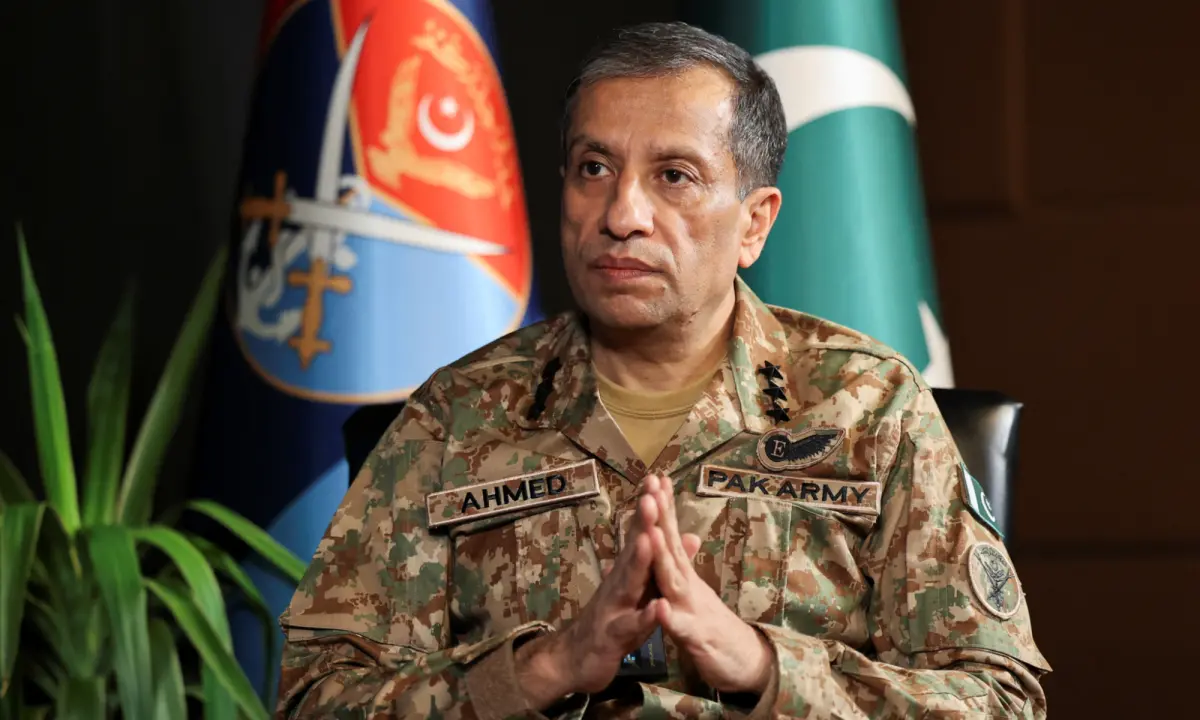
RAWALPINDI: Pakistan is “cautiously optimistic” about its efforts to mediate between Iran and the United States, military spokesman Lieutenant General Ahmed Sharif Chaudhry said on Friday, following a high-level Pakistani delegation’s visit to Tehran.
Chief of Defence Forces and Chief of Army Staff Field Marshal Asim Munir, who is leading Pakistan’s mediation efforts to de-escalate the eight-month-old Iran war, has visited Tehran twice this month. His latest visit on Monday included Saudi and Turkish officials.
“Why would the field marshal be going twice if it is not for some positivity? So yes, of course,” Chaudhry said when asked whether the visits indicated progress.
“The word that we would use is always cautiously optimistic,” added the director general of Inter-Services Public Relations (ISPR).
Warning Against Spoilers
Speaking in Rawalpindi, Chaudhry warned that powerful spoilers and detractors remained who believed the conflict served their interests. He did not identify them.
He declined to disclose details of the Tehran discussions or say whether the United States had supported the diplomatic visit.
Saudi Defence Minister Prince Khalid bin Salman and Turkish intelligence chief Ibrahim Kalin accompanied Munir during Monday’s meetings.
Iran Could Join Pact
Pakistan, Saudi Arabia and Türkiye signed the Makkah Joint Defence Agreement on August 7, committing to treat an attack on any signatory as an attack on all.
The agreement has gained significance amid the Iran-US conflict and growing concerns about wider regional instability.
Following Monday’s talks, Mohsen Rezaei, secretary of Iran’s Supreme National Security Council, said regional security should be maintained by countries in the region without foreign intervention.
Asked whether Iran could join the defence agreement, Chaudhry said its wording did not prevent additional members from joining.
“Anyone who has a shared vision of collective deterrence and regional peace, why not? Everyone is most welcome,” he said.
However, he added that any decision on expanding the pact would rest with the political leadership of its three founding members.
Over 70 militants killed in Balochistan operations, says ISPR
No New Troops Confirmed
Chaudhry also addressed questions about whether Pakistan would send additional troops to Saudi Arabia under the agreement.
He said any such decision would depend on the prevailing circumstances and the decisions of the political leadership in both countries.
He reiterated Pakistan’s commitment to Saudi Arabia’s defence and the protection of the holy sites in Makkah and Madina.
“We are not part of the Yemeni conflict, which is an intra-Yemen conflict,” he said.
Fighting involving Saudi Arabia and Yemen’s Iran-aligned Houthi movement has intensified amid the wider regional conflict, raising concerns about further escalation.
Counterterrorism Operations
Turning to domestic security, Chaudhry addressed questions about Pakistan’s counterterrorism strategy in Khyber-Pakhtunkhwa following the federal government’s suspension of the provincial government on October 11.
The province had been governed by Pakistan Tehreek-e-Insaf (PTI), whose leader and former prime minister Imran Khan has been in prison since 2023.
The federal government accused the provincial administration of failing to tackle militancy. PTI rejected the allegations, saying its government had participated in counterterrorism efforts and describing the move as an attempt to suppress opposition protests.
Asked whether the situation would lead to larger military campaigns in the province, Chaudhry said the army’s counterterrorism strategy did not work that way.
“Our counter-terrorism operations are based on what we call IBOs, intelligence-based operations… The tempo of the freedom of action of (those) IBOs will further increase,” he said.
Political Tensions Continue
In the February 2024 general election, independent candidates backed by PTI won the largest number of directly elected National Assembly seats but fell short of a majority. Khyber-Pakhtunkhwa remained the only province governed by the party.
Khan’s supporters accuse the military of being involved in his imprisonment and the crackdown on PTI. The army denies involvement in politics.
Pakistan’s mediation efforts are continuing against a backdrop of regional conflict and domestic political tensions, with Islamabad seeking to support de-escalation while maintaining its existing defence commitments.