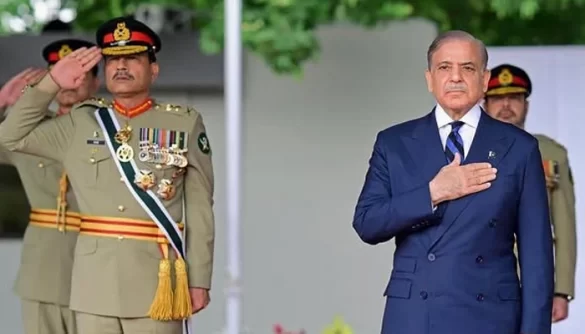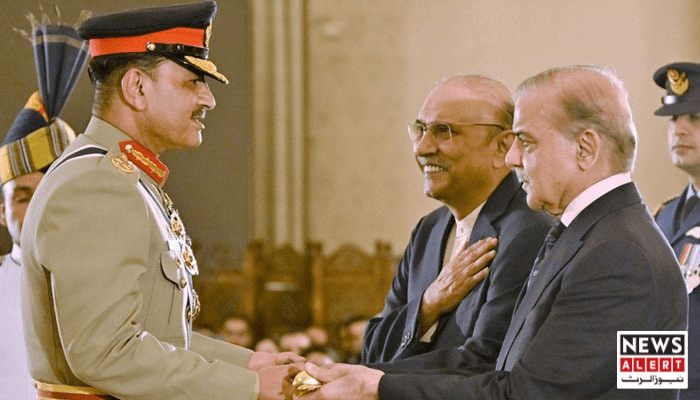
Islamabad, Pakistan — President Asif Ali Zardari has officially approved the appointment of Field Marshal Syed Asim Munir as Pakistan’s first Chief of Defence Forces (CDF). The move marks a historic reshaping of the country’s military command structure, with Munir now set to lead both the Army and the unified defence forces.
The approval came after Prime Minister Shehbaz Sharif forwarded a formal summary recommending Munir’s dual appointment as Chief of Army Staff (COAS) and Chief of Defence Forces. According to the official notification, the President has sanctioned a five-year term for Munir in his new role.
Field Marshal Asim Munir: Pakistan’s First CDF
Field Marshal Syed Asim Munir will serve as both Chief of Army Staff and the inaugural Chief of Defence Forces, consolidating leadership across Pakistan’s military branches. This dual appointment is unprecedented in the country’s history and reflects an effort to enhance coordination among the Army, Air Force, and Navy.
The role of Chief of Defence Forces is designed to oversee strategic defence planning and ensure operational readiness across all military services. Analysts suggest that the creation of this post aims to modernize Pakistan’s defence management and streamline decision-making at the top level.
Munir, a career military officer, has previously held key command positions in the Army. His promotion to Field Marshal and now to CDF underlines his extensive experience and the confidence of civilian leadership in his capabilities.
Extension of Air Chief Marshal Tenure
In addition to Munir’s appointment, President Zardari has approved a two-year extension for Air Chief Marshal Zaheer Ahmad Sadhu. The extension will be effective from March 19, 2026, ensuring continuity in the leadership of Pakistan’s Air Force during a period of regional security challenges.
The Air Chief Marshal has been credited with modernizing the Air Force’s operational capabilities and overseeing significant procurement and training programs. His extended tenure is expected to provide stability as Pakistan navigates evolving defence and security dynamics.
Reactions and Significance
The President’s office issued a statement expressing best wishes for the successful completion of Munir’s tenure as both COAS and CDF. Military analysts view this dual appointment as a potential shift toward greater jointness among the armed forces, allowing for more coordinated defence policies.
Historically, Pakistan’s military has been led independently by the heads of each branch, with the Army typically considered the most dominant. The creation of the Chief of Defence Forces role could represent a significant step toward institutionalized joint command, aligning with practices in other countries where unified military leadership exists.
While no official details on Munir’s strategic priorities have been released, experts anticipate that strengthening defence integration and improving operational coordination will be central to his agenda. The five-year term provides a window for implementing long-term reforms and enhancing Pakistan’s overall military readiness.
Context: Pakistan’s Military Leadership Structure
Pakistan’s military leadership has traditionally been Army-centric, with the COAS often regarded as the most influential figure in national security matters. The establishment of the CDF post may reflect broader trends in regional militaries to centralize command, particularly amid growing security challenges along Pakistan’s borders and within the Indian Ocean region.
By formalizing a role that oversees all three service branches, Pakistan joins other countries that maintain joint military commands to improve efficiency, coordination, and strategic oversight. Observers note that Munir’s dual role could also influence defence diplomacy and Pakistan’s interactions with international partners on security matters.
Looking Ahead
Field Marshal Asim Munir’s appointment marks a historic moment in Pakistan’s defence history. As the first Chief of Defence Forces, he will be tasked with balancing operational command, strategic planning, and inter-service coordination. Meanwhile, the extended tenure of Air Chief Marshal Zaheer Ahmad Sadhu ensures continuity in Pakistan’s aerial defence capabilities.
Together, these appointments reflect a renewed focus on modernizing Pakistan’s military leadership and adapting to evolving regional and global security dynamics. Both military observers and the public will be closely watching the implementation of these changes over the coming years.